**EP326: Conference Time**
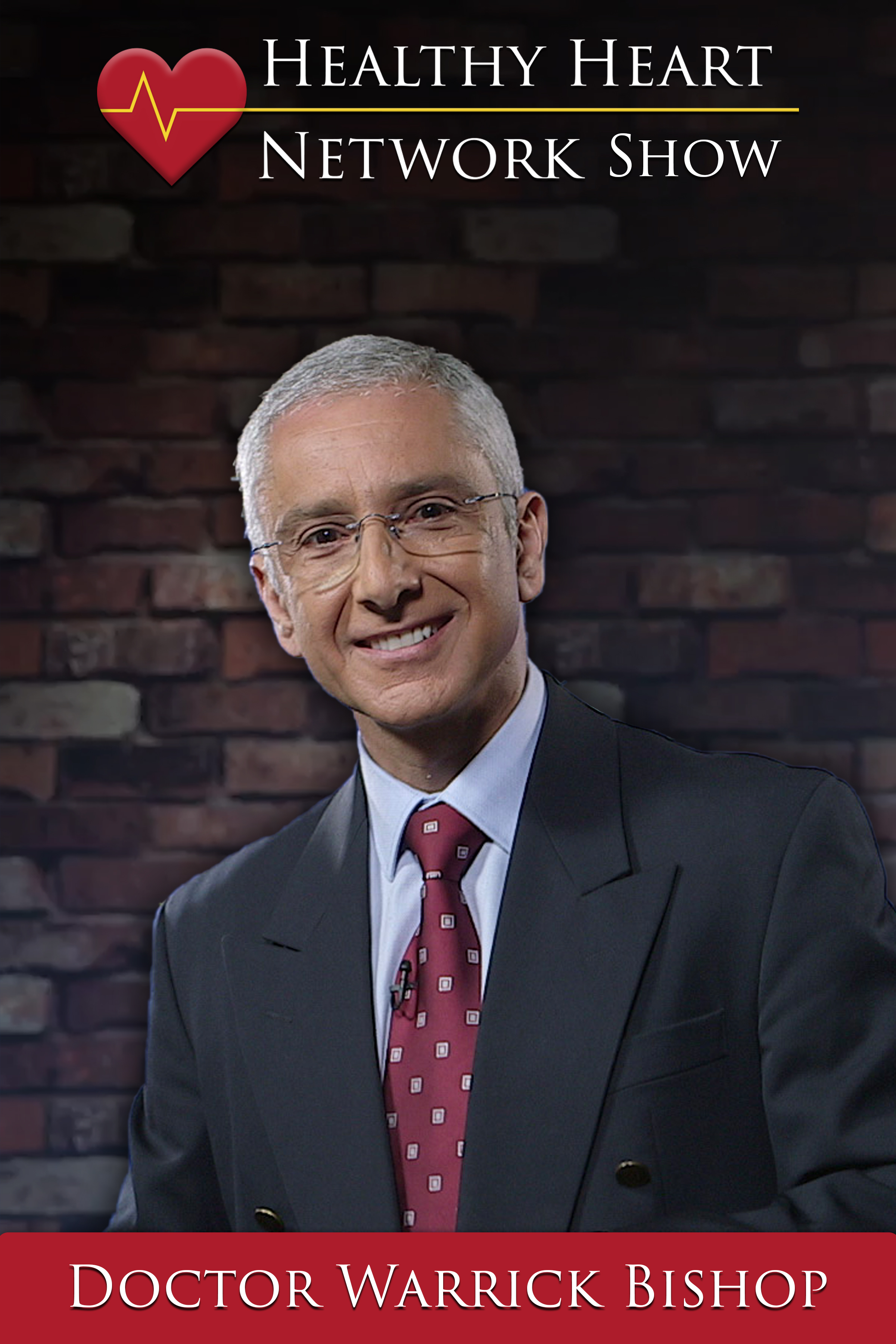
**Dr. Warrick Bishop:** Welcome, my name's Dr. Warrick Bishop. I'm a cardiologist, an author, and a keynote speaker. I'm CEO of the Healthy Heart Network. I'm all about trying to help people live as well as possible for as long as possible. Heart disease is huge in Australia. Every 20 minutes, someone suffers a heart attack. Most of these could probably have been avoided if only we knew what to do. This podcast is all about helping you understand blood pressure, weight, cholesterol, for better health. If you enjoy this podcast, I would be honoured for a five-star review. You can share it with your family and friends. It may well save someone you love.
**Dr. Warrick Bishop:** Hi, my name is Dr. Warrick Bishop and welcome to my podcast and videocast station. I really do appreciate you taking the time to tune in and have a listen. Today, I'd like to share with you an experience from last weekend. It was the 2nd and 3rd of March 2024, and I had the chance to go to the NCC Congress, which was held in Sydney. This is a pharma-sponsored event. However, the organising committee recognised local cardiologists who guided the agenda and the topics and included some of Australia's most recognised and respected cardiologists. They put together a fantastic program and invited some highly regarded international speakers.
Well, the whole session kicked off on Saturday morning with a breakout session or a breakfast session that included a number of case presentations. These case presentations were of different types of patients, and the panel, which consisted of four different specialists covering pharmacological specialists, non-invasive imaging specialists, cardiometabolic and obesity specialists, and a lipid specialist. The breakfast session really revolved around four different patients being presented, with each of the panellists being responsible for sharing details around their particular case.
I thought it was very well presented and really gave us the opportunity to understand how different specialists look at patients through slightly different perspectives. There was the opportunity to learn different perspectives in that. Some of the take-homes for me were actually the importance of being holistic in the patient's care, looking at not just the aspect that you might be most familiar with, but looking at all the aspects. So the obesity metabolic patient may well have cardiac-related issues, but it's really important for us to look and drill down on their blood pressure, their diabetes, their weight, and their general well-being, which could even include depression.
So, a fantastic session, and it's always interesting to be listening to case presentations and then be challenged with MCQ questions. We did have a number of people who found the MCQ questions didn't quite satisfy their needs, but that's okay.
The formal conference kicked off at about 11 o'clock, and the keynote or the starting presentation for that session was by Professor Florian Cronenberg from Austria, who's a world leader in polygenic risk scores and lipoprotein A. Well, Professor Cronenberg kicked off the session really talking about where polygenic risk sits and discussed how different evaluations of multiple genetic material can help guide our understanding of someone's risk over time.
To be honest, as I sat there, I was trying to understand where it might fit in to a large degree. My feeling has always been a reasonable history, which included the family history, plus a look at the lipid profile and blood pressure, combined with imaging the arteries, would give us pretty well all the information we should probably need. Having listened to Professor Cronenberg's presentation though, I got the sense that if we could get a mechanism for looking at these genetic or polygenic risk scores, then these polygenic risk scores could help us even batch people in a more precise way.
For example, in my own mind, I often think we should image men at 50 years of age and women at 60, a little bit earlier if there are indicators based on history that we should do so. But imagine we had a polygenic risk score that we could run individuals through. That polygenic risk score could inform us that this group of individuals with this particular risk score should be imaged at 35 years of age, while this particular cohort should be imaged at 50 years of age and a range in between. So there may really be a role for incorporating polygenic risk scores, not in complete isolation, but as indicators for the group of people we should be targeting at certain ages where we may expect problems. I thought that was absolutely fascinating.
Professor Cronenberg's talk was followed by Professor John Mammo, a neurologist and researcher, who presented this amazing information around how there could be a link between LDL particles and amyloid, and how amyloid may well be carried in LDL particles, generating a potential or causal link between these small cholesterol particles moving around in the body, landing in small blood vessels, and giving up not only cholesterol but also amyloid protein. Professor Mammo really underlined the importance of how healthy hearts and healthy brains are linked, and there's no question this will be an area of more research into the future.
We then had Associate Professor Adam Nelson speaking to us about the new types of agents which we're using for dyslipidemia or abnormal cholesterol levels. We know now, and we're starting to use small interfering RNA molecules. So these are the transcription or the messenger proteins that take the blueprint from DNA and take it to the cells, to the reticular endothelium of the cells, the Golgi apparatus of the cells where protein is produced.
Small interfering RNA proteins that are already in use are being used in cholesterol-lowering therapy, which is pretty exciting. But we're now starting to see the expansion of that technology to lipoprotein little a, to triglycerides, and to broadly lowering triglycerides and LDL through a different set of enzyme processes. Absolutely fascinating, and a very exciting area where we're seeing dynamic change. Outside of the area of lipids, it looks like there's even a small interfering RNA protein that may well be positioned to target mechanisms within hypertension to lower hypertension.
The reason why these siRNA proteins or oligonucleotides, as they refer to them in the game, are so exciting is that they are able to be delivered every six months or year, and they hang around within the cell, not affecting the DNA, but having their influence for months and months at a time. This really alters our ability to deliver medications, knowing that there'll be excellent adherence. Because if the patient comes and has their jab, it disappears for six months and comes back, we could be pretty sure that the agent, the drug, has been effective during that period of time. So it's pretty amazing.
We then listened to Dr. Roxanne Merrin, a very highly regarded and highly credentialed cardiologist, who presented the Lancet report on heart disease in women. Professor Merrin's talk was really a clear indication of the discrepancy between men and women in terms of their heart health journeys, not just in first-world countries, but right throughout the world.
Very interestingly, there was information presented during that talk that pointed to female patients getting better outcomes if they were looked after by female physicians, and in particular, female cardiologists. There's no question that Professor Merrin underlined the current issues with women's cardiovascular health, not having been researched as much, not getting the same attention, and not having enough female cardiologists in the field to bring parity to women's care within cardiovascular disease, and that's right around the world.
The next session was on heart failure with mechanical circulatory devices, talking about what they call ventricular assist devices, which simply means a mechanical device or a pump that helps the ventricle, the main pumping chamber of the heart, until the heart is able to be either replaced, a transplant, or until the heart recovers. Ventricular assist devices have been used in what's called bridging scenarios to keep someone alive until the heart's ready for a good number of years.
Well, it turns out that these devices are getting better and better, and people can sit with them longer and longer. The longest recorded time for someone to have one of these bridging devices so far has been 18 years. Go figure. We had Professor Fanaro from the United States, a leader in the field of cardiac failure, really underline the importance to us of maximizing guideline-directed medical therapy, which includes beta blockers to slow the heart down, renin-aldosterone system blockers to alter Duren and aldosteroaxis, such as spironolactone, and then the neprilysin inhibitors, known as sacubitril.
We're now using SGLT2 blockers, which are drugs that alter sugar loss within the kidneys. All these are critical in trying to give people with cardiac failure the very best outcome, but not just all of those drugs— all of them at maximal tolerated doses.
The last session for the day was a very empowering and impressive series of lectures, initially by Rolf Gomes, who was the founder of the Heart of Australia Trucks. He has an engineering background which allowed him to see the opportunity for loading up a cardiac test centre and clinic in the back of a semi-trailer. Well, this Hearts for Australia truck has exploded. It's delivering amazing care to people miles and miles out into the west regions of Queensland, away from the major capital cities. It's been making a substantial difference.
Rolf Gomes estimated hundreds of people have been touched who could well have had serious and detrimental impacts and events had the truck not passed through the area and identified these high-risk people. So, taking cardiological services to rural and remote areas of North Queensland, there's lots of talk about this being adopted and spread more broadly. An incredibly inspirational talk from a doctor who's done something absolutely amazing in terms of impacting large numbers of people in remote locations.
We also had a doctor based in Melbourne, Swati Mukherjee, who's a female interventional cardiologist, highly regarded as a leader in the space who spends time in rural and remote Victoria. She shared her experiences and the impacts that she'd made and her experiences that she'd had through going to rural and regional Victoria.
The last presentation of that series was by Dr. Edwina Wyn-Lun, who shared passionately from the heart the frustration, the difficulty, and the problems encountered in the Northern Territory with regard to particularly the First Nations community and the Indigenous population. She shared some case histories which are beyond the scope of what we normally see down here in the metropolitan areas. She was clearly passionate about trying to make a difference and really underlined the significance of the cultural and geographical logistics that are surrounding the problems of delivery of healthcare in the Northern Territory.
Great way to finish off the day. There was no question each of these speakers were motivational, but really inspirational and left, I think, everyone wondering how they could do better in their own backyard.
Day two was kicked off by a summary from the Steering Committee of the highlights of the day before, well worth listening to. We went on to a Meet the Experts Q&A, where we literally got to speak with some of these world experts, asking them direct questions. From my perspective, I get so much out of listening, not just to the answers, but to the way my colleagues are approaching and thinking about things, and therefore the sort of questions they are asking.
The morning session was divided into two, one on surgical versus transcatheter mitral valve repair and replacement. So the difference between doing something up through the groin with a catheter to try and fix the mitral valve or whether people should be surgically steered in that regard. I didn't get to that because I was in the other session, but of the cardiologists who I spoke to, it was a very well presented and thoughtful session. When the conference is made available down the line on video and on demand, I'll certainly be seeking out that particular session based on what my colleagues had said about it.
The session that I went to was on social media and medical misinformation, and there's no doubt that the power of social media is huge. However, it's a double-edged sword. If we are going to try and engage with patients and try to bring what we believe is quality information, we also have to be so careful that by doing so, we don't present ourselves as a target for malicious attacks, which personally I've actually been subject to. So where do we go with social media and medical information on the internet? It's a really complicated space, and there's no question we're going to see more and more stuff done in that particular regard.
The day ended superbly with Professor Florian Cronenberg sharing perspectives on lipoprotein small A. This is a small lipoprotein particle, which means it carries fats around the body, one of those fats being cholesterol. It's a lot like low-density lipoprotein, the so-called bad cholesterol, but it has a tail on it. We call it a crinkle tail, but you could call it a mischievous tail. That mischievous tail changes its molecular weight, changes its stickiness, and the way it interacts with blood vessel walls.
Turns out lipoprotein A is about six times more atherogenic, i.e., more likely to put plaque in your arteries and therefore potentially increase your risk of heart attack, than standard LDL cholesterol. So it's an ugly guy, no question about that. And if you've got it, you can't do much about it. You've got to thank your parents because you're not going to be able to change it too much by diet or exercise or even meditation or medications. That's why there are medications on the horizon that may well have an impact.
Anyway, really well worthwhile presentation. The next presentation was one that just blew my mind, and I think the mind of just about everyone in the auditorium, presented by Associate Professor Peter Soltis. He was talking about, and wait for it, I've got to read this out, clonal hematopoiesis of indeterminate potential. That's referred to as CHIP. Well, if you know what that means, please give me a call and let me know.
I'll say it again: clonal hematopoiesis of indeterminate potential. Well, I'll try and explain to you very briefly what I think that means. What Peter then went on to articulate is that what we find in people, as they age in particular, and sometimes people who have had cancer therapies, or had cancer, that they can end up with lines of cells within their bone marrow, which are all the same, i.e., clonal.
So these people, or individuals as they age, can generate clusters of cells which are in the bone marrow, so the hemopoietic area of the body. They're the same, clonal, hemopoietic, and we're not sure exactly of their significance at the time that they could be found, of indeterminate potential, meaning we don't know if they're going to be a problem.
So, clonal hematopoiesis of indeterminate potential simply means bunches of cells in the bone marrow, which we're not really sure if they're going to be a problem or not, but they're all a bit the same. Turns out they probably could be a forerunner or at least a marker of something wrong happening. Interestingly, not only do these cells potentially relate to increased risk of cancer, but they also relate to increased risk of coronary artery disease, linking cancer and cardiovascular disease yet again. We've seen more and more in recent times the importance of the link between coronary artery disease and cancer within individuals, and this seems to be within that space.
A fantastic presentation. I took a heap of slides because I will go through and look at them at another time. I couldn't possibly explain them to any point of justice over this podcast. Keep an eye out for clonal hematopoiesis of indeterminate potential, also known as CHIP, and I think it'll be a space that we'll see more of in time to come.
The whole conference finished with Professor Florian Cronenberg and Dr. Honey Sabore debating whether LDL cholesterol or lipoprotein A are the more appropriate biomarkers. I think at the end of the day, everyone agreed it was a bit of a draw and beautifully presented.
I'm not going to go on anymore; I've talked for enough. It was a fantastic conference, well worth attending. I will mention that apart from the academic content, the opportunity to listen to other people's questions and thoughts and learn from that, the ability to get together in person in these situations is enormous. It allows the opportunity for connecting with friends and colleagues, but it also allows for, if you like, networking and corridor conversations where plans can be made for collaboration in the future.
Overall, I was so pleased I had the chance to attend and be part of the conference, enjoying the speakers, catching up, and asking questions of various people, and catching up with friends and colleagues. I've talked an awful lot. If you've got any queries or questions, drop us a note. If you've listened to now, thanks so much for your attention. Really appreciate it. I am going to wish you the very best and hope you live as well as possible for as long as possible. Take care and bye for now.
**Dr. Warrick Bishop:** Hi. Ever wondered what your risk of heart attack is? You should. It's the single biggest killer in the western world. We're talking one death less than every 30 minutes in Australia. One death less than every 60 seconds in the United States. Nine million deaths globally per annum. Well, how do you check your risk? You can go to www.virtualheartcheck.com.au. You'll find out about your risk and what can be done beyond that to be even more precise.