**EP325: Gladiator and Trainer to the Stars: Lourene Bevaart (Part 2)**
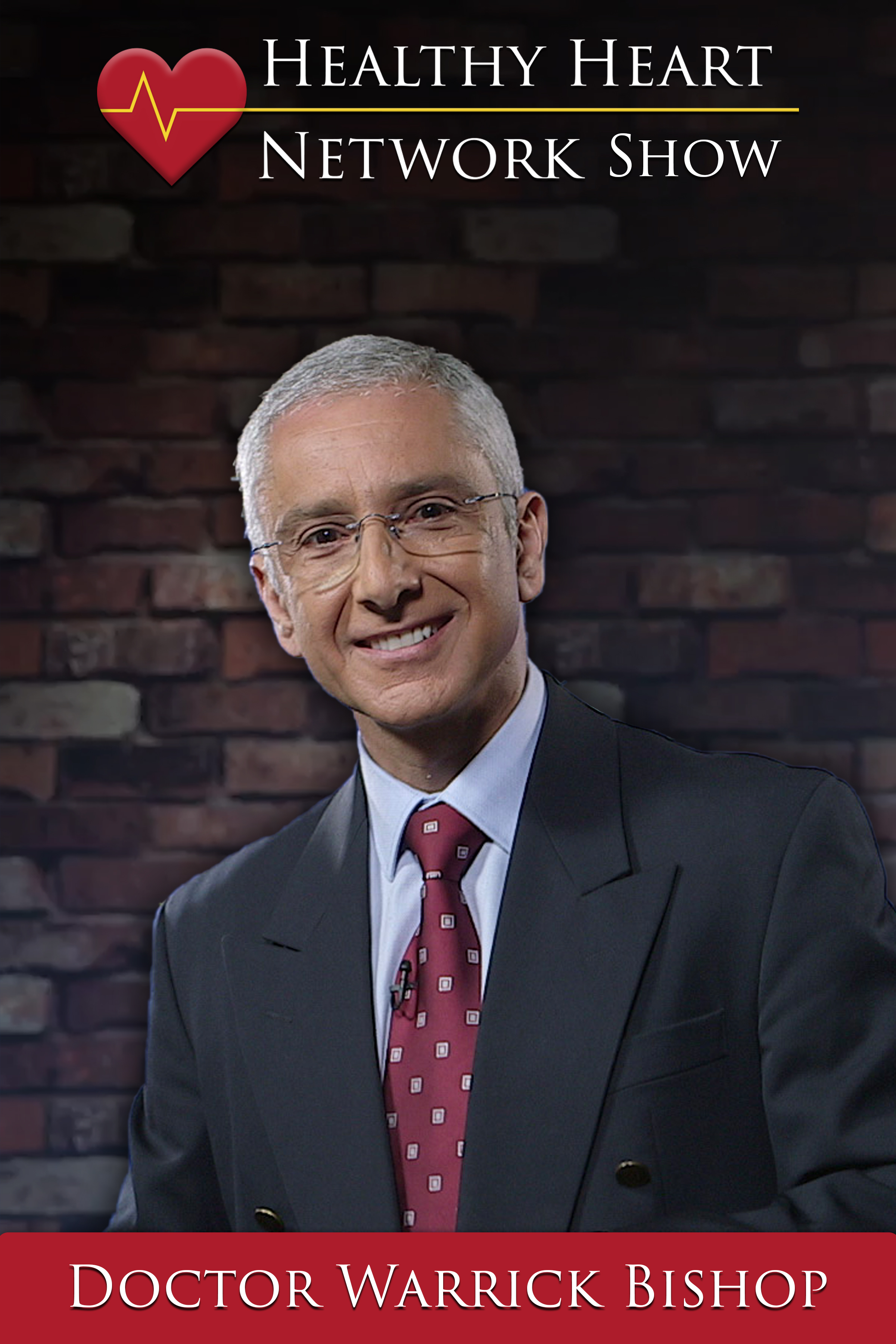
**Dr. Warrick Bishop:** Welcome, my name's Dr. Warrick Bishop. I'm a cardiologist, an author, and a keynote speaker. I'm the CEO of the Healthy Heart Network. I'm all about trying to help people live as well as possible for as long as possible. Heart disease is huge in Australia. Every 20 minutes, someone suffers a heart attack. Most of these could probably have been avoided if only we knew what to do. This podcast is all about helping you understand blood pressure, weight, cholesterol, for better health. If you enjoy this podcast, I would be honored for a five-star review. You can share it with your family and friends. It may well save someone you love.
Hi, my name is Dr. Warrick Bishop. Welcome to my podcast and videocast station. Today, I've got part two with Lorene Bevaart. If you've listened to part one, you'll know she's a mum, a world champion in karate, an ex-gladiator, and a fitness trainer to the stars. Laureen, thanks so much for joining me.
**Lourene Bevaart:** Thank you so much for having me back on. Look, for anyone who's missed the first podcast or video, I suggest you go back and have a listen because Laureen has an amazing story. It really has some twists and turns and some interesting stuff. With gladiators back on the screen, it's an amazing sort of look back to the opportunity she had as a university student to step up and really be on the national stage. So have a listen to that. But where we are for this second podcast, I really want to talk about where you're heading at the moment, Lorene. I get the sense that you've had a pivot in the last couple of years. Share with us the background to that and some of the steps that you've taken to be where you are right now.
**Lourene Bevaart:** So now I help people thrive. Basically, if we go back a little bit, I trained Russell Crowe and I was traveling the world. I came back, got married, had two beautiful girls, and then life threw me a curveball. Now I'm a single mum, which I wasn't prepared for emotionally and financially. When you have kids, there are lots of changes to the body—hormonal swings. I'm sure I had postnatal depression. I didn't know that then, but looking back, I wasn't feeling good about myself. I was putting weight on. I was living from paycheck to paycheck, and I thought, "Oh my God, I can't live like this." I felt like I was failing as a mum. I wasn't being a good role model, and that's just not my DNA. I'm a high achiever. But I also knew that no one was going to come and save me. For things to change, it was up to me.
So I found a solution, a solution where I could work from home in pockets of time around my kids and a system that I was following. People were really earning good money, the steps were there, low startup costs, and it was all around the chemistry or the science of redox signaling molecules. So what the heck is that? You probably know more about it than I do, and I'm just going to keep it really, really simple. I am passionate about health and wellness, and I love helping people with their health.
In my time as a gladiator, as a personal trainer, and as a karate athlete, I have used so many supplements for recovery. I'm a big fan of supplements because I just don't think you get the nutrients and the tools from the food and everything that we have today. One of the main reasons is that the pollution and toxins that we're exposed to now, we're exposed to in 15 minutes, whereas my parents were exposed to in a lifetime. We get a lot quicker time, right? That's why I see a lot more issues now—why people get brain fog, why they're tired, and all that sort of thing. It all comes down to information, and information is the cause of so many chronic diseases, which is related to the health of your cells. Healthy cells, healthy you.
We are made up of an abundance of cells, and there are these tiny nano-sized molecules inside them that keep them healthy called redox signaling molecules. Do you want me to keep talking here, or do you want to ask a question?
**Dr. Warrick Bishop:** Keep going. I think I'd love you to keep talking. My understanding is the redox molecules help an electron transfer within mitochondria, and mitochondria are the small energy cells within our own cells. They're almost the engine house. Anything we can do to help our mitochondria gives the cell fuel for repair, for restoration, for whatever it needs to do, its normal functions. I think it's a fantastic, interesting area. I'd love you to keep talking to it because I think we are going to see more and more understanding of the redox pathways with time. I think it's a great thing for the listeners to have some information about it. So please.
**Lourene Bevaart:** So we have trillions of cells, and we have trillions of these nano-sized molecules inside the cells. As you said, they detect damaged cells, repair damaged cells, and replace damaged cells because your cells are talking and signaling to all the different systems in the body—your immune system, inflammatory response, your gut, your skin, everything. But why do we need to top up with these redox signaling molecules? When we're a healthy child, we have an abundance of them. That's why you can tell a child's skin is amazing, their energy's amazing. If they graze their skin, they're going to heal a lot quicker than I am or yourself, okay? But as we age, we lose 10% of these nano-sized molecules every decade. By the time we come to 50 or 60, you have half of what you had as a child. So you start to see and feel the signs of aging—you become a bit more lethargic, your memory and eyesight decline, you get gray hair, and your skin changes. In some cases, there's more information within the body. Like I said before, information is a cause of so many diseases. If that damaged cell doesn't get detected or repaired, it starts to rot, and it doesn't signal; it doesn't do what it's supposed to do.
A really good analogy of this is most of us have the latest iPhone. I'm going to talk iPhone. For those who have Samsung, I still don't understand why you have a Samsung. But anyway, iPhone 14, 15, right? If I took that iPhone from you and gave you an iPhone 3, how frustrated would you be? You can't download, send messages, text, and it will take forever to send a video or anything like that because it just doesn't have the hardware, the signal capacity of what a new phone does. That's what happens to us when we start to age. Your mind sometimes wants to do all these things, but your body has aches and pains, discomfort, gut issues, skin issues, and things like that.
But now there's a company that has replicated these redox molecules in a bioreplenishment. Why it's so unique and powerful is that it's not a herb, plant, organic, or synthetic; it's identical to what's in our cells that we can top up our levels of redox molecules. It amplifies our body to do what it's designed to do—to signal and to heal. We are just seeing so many incredible transformations because we're giving our body the tools that it needs to repair itself. That's what I love doing now. I work mainly with women, but I work with a lot of guys too. So many women my age, in their late thirties to fifties, are experiencing perimenopause and hormonal swings, putting on weight, and trying to go to the gym and work out but not eating well.
These are the things that I cover. First of all, hydration. So many people are chronically dehydrated. I talk about that. Not enough protein is another thing. Sleep, resistance training, or getting your steps in is really important. Then you need a supplement. I like to do it, obviously, with Redox because it just accelerates the whole process. Yet it still amazes me how many people won't implement any of those simple steps. They'll drink alcohol, eat junk food, and wonder why they've got cravings. They wonder why they always feel hungry and can't work out why they're putting weight on. Their metabolism, everything is sluggish.
A really good example of this is it's like having a dirty washing machine or a dirty dishwasher. You've got to clean that out for your system to work properly. What does that is those things I mentioned, but also the supplement of cell signaling redox signaling molecules.
**Dr. Warrick Bishop:** So the redox molecules that you're talking about, they're a supplement that you're sharing or able to provide people information about or even supply them if need be. Where would people get those from, by the way, Laureen?
**Lourene Bevaart:** That's a really good question. They can probably contact me on my website, or if we can provide an email, that would be really good. They can reach out to me, and I can definitely send them some information. They could read through it because it is an education. It is a new field. It's only been around since 2010. The years before, the buzzword was antioxidants. Well, redox will be the future. If you haven't heard about it yet, you will. There are books on it now, conferences on it now, and lots of universities doing studies on it now because of the power of what it's doing. So it's exciting. It's great for athletes too, by the way. If you look at the 10% edge, this is it.
**Dr. Warrick Bishop:** When we're talking about supplements, to a large degree, I agree with you. As we get older, I think it makes sense for us to look at things that can improve our health span. Once we start to accept that the biological blueprint that we live with was designed three to four million years ago and really only designed for us to last about 20 to 25 years tops, we realize we're way past our use-by date. What can possibly support your journey or help you get the very most out of that old DNA platform that you're actually using? I'm very open to trying to think around ways that we can supplement to maximize our health span. Having said that, I take a few supplements, but I'm curious to know what you recommend. You've obviously got some Redox supplements. Talk a little bit about those. What do you take those with, Lorene? What would be your regime for looking at?
**Lourene Bevaart:** The redox comes in a liquid form, so it's like the size of a shot glass. I take a couple in the morning, maybe one at lunchtime, and a couple in the evening or early afternoon. Then there's a redox gel. Our biggest organ is our skin, so I put that on everywhere to look after my wrinkles, blemishes, and so forth.
**Dr. Warrick Bishop:** You do look fabulous today, I have to say.
**Lourene Bevaart:** Thank you! It's also not just for that; it's also for sunburn, insect bites, discomfort in joints, and inflammation in the muscles and things like that. It helps with lots of different things, and it's safe for newborns all the way to the elderly. It's non-toxic. This is a really good point to think about as well. On the outside, you can see changes in your skin, right? You might think, "Oh my gosh, I've got to get that checked out," or "That doesn't look good." So you can do something about it. But I can't put a camera on the inside. Exactly the same is happening. It's like my skin's wrinkling; my organs are wrinkling, they're getting older, blemishes, maybe they're rotting—all those things. Can I just say, may I never know what I'm preventing by taking the redox on a daily basis, right?
So obviously, I eat pretty well. I love my chocolate still. I take other supplements, like a biome for my gut, omega-3, and then obviously just a multi-cardiovascular mineral supplement as well. For me, that's enough. There are plenty of times I tell you about Tresol speed as well, which is quite powerful, and then good clean water. I'm big on hydration, but I actually put hydrolates in it as well because I think it's important that the minerals and so forth are put back into your body, especially in the warmer weather. Being an athlete, I make sure it gets absorbed. So that's me in a nutshell. And protein—protein is king. Can I just say that? No way do people have enough of that. It does so many things for you, and there are so many sources of protein. It doesn't have to be meat; there are plenty of plant-based ones, and obviously, there are lots of protein powders and things like that you can also use.
**Dr. Warrick Bishop:** How do you tend to satisfy your protein needs, Lorraine?
**Lourene Bevaart:** I always have a minimum of about 140 grams of protein a day. Every meal or snack I have, there's some form of protein in it. In the morning, the yogurts these days are incredible, right? There's Chobani Greek yogurt, and I just put frozen raspberries in it. Oh, the chocolate peanut butter that you can get—yum! Chia seed pudding, like, you know, you put the chia seeds in, a little bit of almond milk, oat milk, or no milk, a scoop of protein powder, frozen berries, eggs—it's amazing. I have protein bars, but I don't have them a lot. I try to get my protein from real food most of the time. That makes sense. Obviously, lean steak, fish, and so forth. So every meal has some protein in it. The palm of your hand is a great ingredient—that's about 20 grams of protein. If you can have about 15 to 20 grams of protein with each snack or each meal, you're doing really, really well—better than most people do. That's why people get so hungry all the time. That's why they don't feel full. That's why they have these sugar cravings because there isn't enough of that dense food to keep them feeling amazing.
**Dr. Warrick Bishop:** No, I agree. There's no question that protein is great for satiety. But one of the real problems I see is when people don't have enough protein and the consequences that they have too much carbohydrate or relatively simple sugar. You have a meal; it can only be fat, protein, or carbohydrate. If you're not having much protein and not much fat, it's got to be carbohydrate left. That carbohydrate gets absorbed, the sugar levels in the body go up, and the body's insulin response kicks in. That insulin drives the sugar level down, and that's what the brain's registering. The brain's thinking about food, which is its glucose. When the sugar level drops, that kicks in those cravings as well. So you're exactly right; we can smooth those out. It's a huge positive for people's eating patterns, no question.
Look, you've obviously been in this space of helping people with lifestyle choices and supplementation. Have you had any stories, any particular clients or people you've worked with who have a story you'd like to share?
**Lourene Bevaart:** Oh, look, there are many. There are many. Some of them are just mind-boggling. There was one lady, her name is Danielle. She got hit and run by a drunk driver and had huge brain damage. The doctors said, "Look, there's only so much we can do. This is your new life now." She experienced a lot of memory loss, brain fog, and aches and discomfort. Someone introduced her to the redox, and she is a new woman—a new lady, just transformed. I've got to be compliant; I've got to be careful what I say here. But look, there are a lot of people who have gut issues, and many of your health problems are related to your gut. There have been a couple of people that I've dealt with very, very recently who would only go to the bathroom or the toilet once every four to five days. I can't even imagine that. Then just starting the redox, they are going all the time because what it's doing is cleaning it out—cleaning that dirty dishwasher. They can't believe how much improved their energy is in less than just a week.
That makes sense. All of a sudden, the system is signaling how it should. Diseases that inflammation causes—if you can get on top of the inflammation and reduce it and give your body what it needs, your body is an incredible tool. The immune system is amazing, but if we don't give it what it needs, how can it do what it's designed to do? This is the most foundational thing that you can take for your health, and then you've got your nutrition, hydration, and sleep—that's all laid on top of that. It's incredible what you will start to feel and see the changes. Now, it's not going to happen overnight. So let's take me, for example. I'm 58, nearly 60. Let's say there's 60 years of damage, right? I haven't started Redox. Oxidative stress, pollution, stress, hormones—everything like that. You've got to give it time to work. It's not a drug; it just empowers my body to do what it's designed to do. I always say to people, you've got to use it for a minimum of three months, but ideally, it's a month for every year you are. People notice changes very quickly, if that makes sense. Things like sleep, energy, brain fog—the digestive system is working really, really well. Hormones start to obviously modulate, not having these huge swings. You'll never get rid of the perimenopause and menopause; that's just part of life, but you can definitely stabilize it. It kept me away from HRT and other things—I don't want to go on that.
There are so many things that are beneficial, and it's exciting because I just love the hundreds and hundreds of stories every day. Not only that, it's also helped me financially. I was a single mum on Centrelink, about $70,000 in debt. What was I going to do? Was I going to go back to the corporate world or go back to personal training? If my kids were sick, I didn't get paid. If my clients were away, I didn't get paid. What sort of future does that provide? Here's a system where you don't have to have an education—well, I did have one. You don't need an education; you just need a willing why. There's a system to follow. You get a website; there's no stock, no rent. You can start up a business from as low as $200. To me, that's a game changer, right? The opportunity is huge as long as you follow the system, do the work, be coachable, be willing, and listen. It can change a life, and it's changed my life. It's changed many other people's lives on so many different levels. I love this sort of business model because to me, it's about personal development. It's about being the best person I can be and how many people I can help. For me now, that's what it means the most—daily meeting people.
Well, I found a solution: educate people. What they choose to do with that is totally up to them. But at least I've told them. I'm sure you come across it too; you have the amazing tools about preventing heart disease and heart attacks. You educate people on it, but they still choose not to. It drives you nuts.
**Dr. Warrick Bishop:** It drives you nuts.
**Lourene Bevaart:** That's okay. The thing that I've done is educate about it. I've given you the solution. The science is there; the proof is there. Some people just don't want to move. Then there's the other spectrum where people will write you a handwritten note or they'll be in tears, saying, "Lorene, thank you. You have saved my life. You have changed my life." That is what it's about.
**Dr. Warrick Bishop:** Yeah, absolutely. No question. We share a similar passion, and that is making a difference in people's lives. It's huge, actually. So good on you. I feel that, and I think you feel it deep.
**Lourene Bevaart:** I do. I do. Because I just know so many people are struggling—more so since 2020. There's a lot of stress on people. People living from paycheck to paycheck, and stress is a cause of so many health issues. No question. If I can help people, not just with the redox, but hey, let's go and walk 5,000 steps. What are you drinking? How are you sleeping? Let's just try and feel a little bit better. Some people just need guidance with that.
**Dr. Warrick Bishop:** Look, an absolute pleasure sharing with you, Laureen. Time has probably run away from us. I think we could talk for another hour or two on these sorts of things and share stories for the rest of the day, really. Just in summary, obviously, we've talked a bit about these redox molecules. Just a reminder of how people might be able to follow through on that and get some more information from you. How would they do that?
**Lourene Bevaart:** If they can reach out to me, probably my email is my name: lauren@laureenbevart.com. I'm on Instagram, LinkedIn, and all the socials. You can reach out to me, and maybe in your description, you could just put a couple of details where they could reach out to me.
**Dr. Warrick Bishop:** Look, an absolute pleasure sharing today. For those listening, I hope you got as much out of it as I did. Thank you so much. For those still listening, I really appreciate you tuning in and listening to the end. If you've got any queries or questions, drop us a note. But for now, I'm going to wish you the very best. Hope you live as well as possible for as long as possible. Take care and bye for now.
Did you know that coronary artery disease kills one in four people? Most of us are likely to carry some risk or know someone who does. If you're interested in finding out more about how to evaluate that risk, check out www.virtualheartcheck.com.au. It'll give you information about risk and what else can be done to be even more precise.