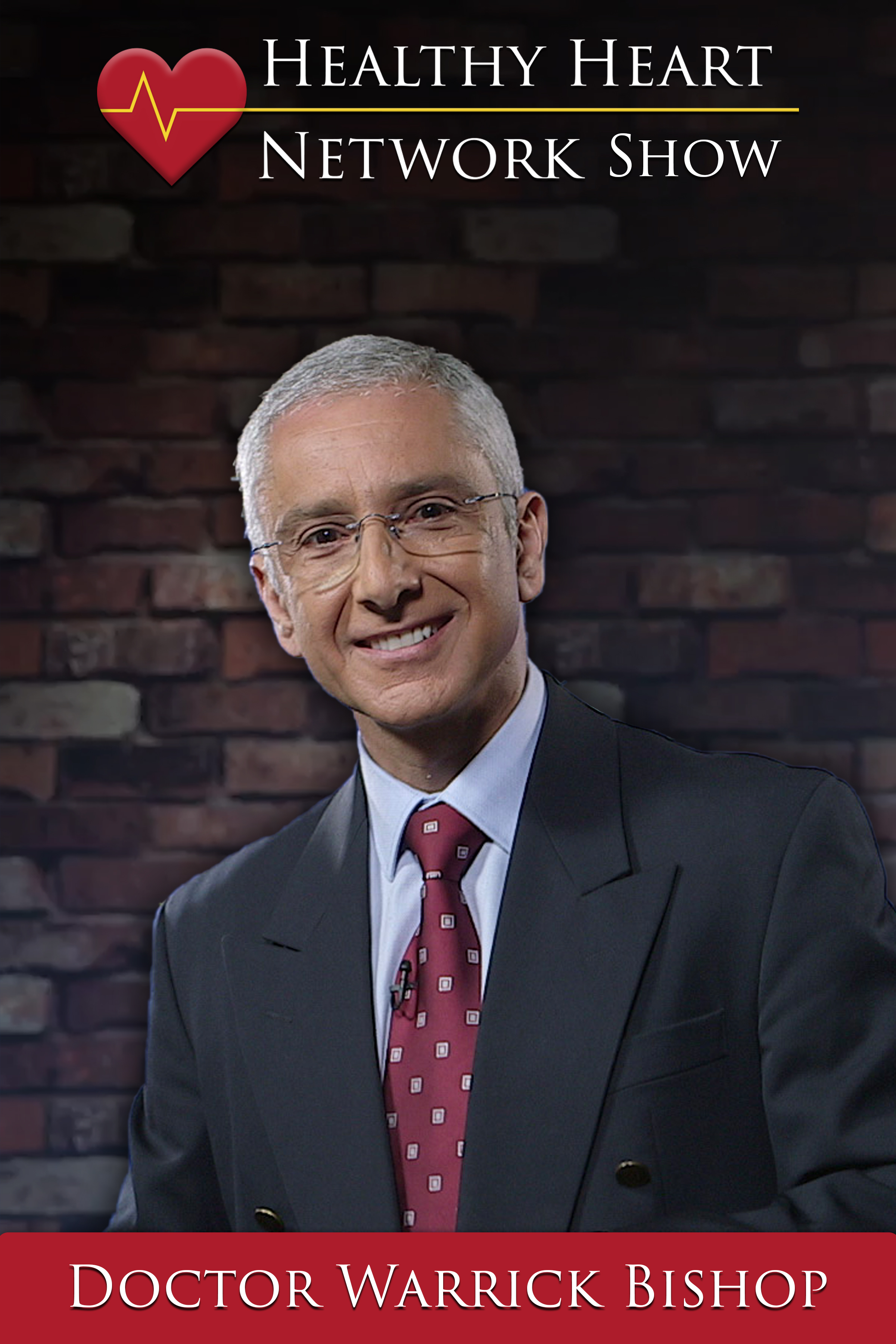
Welcome to Dr. Warrick's podcast channel. Warrick is a practicing cardiologist and author with a passion for improving care by helping patients understand their heart health through education. Warrick believes educated patients get the best health care. Discover and understand the latest approaches and technology in heart care and how this might apply to you or someone you love. Hi, my name is Dr. Warrick Bishop and welcome to my podcast and videocast station. Today we've got a couple of things to cover, but first of all, let's think about coffee. We often think of it as a heart starter, some of us think of it as something that drives palpitations, and all of us may have had just a little too much on one or two occasions and noticed the buzz. One of the issues around coffee is whether it should be recommended or not in people who could be at increased risk of atrial fibrillation or atrial tachycardia. And a group in the United Kingdom using biobank data and studying around about 400,000 people looked to answer this question. This was done in the United Kingdom. The study consisted of evaluating rates of palpitation for coffee users. It turned out that 56% of the people surveyed were drinking instant coffee, 23% ground coffee, 19% decaf and 2% other, which I guess would be different to the Australian landscape, or at least I'm guessing it would be. The results really were interesting in that there wasn't a strong or clear association between coffee consumption and development of heart arrhythmia. Of course, these sort of studies or trials can have limitations because it was a questionnaire followed by a period of observation. And of course, that questionnaire poses a question, do you drink coffee, yes or no? And then watches for... potential events. Well of course modification of coffee consumption could have occurred in that individual between the time that they answered the questionnaire and the study period concluding so that they may have self-adjusted down their caffeine levels but that aside the researchers persisted and were able to look closely. at the potential reported events of tachycardia and showed no close association with increased amounts of coffee consumed. The average amounts consumed were in the order of one to three cups of coffee a day and interestingly by using genetic data they were also able to identify that some people were rapid metabolizers of coffee and some people slower metabolizers of coffee and as you might guess demonstrated that the rapid metabolizers, the people who could clear it quicker, tended to drink more coffee, so no surprise there. Although not a definitive or end of the coffee story study, the study is at least able to provide some reassurance that usual coffee consumption doesn't appear to be linked with significant. increased levels of development of fast heartbeats. Of course, if you're someone who suffers from atrial fibrillation or supraventricular tachycardia and you notice that in your particular situation that your heart rate kicks up and your heart becomes unstable with coffee, then the answer is pretty obvious. What I'd like to do is talk next about a regular. on this podcast, which is Statin Therapy. And a relatively recent review from mid-July looked at a matter analysis or a combination of over 60-odd trials, and that covered more than 120,000 people. And what this trial was looking at was trying to ascertain the reporting rates of Muscle aches and pains or liver abnormality or renal abnormality matched up against the role of cholesterol-lowering therapy. Well, it turns out that there were, of course, people reporting muscle aches and pains because we recognise that as on the side effect or tolerability list in regard to statins. However, it is interesting to note that for the study population that was looked at, per 10,000 patients that were treated per annum, 19 myocardial infarctions were prevented, 9 strokes were prevented, and 8 cardiovascular disease deaths. were prevented. So the conclusions that were drawn in regard to the amount of muscle aches and pains were that of course they occur but there is clearly a significant upside which can't be ignored and needs to be worked around. An important reminder that of course if we could find drugs that had no side effects we'd use them but given We're not in a perfect world. We have to work with what we have. But a nice reassurance that the drugs that we do have actually work. And pleasingly, for many, many people, the statins are well tolerated and therefore very effective. Look, lastly, I'd like to touch on something that really caught my eye that popped up recently, and that was biodegradable pacemakers. comprehensible thing to think about when we normally think of pacemakers as battery metal boxes or cans that are put in under the shoulder with wires into the heart to support people's rhythm. Well, in what circumstance might we want to buy a degradable pacemaker? Well, it turns out that after cardiac surgery, it is not uncommon that we need to temporarily pace people's hearts for a matter of days. And the consequence of that is that wires come out of the chest cavity into a pacemaker box. Now, of course, if you've just had major surgery and you've got wires coming out of the chest through the skin that are connected to the heart, you can... easily understand that this could be a significant site for infection to really move in and cause all sorts of problems. Of course there's often issues of reliability with these sort of boxes and of course issues of mobility. So with an understanding of that limitation a couple of researchers in the space of electrical engineering and cardiac engineering have got together and developed a biodegradable device using very simple biodegradable products that can literally break down after a period of a week or two when they're no longer needed and be absorbed or cleared by the body. This particular biodegradable pacemaker is currently being trialled in dogs. There's no formal trials in humans. It uses a thin layered sheet, three sheets put together, and these three sheets lay on top of the surface of the heart. It's put in place at the time of surgery, and it's powered by an external source. Now, if you think about how you could power a device like that externally, Think of wireless inductive power that we use for our smartphones. Some of you may have chargers at home that you just put your smartphone on top of to charge it. Well that's a wireless inductive power source. These biodegradable pacemakers will work through the same process and it turns out that they've now developed the technology to allow that power source to be up to 15 inches away from the actual device, meaning that this individual post-surgery could have the power source 15 centimetres away from where the device actually is, maybe attached to their upper arm or to a waist belt, and have that implanted by a degradable pacemaker working. without any leads or wires at all. No breach of the skin. So this is a spot that I think we'll keep an eye on and we'll see it develop over time because it's incredibly interesting and exciting. It clearly is science fiction moving into current medical practice. I can't wait to see what comes up next. But for now, I hope you found the little bit on coffee, statins and biodegradable pacemakers. interesting and informative. If you've got any queries or questions, drop us a note at info at drWarrickbishop.online. Of course, if you've got any suggestions for future podcasts, I'd be open to hearing. As always, take care of yourself from the Healthy Heart Network. We wish you live as well as possible for as long as possible. Take care and bye for now. You have been listening to another podcast from Dr. Warrick. Visit his website at drWarrickbishop.com for the latest news on heart disease. If you love this podcast, feel free to leave us a review.