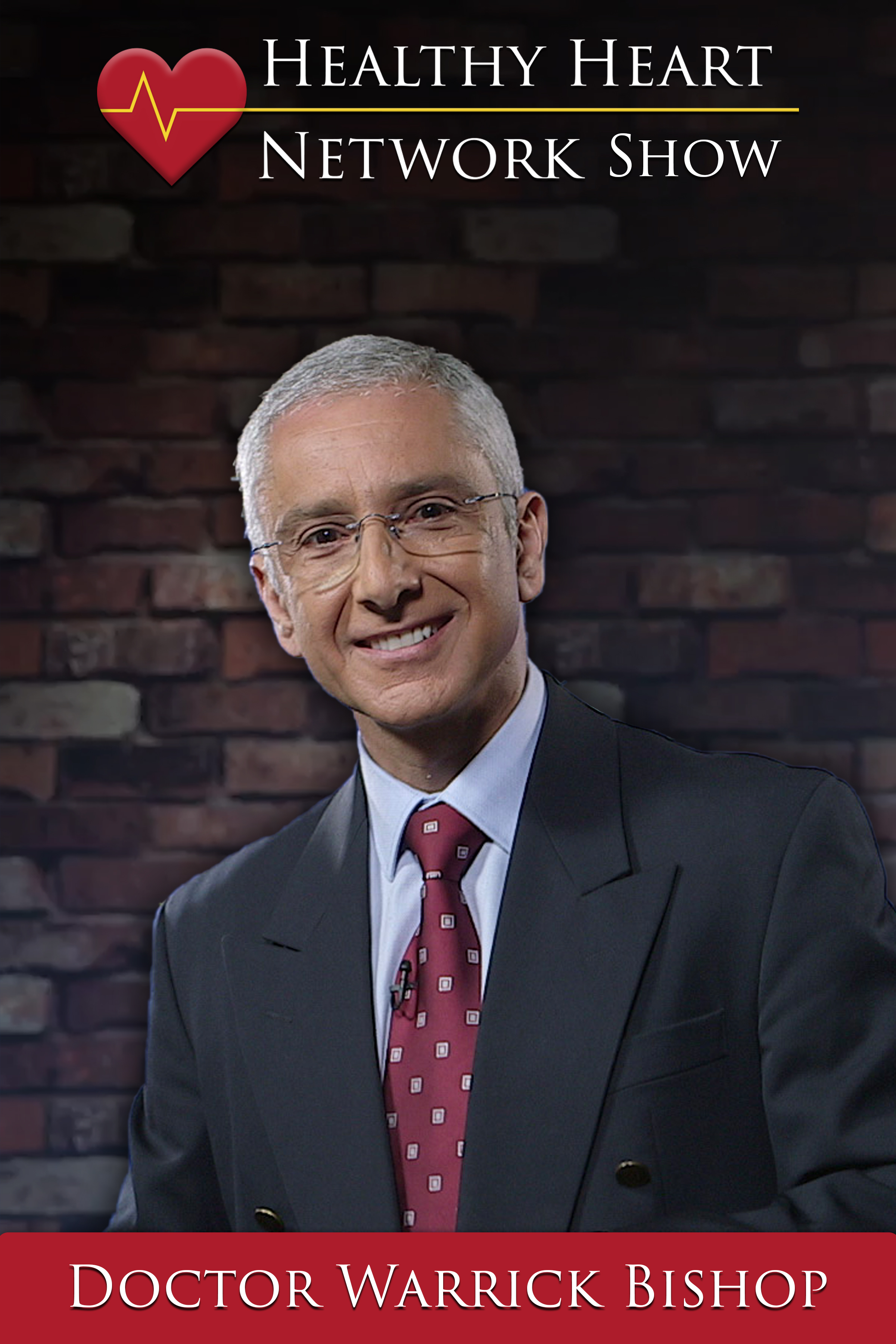
Welcome to Dr. Warrick's podcast channel. Warrick is a practicing cardiologist and author with a passion for improving care by helping patients understand their heart health through education. Warrick believes educated patients get the best health care. Discover and understand the latest approaches and technology in heart care and how this might apply to you or someone you love. Hi, my name is Dr. Warrick Bishop. Welcome to my podcast and videocast station. I have to tell you, I'm excited as anything today to have to interview James Z. G. Buckley, who I've met through my dear younger brother, who is a world leader and expert in hypnosis, in human behavior, in meditation and leadership. Welcome, James. How are you? I'm humbled by the introduction, Warrick. Thank you and a privilege to be here with you today and privileged to be talking with your listeners. Look, I had the pleasure to meet James at Christmas this year through his friendship with my brother. He actually came and visited us at our family home where my mum, who's been incapacitated by a stroke, had... The whole family around and James slipped into that environment effortlessly. And that was the first time I met him. And recent time we've spoken again and he's actually introduced me to some meditation, which of course I thought I'd never be able to do because I'm sort of itchy and jumpy and fidgety. And if I was a dog, I'd be a... Oh, I wouldn't be a Labrador. I'd sort of be more a fox terrier. I'm tearing around all the time. But I have to tell you, for the last three or four weeks, James introduced me to this meditation. I've been doing it and it's absolutely fantastic. And for that reason, I'm so excited to speak with James and learn more about this space. James, we were talking about this only moments ago before starting the recording, but this connect between mind and body in life but also in the illness space is huge. It's a really exciting time, Warrick, understanding that we can measure now what's happening in the brain with our thoughts, which in neuroscience are called neurochemical events. And those neurochemical events are shaping the chemistry of ourselves, our blood, our brain, and that we have the ability to influence if we practice certain tools and techniques. It's a really exciting time. Now, we've spoken about this before, and I know that you're... Your life didn't start as a neurocognitive scientist. Your journey is quite different to that. Why don't you just walk us through that journey so we sort of understand why you are where you are now, James? Sure. I certainly was not anybody that understood anything about psychology or human behaviour, and it was... totally out of necessity that I learnt these things to try and resolve what was happening inside of myself and what was happening around me. I was born, as I've spoken with you, was born into a family that was riddled with domestic violence, drug abuse, alcohol abuse. My father was abused as a child in a boarding home and that led to some really unsavoury behaviours in the family home with us and he was coping with those things with alcohol, drugs and so on and so forth. And that really drove me from a really young age to try and work out what was happening in my environment, work out what was happening with people that I loved and cared for and how I could help them. It was an intrinsic desire to want to support my family. And that led to me leaving home at the age of 14. I got caught up with all of the wrong people in my life. I was hanging out with different gangs in Tasmania. I was homeless for several months. I met a girl who I fell in love with who was addicted to heroin. She was also abused and she ended up committing suicide when I was 18. And that really forced me to take a look at my life and decide whether I was going to continue on that trajectory. follow the paths of all of my ancestors and those people that have been in my life. Or if I was going to change to go in a different direction and I chose to go in that different direction. And by grace, I was given certain tools in hypnotherapy and meditation to learn how to resolve what was happening inside of my mind and how to change my emotional state and my physical state. And that's kind of really where it all started was at the age of 18, wanting just to. fix what was happening inside of myself. So, look, you've shared that really quite openly and I appreciate you doing that. I can't begin to imagine how raw it must have felt for you as a young man, 14, as a child. What were the first things that allowed you to start to take ownership of who you are now? I wanted to learn how to protect myself. Being in those environments gave me a lot of fear and a lot of... paranoia, you could say, or distrust around people and distrust around myself. And so I figured that if I could learn how to protect myself physically, that that would solve everything. And so I got into martial arts and I was training five hours a day, five days a week. I got my black belt, the fastest person ever to get that black belt in the club, which was in 12 months, only because of the amount of time that I invested, became the captain in the international demonstration team. So we did all of the fancy board breaks and back flips and all. all of that crazy stuff, but I was still unsettled in myself. I was still unresolved in what was happening in my thoughts and my mind. And although it was a nice distraction, although I learned how to protect myself physically, I didn't protect myself mentally or emotionally. And so I needed to find another journey, another avenue to be able to resolve those things. And so by grace, I was introduced to a... Tibetan Lama of a Tibetan Buddhist center in Tasmania. And for the next two years, I was immersed within the Buddhist culture and learning meditation, learning how to shape my mind and how to shape my personality and characteristics. So absolutely a blessing and a gift. And that put me again on another trajectory of really learning how to hone this machine. The martial arts often, I mean, I don't have experience, but I've watched Karate Kid and you get the sense that there is a real emphasis in mind-body balance and there is a priority to mindfulness and inner control. Was that, did that, presumably that was one of your first steps towards the, opportunity to then engage in a Buddhist environment. Absolutely. It was the foundation for me to be able to do that. And it definitely knocked off a few of those rough edges that I brought with me and disciplined me to be able to take that on fully and wholeheartedly within the Buddhist philosophies, I guess. So the Buddhist experience was one of Was it a religious experience for you mainly, James, or was it a meditative experience, or was it more than that in an emotionally more holistic way? How would you have described your path through that? Interesting question. I was incredibly sceptical-minded, sceptically-minded, because of my environments that I grew up in and whatnot. I was very sceptical of people. Chujilama Shedrup, my spiritual father, who was the abbot of the Buddha Center. He was a very and is an incredibly compassionate, wise and intelligent man that just gave me space to be able to trust him. And so through that, it was more about him and what he embodied as a Buddhist that I was attracted to and that I wanted to embody in myself. I saw those characteristics as something that I wanted to have for myself. And then in regards to the meditation side of things, it was very much an analytical approach for me. I really wanted to understand what was real and what wasn't real and just cut through the fat, so to speak. The meditation techniques that you engage now, are they the same sort of meditation techniques that you learnt through your time in contact with the Buddhist influence? That's an awesome question. A lot of the ritualistic habits within Buddhism is very much associated with what we understand now in psychology, classical conditioning or Pavlovian psychology. So I use a lot of those ritualistic. tools that are used within Buddhism, but not in a religious sense. It's really in that psychological sense and that analytical sense. I'm not sure if that answers your question. I'll jump in there quickly. For those listening who have heard that term Pavlov, he's famous for his dogs who he conditioned by ringing a bell and feeding them so that they linked the bell ringing with food. And many demonstrated if he rang the bell without the food, they would salivate in anticipation. They called that conditioning. And that's exactly what you're talking about there, James, these ritualistic processes. preparing someone for an experience that they're expecting is that exactly and and that preparation is really priming the nervous system to react or end or respond to that stimulus so it It doesn't have to be a bell. It can be any sound. It can be any smell. It can be any sensation. It can be any taste that we can use as a stimulus to create the response. And over a short period of time, we create that unconscious conditioning where the nervous system will just react in a moment to those stimuluses, which is a really cool understanding to be able to use in these ways. I'm going to... Give you a difficult question now because I know this would be difficult because I'm not going to let you ask it of me. But your journey, I'm sure the people who have listened have probably recognised that that journey is one that must have been difficult. And, look, I feel emotionally engaged with that, actually. So you've done an extraordinary job. But what I want to ask you is, all the past behind, where do you think you've now been able to bring yourself? How would you describe James Z.G. Buckley as the man who's talking to me now over Zoom? I have come to the realization, Warrick, that our brain has the ability to access resources from the past. It has the ability to anticipate resources in the future. And so... It's about, for me, understanding, and now I can, use those resources to my advantage in the directions that I want instead of unconsciously being dragged around in my mind. Previously, before learning all of these things, I was a victim. I was a victim to my memories. I was a victim to abuse. I was a victim to my environment. My future anticipation was that I was going to be a victim. And so although those resources were there, of me I didn't know how to access them now I have the ability to access those resources and I can go through my life and through to my childhood and take out all of the positive learnings that I had I can take out all of the gratitude from my life and there's an abundance of that that I never saw before learning these things and so they've really become the gifts of my life and so to answer your question a little bit more succinctly I am now in a space where I have the ability that I can make my own choices to think what I want to think, to feel how I want to feel, to behave how I want to behave, and then life is responding to me the way that I want it to because I'm in control of those processes. I'm going to offer an objective comment, which is I believe you've also been able to fill your own resources enough so that you can now share with others, and that's huge. That's the end game now is to be able to influence as many people as I can to be able to break through those same or similar challenges so that they can get that kind of slingshot forward, that jump ahead, a head start, so to speak. We're coming toward the end of our time here, James. I want to try and break reasonably soon so that we can roll on to maybe another couple of episodes because there's so much we haven't even started. But I love a story and I would love you to, if you can wrap up with a story of someone who you've been able to impact from where you are now, where you've helped someone through a process. Have you got a couple of minutes where you can indulge us? Of course. And I have thousands of stories that I would like to share with you, Warrick, and some may be way out there. And that's just because of the potential of our minds and bodies. When harnessed can be way out there, there's really magic that can be created. But in short, there is... I have many stories, Warrick. In short, there is countless people that through the work, through the understanding of... this science of how meditation works, how self-hypnosis works. And it's all based on science, no conjecture, no woo-woo, no religion that's tied to it. It's only the scientific method. Through that scientific method, I've seen people that have been able to take themselves off of antidepressant drugs in a matter of days, obviously working with their doctors to do so. I want to pin you down on a specific story. I really get the gist that there are multiple facets of potential benefit. But maybe tell us about, you know, a bloke in his 30s or 40s with a bad hip who couldn't walk or was lining up for surgery or, you know, tell us about a real person. Sure. I love people's stories. Absolutely, I agree. In 2013, I had a young lady who came to see me. who had been on antidepressants for over 10 years. We did three hours of hypnotherapy slash hypnosis. And after that time, she went to a doctor. She went off of her medications and she cleared up a depression and anxiety disorder that had been there for over a decade. She'd done cognitive behavioral therapy. She'd seen multiple psychologists and psychotherapists. She'd been taking medication that entire time and nothing had resolved the root cause of what was stopping her from resolving that. And after that, she went on to become a world champion skydiver. who has won multiple gold medals, multiple silver medals in what they call formation skydiving. And I went on to coach that team, Team Bellatrix, and was their, you could say, their mind coach and helped them to also go on and win multiple golds and silvers as well. I love that. So you help someone jump out of the plane. But look, I just want to confirm for you and for your listeners as well, Warrick, that I am nothing special. I've only learnt the sciences of... what is change in the mind and body. And when I teach that to people and when they take that for themselves and use it for themselves, they create magic within themselves because the mind and body is magic as I see it. So it's not me doing it. It's teaching people how to do it and then they're able to do it for themselves. Yeah, no, I get that. There's no question. There's enormous power there. And I'm so keen to come back and explore that a bit more. So I'm going to wrap up now. For those listening, I believe James... If you go to James Z. G. Buckley, he runs a seven-day meditation challenge. I've been doing it ever since I spoke to James about our shared interests and our passions in our own areas for the last month or so. There's no question I'm less grumpy now than I was. I so encourage you to go and look it up. And with a bit of luck, we can even add the link to this podcast. Thank you, James, for joining me. Welcome, sir. Thanks for the opportunity. For those listening, thank you so much for tuning in. If you have any queries or questions, drop us a note. But until next time, stay healthy and please don't die from a heart attack. Goodbye. You have been listening to another podcast from Dr. Warrick. Visit his website at drWarrickbishop.com for the latest news on heart disease. If you love this podcast, feel free to leave us a review.