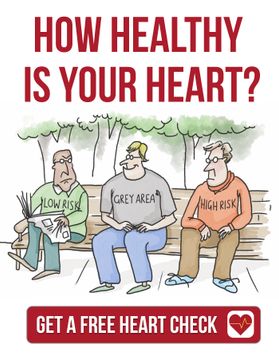
I believe we can prevent heart attack. We can put in place strategies to reduce risk. We can literally plan to change your future. Welcome. My name is Dr. Warrick Bishop and I'm a cardiologist, an author, a keynote speaker and CEO of the Healthy Heart Network. I'm all about trying to help people live as well as possible. for as long as possible and that includes heart attacks which impact Australia enormously. We're talking a heart attack almost every 10 minutes and over 20 people per day dying from a heart attack in Australia. That's on a backdrop of over 9 million people globally being impacted. The sad truth is many of these could have been averted if only we knew what to do. Well, this podcast is all about that. weight, blood pressure, cholesterol, general health and driving in it health literacy. I'm on a mission to help not just prevent heart attack but improve general health on a global scale. If you enjoy this podcast I would be honoured if you could give it a five star review and share it with your family and friends. It may even lead to saving someone you love. Pablo Miller, good morning to you on the phone. He's a practicing cardiologist. He's been on Mighty HQ before. Best-selling author, keynote speaker. We welcome Dr. Warrick Bishop. Good morning to you. Good morning, Chris. Thank you for having me. Great to talk again. We're going to lead in this morning with cholesterol, which obviously can be a factor to heart problems. Do you want to give us the background on the cholesterol side of things? Yeah, there's a lot of talk out there about cholesterol and lots of people are interested in it because we measure it and we often are aware that it's in association with heart attack. But it's a pretty simple little compound. It's a ring of carbon atoms. It occurs naturally. We actually make it in our own bodies. We use it for a couple of major things. Cholesterol is a component of the cell wall of every cell in our body. So we need it. to make things. It also helps us carry some vitamins around in our body, particularly and specifically the fat-soluble vitamins. These are vitamin A, vitamin D, the one we get from the sun, and vitamin E, which is a bit of an antioxidant, and vitamin K that we use for coagulation or how quickly the blood clots. And we also use cholesterol for making male and female hormones. foundation building block for some of those male and female hormones. But importantly, and the reason we're talking about it, is it can end up in coronary arteries and give rise to problems. So there you go, cholesterol in a nutshell. Would there be any warning signs about a potential problem without having that checked? Look, that's a really good question, Chris. What we find is that as cholesterol builds up in the arteries, it can build up gradually. And as it builds up gradually, if it causes a narrowing in the artery, then that person may get symptoms from lack of blood flow if that narrowing is too tight. So they walk up a flight of stairs and feel some tightness in their chest. But that cholesterol, before it gets to that tight, can be unstable. And the very scary thing and the interesting thing about what we find is that about 40% of heart attacks 40%, so nearly half, occur in arteries that are not narrowed prior to the time the cholesterol plaque ruptures and a clot or a thrombus closes the artery off. So for 40-odd percent of people, they have absolutely no prior warning that there's a buildup of plaque in their arteries that may rupture and may block blood flow. So I would assume the other side is regular checks with your doctor to see how things are going and being aware of your diet is a big factor? Look, there's a lot of associations, Chris, and it's really important to look after cholesterol, look after diet and exercise. These things are really important. And, of course, things like blood pressure, smoking, being overweight. sugar or risk of diabetes and so on. But one of the things, and we might have talked about this before, one of the things that's extremely important is to understand the difference between association and causation. And using cars as an analogy or as an example, you and I would agree, speeding and alcohol are closely linked to car accidents. But if we think about it, they're not causative because every time someone speeds, they don't crash. And every time someone has some alcohol, they don't crash. And the reverse is true. People who have not been speeding and people who have not been drinking can have a car accident. And the problem with all this is it's the same with us. We can do all the right things and unfortunately we can still have a heart attack. We can do all the wrong things and surprisingly not run into trouble. And I bet there's people listening to this. who know someone who's fit and well and appeared on the outside to do everything right, but still had a heart attack. This is Mining HQ. We're talking to Dr. Warrick Bishop. We're going to take a break and then we'll come back and we'll talk about assessing heart risk using a scanning method. Mining HQ this morning, talking to practicing cardiologist, Dr. Warrick Bishop. Dr. Warrick, the virtual heart check, this is something we can do for ourselves online? Well, look, Chris, What I realized was that time's precious these days and there's always barriers to maintenance. All of us are busy putting out fires rather than, if you like, clearing the shrub and the undergrowth from around the house. So the heart's exactly the same. What I find is that people just don't have the time to put in the maintenance that they need for their heart health. And as I was talking about before, realizing that there can be people who look fit and well on the outside and have no symptoms, one of the ways to get around that to truly find if those people are at risk is to take a scan of their heart. Now, normally that takes a couple of steps. You have to go to the GP and the GP might send you to a specialist and the specialist might send you for a scan and then you go back. And honestly, for many people, that is just too many obstacles in the way. So what I've done is I've set up with a... a group in Sydney, a business support person, a website that allows people to literally jump online, answer a couple of questions to find if it's appropriate for them to consider getting a scan, and then for only $300-odd, purchase a scan in any major centre in Australia. And then you just turn up, get your scan done, head home, the results will go to the GP, the results are sent to the patient. and it starts the ball rolling. It's the first step in really being precise around an individual's risk of heart attack. It takes the guesswork out and really takes the fear out, Chris. So how good is that scan for? Is it something to do annually? So the scan is called a coronary artery calcium score. In Australia at the moment, the current sort of use of that scan would be for men 50-odd years of age and above. and women 60 odd years of age and above. And if the scan's completely clear, then general recommendations will be to go back and get it done again in five years. And in the meantime, look after your health. Keep your blood pressure down, keep the exercise up, the good diet, and make sure you're not smoking and make sure that your sugars are not creeping up. But if everything's clear, you'd go back and do it again in five years. And if everything's not clear... then you've got some really good information to say, hey, here's a potential problem in the future. Speak with your GP because they'll have that information and you can take the next steps to start mitigating that risk, start avoiding you being a statistic of heart attack. Well, before we wrap up here, how are your podcasts going? Do you want to tell our listeners how they can actually listen in? Look, thank you. Chris, I'm up to over 200 podcasts. Oh, wow. I've had some really nice feedback. They're available through just about every platform. I know I've got plenty of patients who listen to my podcasts through Spotify. I cover all sorts of bits and pieces, from the opportunity to interview the original Yellow Wiggle, to interviewing Darren Lehman, who was the coach of the Australian cricket team, to talking about children and consultations, to talking about cholesterol, blood pressure. And last week I even recorded podcasts on the difference between grass-fed and grain-fed beef. And look, I've had really nice feedback and I'd love it if your listeners found some enjoyment and information in them. So Dr. Warrick Bishop, we just do a search and it all comes up? Yep, you should find me pretty easily. If you're after my website, drWarrickbishop.com, if you're after the virtual heart check, simply put in virtual heart. check.com.au. And if you're after my podcast, go to your favorite platform, whether it's Apple or Spotify, search me, subscribe. And if you enjoy it, please give me a five-star rating. And if you don't enjoy it, just keep that to yourself. Join the Healthy Heart Network and become part of our growing community. Do you want to know more about your heart health and know more about your risk of heart attack? For $5 get lifetime access valued at over $55. The Healthy Heart Network has been designed to support and help you understand your risk of heart attack, your risk level where you are right now and the positive steps you can take to reduce that risk. Check it out at www.healthyheartnetwork.com and press the join the family button.