Welcome to the Younger Longer 14-Day Cholesterol Challenge. My name is Dr. Warrick Bishop. I'm a preventative cardiologist and I'm super excited that you're looking to look after your cholesterol. It is one of the most important and really one of the simplest things you can look after to look after your heart for the rest of your life.
During this 14-Day Challenge, I'm going to share with you a whole lot of stuff. Every day, a video, some resources, a challenge or a task for you to complete and a fun fact. Stay tuned, your cholesterol is super important. Let me explain to you how, what you're going to do about it and how you're going to look after yourself for the years ahead!
Why Listen?
- Get practical tips and science-backed advice you can apply immediately.
- Learn from real-world examples and medical expertise.
- Gain daily challenges to help you stay engaged and track progress.
- Take charge of your heart health in a simple, effective, and engaging way.
Takeaways:
- ApoB, particle size, and emerging biomarkers
- When to consider advanced testing
- The limitations of a standard lipid panel
Fun Fact: ApoB gives a direct count of atherogenic particles—not just their cholesterol content.
Daily Task: Read about ApoB online and note one question to ask your doctor. - Resource : https://www.acc.org/latest-in-cardiology/articles/2021/11/22/13/11/utilization-of-clinical-testing-in-the-setting-of-dyslipidemia
Transcript:
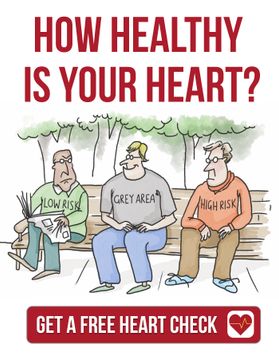
Are You at Risk of a Sudden Heart Attack? How Healthy is Your Heart? Really?
Heart disease is the #1 killer in the Western World. In Australia, someone dies every 28 minutes from heart disease. That’s 51 people a day. In the US, someone has a heart attack every 40 SECONDS! Fortunately, many heart attacks are preventable. However, regular exercise and eating healthy are no guarantee you won’t succumb to this silent killer.
- 94% of Australians have at least One Risk Factor for heart disease.
- 59% of Australians have been Touched by heart disease.
- Yet only 3% of Australians have had a Full Heart-Health Assessment in the past 12 months.
Do the free heart check today at www.virtualheartcheck.com.au
Join the Healthy Heart Network and become part of our growing community!
Do You Want to Improve Your Heart’s Health and Reduce Your Risk of Suffering a Heart Attack? Join The Healthy Heart Network For Only $5 Lifetime Access (Valued at over $55)!
The Healthy Heart Network is designed to help members:
- understand the present state of their heart’s health
- recognise their current level of risk of suffering a heart attack
- Learn the positive steps they can take to improve their situation
Visit https://healthyheartnetwork.com/ and click on the JOIN THE FAMILY BUTTON