Welcome to the Younger Longer 14-Day Blood Pressure Challenge. My name is Dr. Warrick Bishop. I'm a preventative cardiologist and I'm super excited that you're looking to look after your blood pressure. It is one of the most important and really one of the simplest things you can look after to look after your heart for the rest of your life.
During this 14-Day Challenge I'm going to share with you a whole lot of stuff. Every day, a video, some resources, a challenge or a task for you to complete and a fun fact. Stay tuned, your blood pressure is super important. Let me explain to you how, what you're going to do about it and how you're going to look after yourself for the years ahead
Why Listen?
- Get practical tips and science-backed advice you can apply immediately.
- Learn from real-world examples and medical expertise.
- Gain daily challenges to help you stay engaged and track progress.
- Take charge of your heart health in a simple, effective, and engaging way.
Transcript
Hi and welcome to Day 13 — and today is a really important one.
We often talk about blood pressure being a silent killer. It can lead to serious conditions like stroke, heart attack, cardiac failure, atrial fibrillation, renal (kidney) failure, and even dementia.
But can we tell if any damage has already been done?
Well, it turns out that we can. One way to assess this is through a test called a Coronary Artery Calcium Score — also known as a CAC.
A CAC scan measures the amount of calcium built up in the heart arteries. It’s a direct marker of atherosclerosis — or, in simpler terms, plaque buildup in the arteries. This scan is one of the most accurate predictors of future heart attacks and, in many cases, it outperforms traditional risk assessments.
So instead of guessing your heart attack risk based on cholesterol or blood pressure alone, a CAC scan gives us a much clearer picture.
If your score is zero, your risk of a heart attack over the next five years is remarkably low. But if the score is elevated, it helps guide our decisions about how aggressive we need to be with treatments — whether it’s managing cholesterol, blood pressure, or other cardiovascular risk factors.
To help make this accessible, I created the Virtual Heart Check platform. You can go online, answer a few questions, and book a Coronary Artery Calcium Score — all without needing to see a GP or specialist. It saves both time and money and works in every major centre across Australia.
I highly recommend getting a CAC scan. It breaks down barriers and makes this important test more readily available.
If you're unsure, have a conversation with your doctor about getting a coronary artery calcium score.
In my opinion, just about every man aged 45 to 50 and above should be getting this scan — and every woman aged 55 to 60 should as well. I see it as a rite of passage in your health journey. If you have family history or other significant risk factors, it’s worth considering getting the scan even earlier.
So, check it out, and take action.
Tomorrow, I’ll be talking about the final wrap-up for this 14-day challenge. Just remember — your heart beats 35 million times a year, so we really do want to look after it.
I look forward to speaking with you again tomorrow.
Until then, I hope you live as well as possible, for as long as possible.
Take care and bye for now.
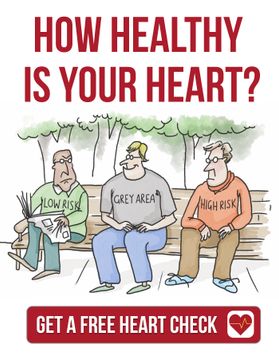
Are You at Risk of a Sudden Heart Attack? How Healthy is Your Heart? Really?
Heart disease is the #1 killer in the Western World. In Australia, someone dies every 28 minutes from heart disease. That’s 51 people a day. In the US, someone has a heart attack every 40 SECONDS! Fortunately, many heart attacks are preventable. However, regular exercise and eating healthy are no guarantee you won’t succumb to this silent killer.
- 94% of Australians have at least One Risk Factor for heart disease.
- 59% of Australians have been Touched by heart disease.
- Yet only 3% of Australians have had a Full Heart-Health Assessment in the past 12 months.
Do the free heart check today at www.virtualheartcheck.com.au
Join the Healthy Heart Network and become part of our growing community!
Do You Want to Improve Your Heart’s Health and Reduce Your Risk of Suffering a Heart Attack? Join The Healthy Heart Network For Only $5 Lifetime Access (Valued at over $55)!
The Healthy Heart Network is designed to help members:
- understand the present state of their heart’s health
- recognise their current level of risk of suffering a heart attack
- Learn the positive steps they can take to improve their situation
Visit https://healthyheartnetwork.com/ and click on the JOIN THE FAMILY BUTTON