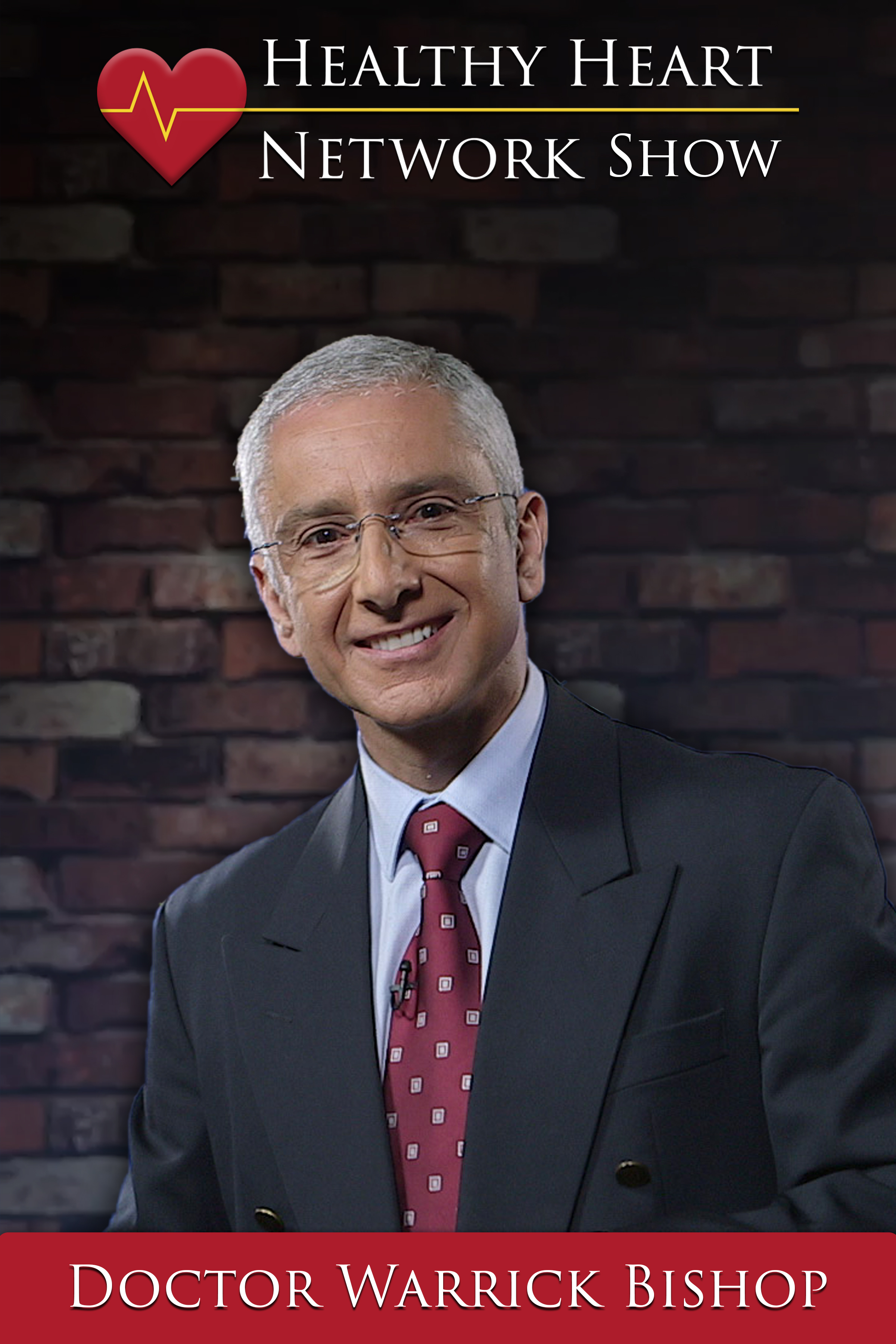
I believe we can prevent heart attack. We can put in place strategies to reduce risk. We can literally plan to change your future. Welcome. My name is Dr Warrick Bishop and I'm a cardiologist, an author, a keynote speaker and CEO of the Healthy Heart Network. I'm all about trying to help people live as well as possible. for as long as possible and that includes heart attacks which impact Australia enormously. We're talking a heart attack almost every 10 minutes and over 20 people per day dying from a heart attack in Australia. That's on a backdrop of over 9 million people globally being impacted. The sad truth is many of these could have been averted if only we knew what to do. Well, this podcast is all about that. weight, blood pressure, cholesterol, general health and driving in it health literacy. I'm on a mission to help not just prevent heart attack but improve general health on a global scale. If you enjoy this podcast I would be honoured if you could give it a five star review and share it with your family and friends. It may even lead to saving someone you love. Hi, my name is Dr. Warrick Bishop and welcome to my podcast and videocast station and thank you for joining me. Look, today I thought I'd share a little bit of my own journey. I enjoy a steak from time to time and I noticed at my local butcher that the price of grass-fed beef was somewhat up through the roof. This made me wonder whether it was worth the extra money or not. Well, a good number of years ago, I had gone through the same experiment with free-range chicken and battery chicken. I'd gone and bought a piece of each and cooked it up in exactly the same way, a clear scientific experiment, and then tasted each. All that time ago, I was completely convinced that the free-range chook was worth every cent extra over the battery product. So I started to investigate grass-fed beef and started to realize that, first of all, there are some recognized nutritional benefits. And one of the benefits is that grass-fed beef seems to have about two-thirds of the fat and therefore reduce calories compared to grain-fed beef. And this is significant. I'm going to use pounds because these are the numbers that I found. But if we thought of an individual on average consuming 65 odd pounds of beef in a year, and we swap that individual from grain fed to grass fed, we would reduce their total caloric intake by about 17,000 calories. Now we eat about 2,500 calories a day, so that actually equates to nearly a week's worth of food. And it turns out that by simply swapping from grain fed to grass fed beef, An individual could lose approximately six pounds in weight over the course of a year, which I thought was quite staggering. Of course, grass-fed beef is less likely to be influenced by antibiotics or hormones compared to feedlot animals, which are likely to get antibiotics to prevent transmission of disease. And certainly... As far as I'm aware, hormones are rarely, if ever, used in Australia anymore, but there was a time where they were being used, and grass-fed animals wouldn't be subject to that. I've done a bit of a taste test. I'm not sure I can tell the difference, but what I did find was that the Huffington Post... did a blind taste in comparing grass-fed beef with grain-fed beef and had a 100% affirmative response to the conclusion that grass-fed beef tasted better, said to have better earthy flavours, better texture of the muscle, and so on. One of the things that really caught my eye, though, was that there are more healthy fats in grass-fed beef. The omega-3 ratio is a really big deal. And we often think of omega-6 and omega-3 oils. And when we look at grain-fed beef, the ratio of omega-6 to omega-3 is greater than 20 to 1. And in our own bodies, we want somewhere around 2, 3 or 4 to 1. When you look at the omega-3 ratio in grass-fed beef, It's 0.16 to 1, meaning there's more omega 3 than omega 6, which is exactly what we want if we want to be looking after our omega 3 index. So the difference in feed has an enormous impact on the fat or oils that the animal produces. This, of course, would have an impact on heart disease on a population basis. It seems grass-fed beef has greater concentrations of conjugated linoleic acid, and there's a little bit of a suggestion that this may be associated with reduced cancer risk. More theoretical than substantial. There's going to be less bacterial contamination. Grass-fed beef has better levels of vitamin B, vitamin D, iron, and carotenoids. And carotenoids are... the compounds that break down to vitamin A. Importantly, your grass-fed beef is better for the environment and, I have to say, leaves you with a feel-good sense about enjoying your beef. While we're talking about grass-fed beef, why don't we talk briefly about grass-fed butter? Pretty well all butter comes with good doses of vitamin A, but grass-fed butter has less saturated fat, greater amounts of omega-3, as I mentioned, more conjugated linoleic acid, and more vitamin K2, vitamin K2 being healthy for your bones. Grass-fed butter also has... Greater levels of beta-carotene, which converts to vitamin A. Beta-carotene being that orange substance that we associate with carrots, which is why we say carrots help us see in the dark, because vitamin A is required for retinal health. There's also some suggestion that vitamin A is important for type 2 diabetes and some cancer. So reduction of progression to diabetes and reduction of development of some cancers. Personally, I've found a grass-fed butter that I'm using in the morning in my coffees and I'm making a butter coffee or a bulletproof coffee and enjoying that as a great way to start the day as I continue a restricted eating regime where I tend to eat in an eight-hour window. And that bulletproof coffee or that butter coffee helps me get going and sustains me till about lunchtime. So there you go. Grass-fed beef and butter. Is it worth the extra dollars? Well, probably is if you can get it. Certainly there's some good health reasons. And from all accounts, it's got a better taste. and certainly makes you feel better about the planet. I hope you found that interesting, because I found it really interesting pursuing all this, and we've got some grass-fed beef now in the freezer, ready over the next weeks to enjoy and consume. I'm going to wish you the very best. If you do have any queries or questions, drop us a note at info at drorichbishop.online. Till next time. Again, I'd like to thank you for joining me and I'm going to wish you the very best and hope you live as well as possible for as long as possible. Take care and bye for now. Join the Healthy Heart Network and become part of our growing community. If you're interested in your heart health and risk of heart attack, then join the Healthy Heart Network. for only $5 as a lifetime member. This represents $55 worth of value. We offer and help people understand their present state of heart health, what their current level of risk is and the positive steps they can take to improve their risk of heart attack in the future. Go to www.healthyheartnetwork.com.au and click the join the family button.