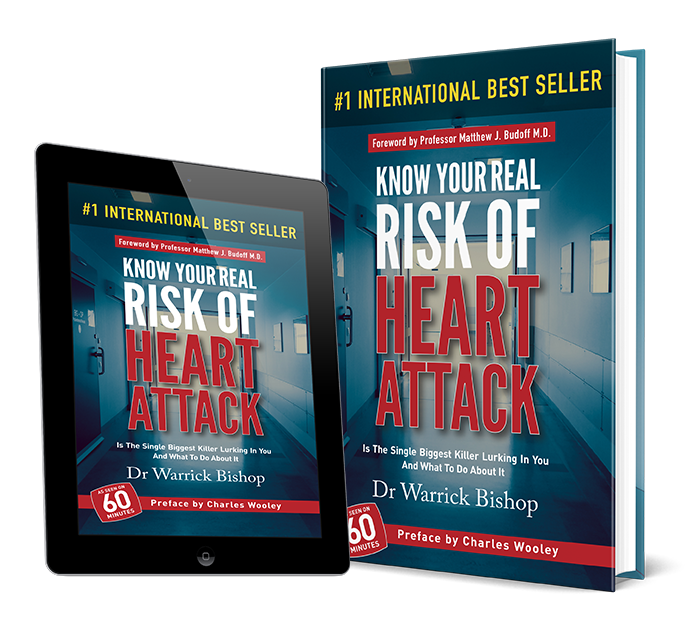
Welcome to Dr. Warrick's podcast channel. Warrick is a practicing cardiologist and author with a passion for improving care by helping patients understand their heart health through education. Warrick believes educated patients get the best health care. Discover and understand the latest approaches and technology in heart care and how this might apply to you or someone you love. Well, we're constantly hearing about the benefits of exercise, but what we don't hear much about is that certain types of exercise are better than others when it comes to heart health, as cardiologist Dr. Warrick Bishop explains. It is great to be chatting with you, Warrick. Jim, it's great to be chatting with you as well. Thank you for the opportunity. You've broken this down into three areas, the best exercise, incidental exercise, and then the worst exercise. So let's start with the top on the best, and that is regarding interval training. So for those who don't know interval training, just tell us a bit about that and why it's potentially beneficial. Look, we see interval training really as it's described, as the name depicts. It's the opportunity to undertake bursts of exercise. interspersed with recovery and to a degree this allows you to push a little bit harder. So you do a greater intensity for a shorter time with breaks in between. So that greater intensity seems to have some benefit in preconditioning the muscles and the metabolism subsequently when you finish that exercise. Is this something that should be reserved for people who are currently exercising as opposed to somebody who's stepping into exercise for the first time or perhaps returning to exercise after a layoff? Look, that's a great question and we really have to be careful to ease into it, particularly as we get a bit older. The likelihood of injury, the likelihood of some muscle strain or so forth is really much greater. There's no question if you're going to undertake interval training, you need to build up to it. All right. Number two is incidental exercise. Can you give us some examples of what incidental exercise might look like? Well, plenty of people these days have pedometers or they have step counters that they have on their wristwatch and they can track their incidental exercise like walking to work, around the office space, from their car to their job or shops. But you can add and increase that incidental exercise by perhaps choosing the stairs rather than the elevator, by perhaps parking your car a little bit further away than you normally do when you're going to the shops or to work. The opportunity, though, to do other sort of bits of exercise could be that you might do some squats between hanging out the washing, for example. So you can actually figure a little bit of incidental exercise in there. in lots of different ways. One of the fascinating things that I came across recently was someone's done a study on people who fidget and bounce their knees or wriggle a worm while they're sitting and believe it or not, that actually burns up extra calories. Oh my gosh. Fidget in your seat while you're working. Right. You would be using extra energy. Okay. Well, that's good to know. And number three, the worst exercise. Now, this is talking about doing vigorous exercise suddenly. And, you know, we kind of touched on that a little bit with interval training. But what are the dangers on the body of launching into vigorous exercise before we're really ready for it? Some common sense should dictate here, Tim. What really is a concern is older blokes like me, for example, suddenly getting the urge to get fit and perhaps run a marathon, but without any preparation, without any warm-up, without checking with my doctor, that you're okay to undertake that exercise in the first place. What other issues might be going on? And then when you do undertake it, you want to ease into it because starting up cold, you're likely to hurt yourself. So any concerns regarding any of that and exercise a simple trip to the GP just to clarify? Look, I think maintenance is incredibly important in particularly heart health and my area of interest is prevention of heart attack. I've written books about that and that really is an area of expertise where I'm able to contribute in different organizations to policy. Please, if people do want to undertake exercise, which is fantastic for your health, get a checkup as well. It's really worth doing. My special guest has been cardiologist, Dr. Warrick Bishop. And as he mentioned, he's written a couple of books. He's the author of Have You Planned Your Heart Attack? and Know Your Real Risk of Heart Attack. And you can find details at haveyouplannedyourheartattack.com.au or at his website, which is simply drWarrickbishop.com. Warrick, pleasure chatting. Thank you for your time. We'll talk again soon. You have been listening to another podcast from Dr. Warrick. Visit his website at drWarrickbishop.com for the latest news on heart disease. If you love this podcast, feel free to leave us a review.