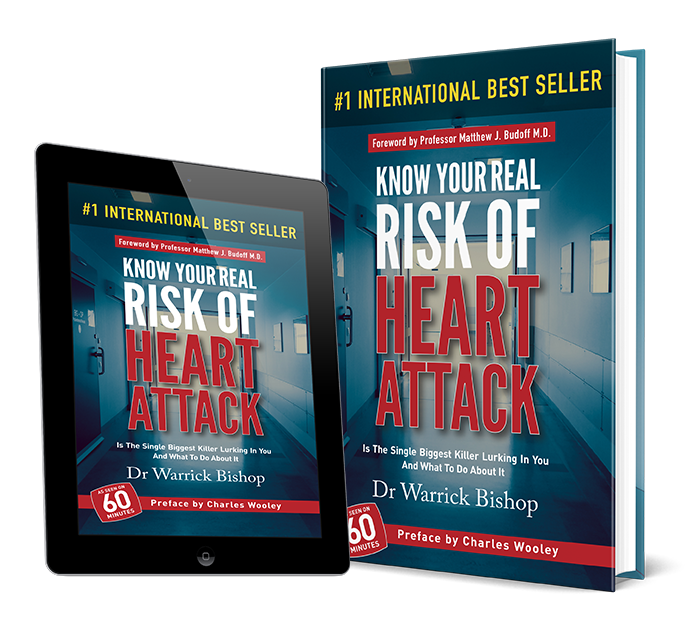
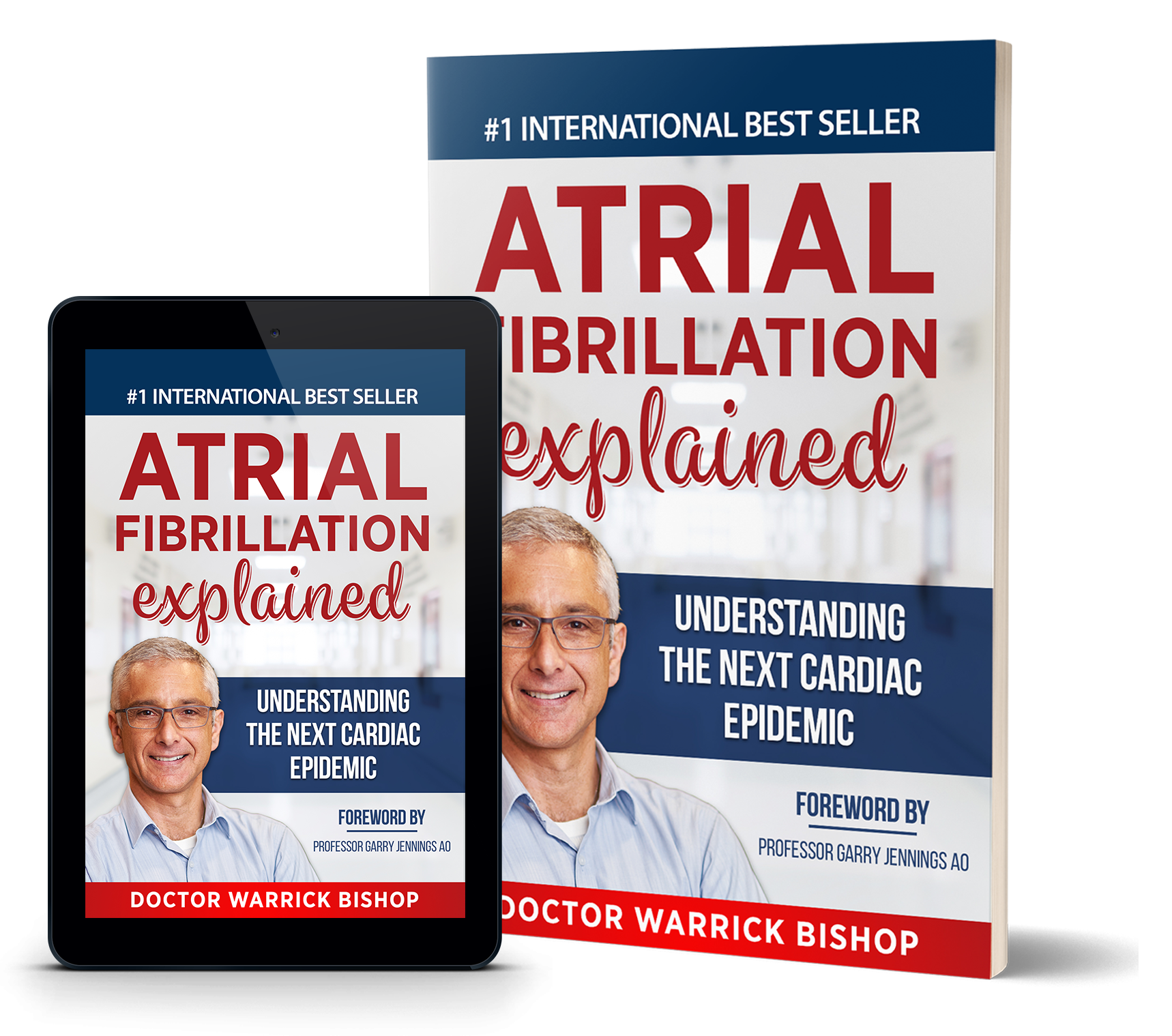
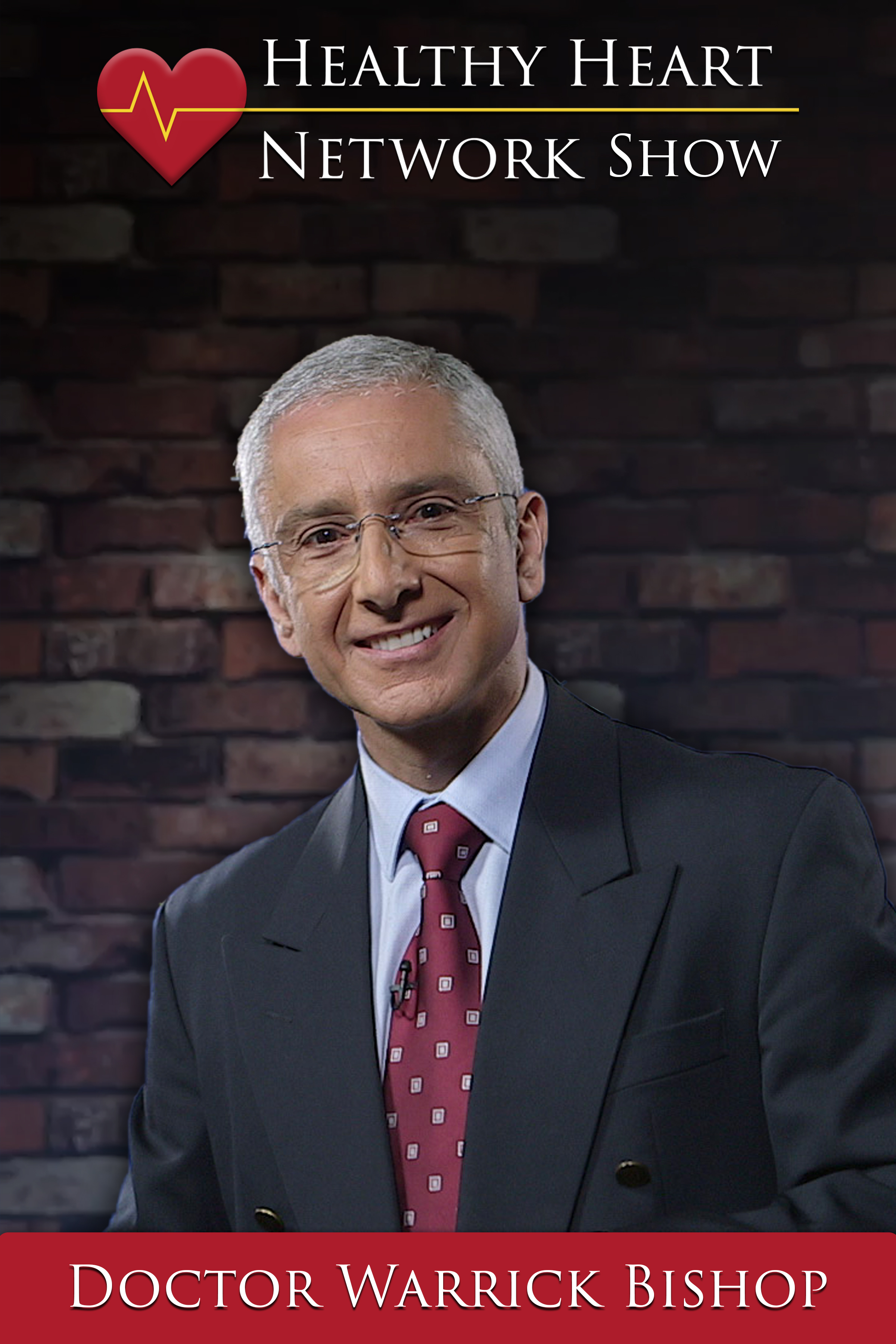
Welcome to Dr. Warrick's podcast channel. Warrick is a practicing cardiologist and author with a passion for improving care by helping patients understand their heart health through education. Warrick believes educated patients get the best health care. Discover and understand the latest approaches and technology in heart care and how this might apply to you or someone you love. All right, guys, WMAP, world's most amazing people. Guys, I got something special for you guys. I have a guest calling all the way from Australia. Warrick Bishop is a cardiologist. He's an author of such great books as Have You Planned Your Heart Attack and Know Your Real Risk of Heart Attack? And there's one more that we were just laughing about because I couldn't. pronounce it, but if you go to drWarrickbishop.com, you can get more information. So guys, with no further ado, it's my honor and my privilege to bring to WMAP Mr. Dr. Warrick Bishop. Dr. Bishop, how are you? I'm very well, Casey, and it's an absolute pleasure to have the opportunity to speak with you. Yeah, I'm honored that you're here. The second book, sorry? I'm honored that you're here. Look, the second book is Atrial. Fibrillation Explained. Yeah, I couldn't say that. No troubles. Yeah, so tell me about the latest one is Know Your Real Risk of Heart Attack, correct? So I've written two books, Casey. The first that I put out, or the most recent one is Atrial Fibrillation Explained, where I talk about a very, very common condition. that we see with people with problems with their hearts. Atrial fibrillation is an irregular beat of the heart, which we see in nearly 20% of people over 80 years of age, and it occurs across the population at a rate of about 1%. But the thing about atrial fibrillation is it's difficult to manage, but it can cause stroke and terrible suffering, and it's... a very complicated condition that often patients just need a bit more information about. So I've put something together to help them in their conversation with their doctor on a regular basis so that they have the best understanding possible. Wow. And then what is the one that's called Have You Planned Your Heart Attack? What is that about? Look, Casey, I believe we can prevent heart attack, and I believe that there's a gap. a real space between what we currently do using population-based risk assessment to try and ascertain someone's risk of a heart attack versus the opportunity of using modern technology to be more precise. And I think we can actually be more proactive. We can actually be very specific about people's risks by using the latest technology. Currently what we do is... We do risk calculation, which is a bit like rolling the die and gambling on what the chance of someone having an event is in the next four or five or ten years. And I think we can do better. And I think people need to have that information so that they can have that conversation with their doctor about whether it's appropriate for them or not. Yeah, that makes sense, because there was something that happened to you that got you started on this whole mission to prevent heart attacks and to tell people about it. You want to talk about that experience, what happened? Casey, that's entirely true. I was heading to work on a weekend morning. During the time, there was a fun run in progress. I saw that there was a commotion by the side of the road and thought I would help. It turned out that a man had collapsed, literally died. During the fun run, he was resuscitated. He did extremely well. He actually made the front page of the local paper. I was so pleased with the outcome I showed my staff, only to have them point out that I had seen this man 18 months earlier and not predicted that event. I'd literally failed this man. And what I'd done was use current approaches, current guidelines. And I realized that just wasn't good enough. Really, it was staggering and it pivoted my whole career, opening my mind to looking at what's most available, what can we do better, how can we be proactive, how could I never be in a situation where I stop at a roadside to resuscitate someone who is a patient who I'd reassured. It was just... Not good enough, Casey. Wow. That is such a coincidence. Wow. I mean, that kind of blows your mind when you think about that. What are the odds of that happening? It's insane. But I'll tell you what's really incredible. This very same patient has now recovered, and now some 15 years on, or 10 years on, actually, he now comes back and sees me as a patient because he realizes my interest in prevention. Wow. Can you believe that? No, I mean, that's... I would have thought he'd never want to see me. Right, right, right, right. But you were just going by what, you know, they go by the calculations. That's what you did, right? Yep, yep, absolutely. And these days, the book I've written, Know Your Real Risk of Heart Attack, the forward of that is written by Professor Matthew Budoff, who's a world leader in imaging the heart, works out of UCLA. So I've got the opportunity to share fantastic knowledge with people, to give them information, for them to drive a conversation and say, look, is this for me? Should I have this sort of testing? Could I be at risk of heart attack that you're unable to predict, but there are other ways we can look at it? Well, that's awesome. And another thing that you concentrate on, too, is that not all doctors are aware of most of the current information and the techniques, right? Well, that's entirely true. I've made my last 10 years a career in prevention, which means that that's my space of interest. I'm not a cardiologist who puts in pacemakers, for example, so I wouldn't claim to be the best in that space. But I know when you work in an area, and you know this yourself, if you've been in radio for many years, you learn stuff that people who have just started in radio or are not. routinely in radio, just don't understand. And so I think there's information, which is not through lack of awareness or understanding, but just lack of experience and lack of not being in an area. There's information that not all doctors know. Yeah. And that's not a surprise. Yeah. Guys, if you're just tuning in right now, I'm speaking with Warrick Bishop, Dr. Warrick Bishop. He is a cardiologist. He's also an author of Three very, very helpful books, and I can't imagine how many lives you've saved with this information, Dr. Warrick. Everybody can go to the website. Go to drWarrickbishop.com. I think that's incredible. Do you ever think about that, doctor? Look, I had an amazing story just in this last couple of weeks. I had a patient who, while he was in a car driving on one of the local roads, The driver of the car, because there was a passenger, the driver of the car had a heart attack. It turned out that everyone was saved. They were able to prevent the vehicle from crashing. But this patient, let's call him John, John ended up really shaken by that. One thing led to another, and he came across a copy of my book, which he read. He came to me and said, look, can you check me out? Because this was terrifying. We checked John out and Casey, we found he had terrible coronary artery disease that left untreated, could well have left him at unacceptable risk of him driving, dying behind the steering wheel of a car. We've put him on all the appropriate medications, we've educated him and we've put him on a surveillance plan. I truly believe we've had the opportunity to save his life. And he turned up because he had the chance to get the information so that... he could seek what would be the best care for him. Look, at the end of the day, Casey, my strong belief is the best educated patients get the best care. And that's why I wrote the book on atrial fibrillation, because it's so common. And that's why I wrote the book initially about preventing heart attack, because I'm so deeply passionate about trying to prevent people having these events that are so tragic. And really, I'm avoidable. Yeah, doctor, you're doing some incredible work and you're really helping people. So that makes you one of the world's most amazing people in my book. Guys, go to DrWorkBishop.com. DrWorkBishop.com. Check out his books. You can get them on Amazon.com too. You know, type in, pick up, know your real risk of a heart attack. Have you planned your heart attack? And atrial fibrillation explained. Maybe. I got it close. I don't know. Dr. Bishop, I appreciate you coming on, and keep doing the great work that you're doing, and I'd love to have you back on and talk about it soon. Thanks very much, Casey. Absolute pleasure to join you. All right. God bless you. You have been listening to another podcast from Dr. Warrick. Visit his website at drWarrickbishop.com for the latest news on heart disease. If you love this podcast, feel free to leave us a review.