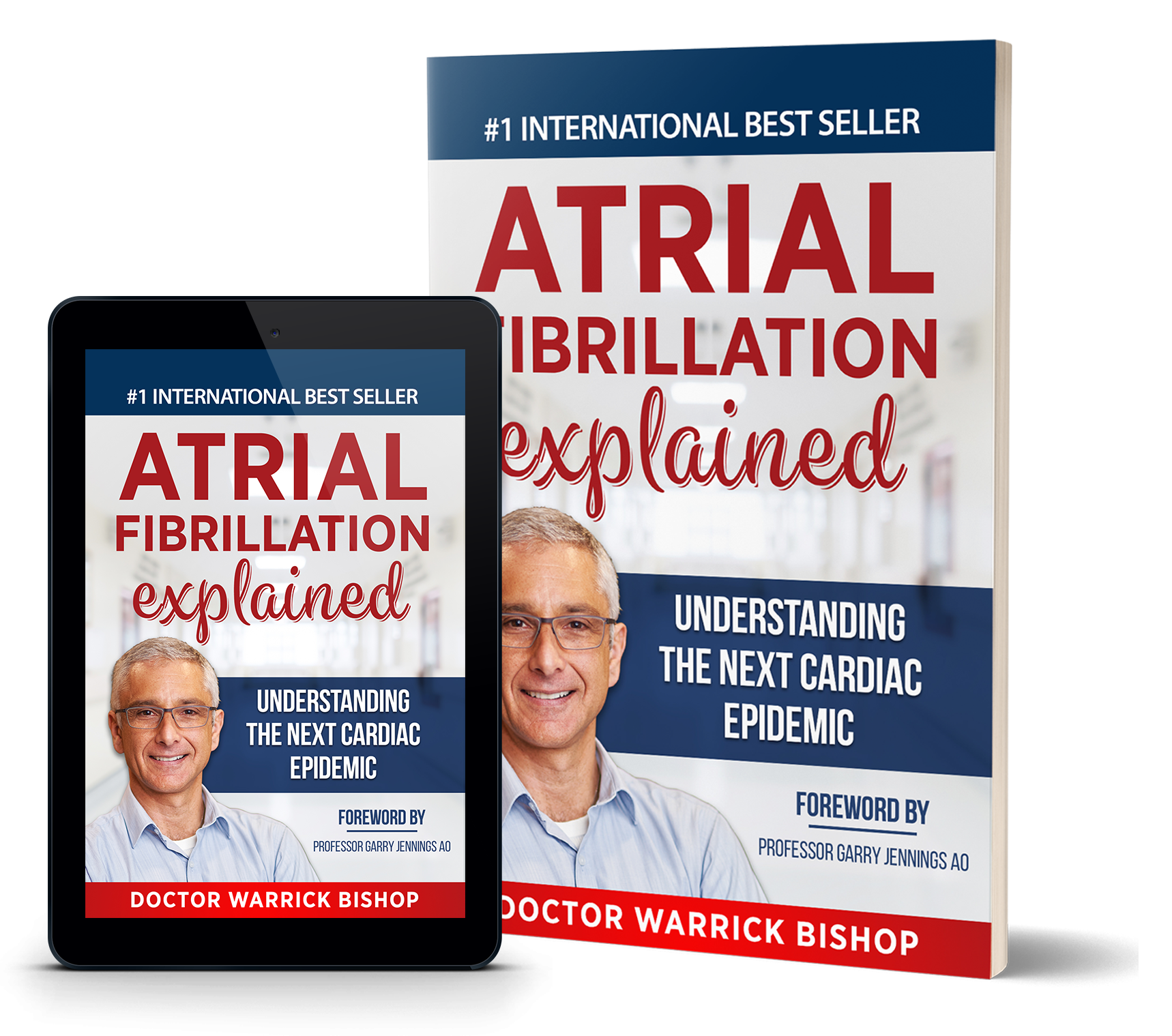
Welcome to Dr. Warrick's podcast channel. Warrick is a practicing cardiologist and author with a passion for improving care by helping patients understand their heart health through education. Warrick believes educated patients get the best health care. Discover and understand the latest approaches and technology in heart care and how this might apply to you or someone you love. Warrick Bishop here and welcome to my podcast and videocast channel and also to the Healthy Heart Network. Today I'd like to speak with you a little bit about blood pressure. In the last few weeks I've had a couple of patients raise the issue of blood pressure and in particular I had one patient whose GP reduced their medication based on blood pressure. So I'd just like to talk a little bit about that. Of course blood pressure is very, very important. It is the work that the heart does. The heart is a pump. And if you think about it, if the pump is pumping into a system, then the pressure within that system is a direct reflection of the effort that that pump is making. Makes common sense. So I want you to understand, if you possibly can, The very simple concept that the lower the blood pressure, the less effort, the less work the heart is doing. And in terms of reducing work for the heart or reducing work for a pump, for that matter, the lower you can run the workload for any machine, including the heart, the better you will be able to preserve that machine, the less. wear and tear on that machine just think about it it's a no-brainer to think if your heart is pumping at 160 millimeters of mercury for a lifetime that has to be more wear and tear on your heart and your vasculature compared to if your heart was beating at 110 millimeters of mercury for your entire life okay So we're agreed, blood pressure, really important in terms of the work that the heart does. And really important in terms of the wear and tear that the heart does. I've spoken about this before. The wear and tear that we're particularly concerned about when it comes to the heart is the effect on the muscle and the effect on the chambers. Both the chamber, which is the left ventricle, the main pumping chamber, but the pre-chamber to the left ventricle, which is the left atrium. That left atrium will dilate if people have high blood pressure. The left ventricle will thicken up if people have high blood pressure. We will see individuals run a greater risk of developing a condition called atrial fibrillation, which I might just add, I've recently released a book on. So if you have atrial fibrillation and you're interested, please look it up because I've got a lot of detail in there. Try and explain this very complicated condition. But one of the things we really want to treat... To reduce the risk of atrial fibrillation occurring in someone's lifetime is blood pressure. The other thing that we want to treat blood pressure for is if we wear the engine out, then the engine can fail. If we wear the pump out, the pump can fail. If we wear the heart out, the heart can fail. And a failing heart is called cardiac failure, no surprise. So raised blood pressure over a lifetime can drive us to cardiac failure. Really importantly, if someone does have cardiac failure, if their heart is not pumping properly, what we want to do to help that heart is lower the blood pressure as much as possible. Does that make sense? Of course. Imagine you had a vehicle or a car where the engine was a little bit dodgy. I had one at university. It was an old 1964 Volkswagen Beetle. Now, I used to drive that car along the flat, no problem at all, but I was rather judicious and careful. if I had to take it up hills because it just didn't have the pump or the energy or the engine capacity to do that. It was a bit worn out. When it comes to your heart, if you've got cardiac failure, we want to lower that blood pressure. We don't want you going uphill figuratively. We want you travelling on the flat so that that heart can recover. So on to the story in regard to the patient I saw this week. Patient comes in, he's on a group of medications for heart failure, which he's had for a number of years. Thankfully, he's been very stable. One of the tablets that he's on is a tablet called Bizoprolol. You don't need to remember that name, but it is for cardiac failure. It is a class of beta blocker. Beta blocker. So these agents slow the heart rate and can lower the blood pressure. These beta blockers we really often try and push to the highest tolerable dose that a patient can cope with. Because if the patient feels fine on the highest possible dose, we believe that's doing the best job for the heart. Well, this particular patient had been running on 10 milligrams of bisoprolol for a long time without any problems at all. His GP, who's a very good GP, has been following up regularly. but the GP recently took this patient's blood pressure and noted it was low. With that, he suggested that the bisoprolol 10 milligrams be halved to bisoprolol 5 milligrams. I saw the patient several months later. In fact, it was just this last week. My question to the patient was, did he have any symptoms? Was there any sign? that his blood pressure was too low in terms of this patient's activities of daily living. Was it impacting him in any way? It turns out the patient had no symptoms whatsoever. Here's the take-home message. In general terms, we measure blood pressure to see if it's too high and we need to bring it down. We don't measure blood pressure to check if it's too low and we need to raise it. Low is always good. In this situation, this patient had no symptoms. I've put him back on his maximal dose, which we know is best for his heart. There is no question that at times we do over-medicate people when it comes to blood pressure. And in that situation, the patients will describe problems. They'll say, when I stand up, Doc, I'm lightheaded. When I squat and stand up, I'm lightheaded. I get out of bed and I'm wobbly. Then we can measure the blood pressure, see where it is and match it up with the symptoms. If the symptoms sound like low blood pressure and measuring the blood pressure confirms it's low blood pressure, then of course we need to wind back. on our blood pressure medication because we're causing problems, we're causing symptoms, we're impacting that patient on a daily basis. But if you're taking your blood pressure medication, your blood pressure is beautiful and low, in fact, low enough to be a teenager, then there's no reason to back off on your blood pressure therapy. Only if there's symptoms. If there's no symptoms, Keep doing what you're doing and know that you're giving your heart the lowest workload it can deal with. You're giving it the best chance to function and you're reducing wear and tear on it in the long term. So blood pressure, it's a fantastically important thing. We always want to be pulling it down. We want it as low as possible without causing symptoms. But if it's low and there's no symptoms, there's no concern. I hope that makes a bit of sense. I really appreciate you joining me on my podcast and videocast channel. I'm really hoping you're getting something out of the Healthy Heart Network and all the resources available through my website and the Healthy Heart Network website. Please, if you have any queries or questions, drop us a note because I'd love to hear your questions. And if you've got any suggestions for a topic for a podcast, please also let me know. For now, until next time, I wish you the very best. Good health and goodbye. You have been listening to another podcast from Dr. Warrick. Visit his website at drWarrickbishop.com for the latest news on heart disease. If you love this podcast, feel free to leave us a review.