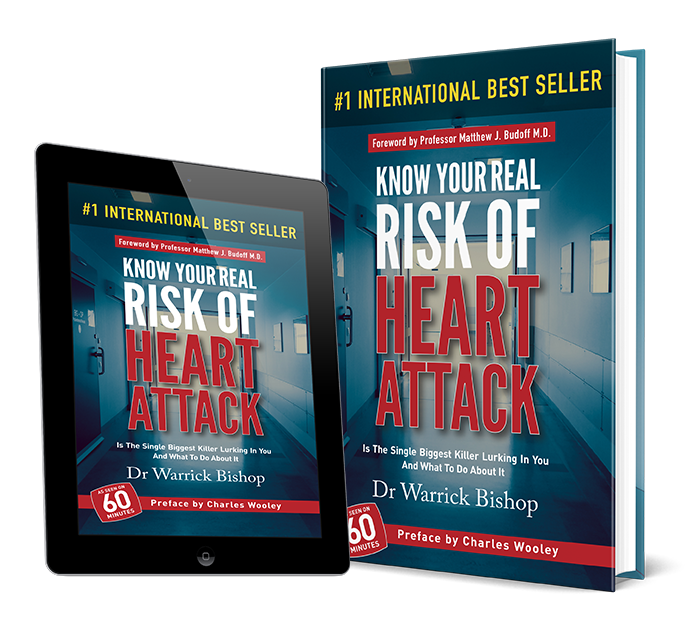
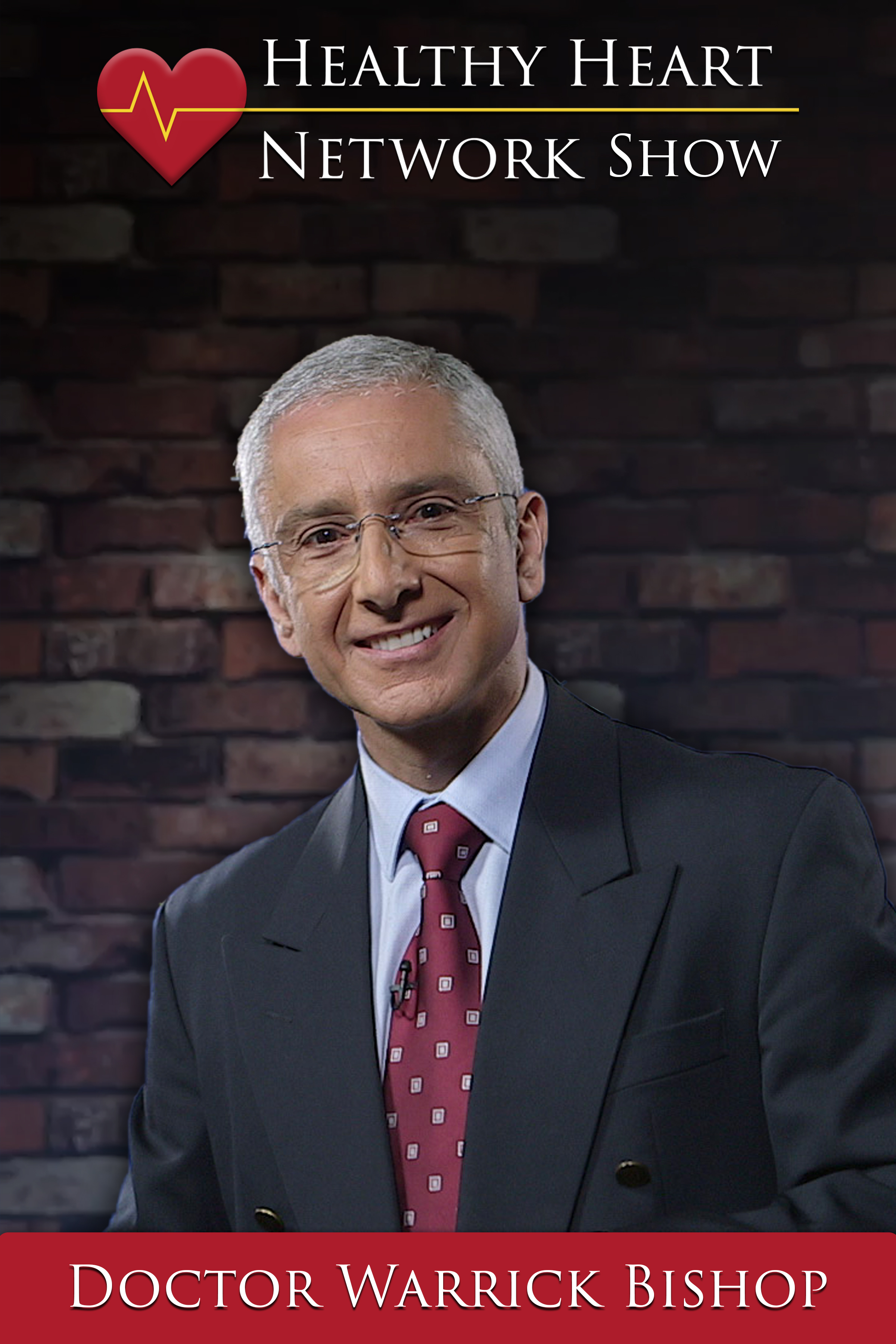
Welcome to Dr. Warrick's podcast channel. Warrick is a practicing cardiologist and author with a passion for improving care by helping patients understand their heart health through education. Warrick believes educated patients get the best health care. Discover and understand the latest approaches and technology in heart care and how this might apply to you or someone you love. Hi, my name is Dr. Warrick Bishop and I'd like to welcome you to my podcast station. Today I've got a consultation interview with one of my patients, Wayne, and his wife is in attendance. Her name is Maureen. They have both agreed and consented to me recording this consultation and I'm going to share it because Wayne's story is one that I think should be shared. I'll just confirm that you... Wayne and Maureen are happy for me to record this. That's correct. Yes. All good. And I'd like to welcome you, Wayne and Maureen. Thanks for letting us record this and thanks for sharing your story. You're welcome. Cheers. I'll start off with you, Wayne. It's probably been a few months that I've been caring for you. If I recall, when I first caught up with you, you were by yourself. Yes, I was. Yes. What your story was and why you came to see me? I've always felt that I was a reasonably fit person. I've just turned 65. When I turned 60, I mulled over it for about five years, thinking that I really wanted to have a check, a proper heart check inside, rather than just going to the GP and having blood pressure taken. And yeah, so it took me five years and I think I discovered preventative heart care before you told me about it because I walked up to you and said I'd like to be checked out and I'm grateful that I did because we found a problem. So just in terms of your own journey, obviously at 60 you started to think about getting a proper heart check. You used the term proper heart check. What was your understanding or had you come across any information that... made you realise there was something more out there? Look, the short answer is no. It's just that I thought there has to be something out there. Surely, rather than just going to the GP, having a check-up, listen to your heart with a stethoscope, take your blood pressure, I could walk out the door and collapse because I know that's happened before. I know there are stories about that. So I just knew that there was a way of... People have had... had angiograms, and I thought, well, maybe I could do something like that. Have a proper heart check, see what's going on inside. Sure. Maureen, did you have any experience in that space, either through friends or family, or did you have any knowledge in that space? I didn't know that there was a preventative option. I think one thing I could add of perhaps value here is that... While Wayne was thinking about it for five years, he didn't act on it till he had, in inverted commas, time. And I think we'd both think that it would have been worth making time for earlier. Yeah, I think that's, isn't that always the case? True. So, Wayne, when you spoke with your GP, how was that conversation received by your GP? Well, it all started, I had some cholesterol tests back in November. In 2017, it wasn't acted on, but the tests weren't great. And when I saw my GP about four months ago, five months ago, she said, look, maybe it's time. I'd spoken to her about having a proper check. And she said, look, there is a test available. I'll refer you. Where do you want to go? And I said, look, Calvary's great. She said, well, Warrick Bishop's good. She complimented you. and the work that you're doing, and so I made an appointment, and here I am. So you understand that one of the interesting things about that was that across this town, not all the cardiologists have an interest in preventative imaging. So to some degree, it is quite possible that you could have seen a colleague being given a treadmill test and reassured. Do you understand the difference in the outcome? Absolutely. I think for me, I'm not a doctor, but the only real way of finding out what's going on is to have a proper look inside. You can do all the tests under the sun, but you can still walk out in the street and collapse. So, in fact, that's the story in the introduction of my book, which I'll give a quick plug to. I understand you both read my book and loved it. Yes. Can I just say that when I... When I came to the meeting, the first appointment with you, I sat down in the waiting room and picked up a magazine which had a picture of Peter Hudson, the footballer on the cover. I thought, that'll be interesting. I picked that up and underneath it was this book that said preventative, you know, how to prevent a heart attack. And then I noticed the author. Hang on, that says Warrick Bishop. I'm just about to see Warrick Bishop. So I put down the Peter Hudson article, picked up your book. I got two pages in and... Sadly, you were on time and COVID got me. But you did encourage me to buy one. All right. So plug for the book over. But the important thing, I think, which is hugely valuable, I mean, one is I'm really delighted you came to see me because there is a small chance that you may have ended up somewhere else and may have had a different management strategy. Because I've gone through with you the results of your CT scan. Can you explain what you understand and what I'm doing in that space for you? Well, I didn't think there was anything wrong. I expected to have the test and be given a reasonably clean bill of health. I've never had heart issues. I think we had the second test, which was the dye test, and that determined that I had a plaque build-up in a main artery, which, whilst it wasn't going to hurt me there and then, If I don't have any treatment, it's possible that something serious could happen in the future. And I'm now being treated with medication. The future tells me that I'm going to have regular tests, stress tests, and we're on top of it. And I feel confident that when I do go, it won't be through a heart attack. You said it's in an important artery. Do you actually know which artery is affected by your plaque? It's one of the main arteries, yes. It's the left main. So your left main coronary artery, distal part, has substantial plaque build-up. And we've got you on a really quite an aggressive lipid-lowering regime to try and primarily stabilise that plaque. A secondary objective is try and have that plaque regress. So we want it to get smaller over time if we can. That would be fantastic. So I've been driving your cholesterol levels down. There's often a lot of chatter on social media and there's different papers released through the British Medical Journal, who I think are just looking to be a bit controversial, raising issues around whether statins are good or bad and whether cholesterol is a problem or not. And I think that conversation has become a bit confused, and people are quite confused around the space. And I think the way to try and understand it is that if there is something going on in your arteries, as you have, if there is a build-up of plaque in the arteries, and that plaque is based on cholesterol, which we know, then lowering cholesterol levels by using medication can benefit... your plaque burden. There's no question about that. But if we take someone who you measure their blood cholesterol and it's high, they have no plaque in their arteries, then of course there's absolutely no benefit giving them a statin. And this is what some of the papers are confusing. They're taking well people without plaque, without any problems, and saying, well, cholesterol levels don't seem to be causing heart attack. Well, I agree with that. What I strongly advocate for is that if we find people are of high risk, lowering their cholesterol makes a real difference. There's lots of people concerned about side effects with statins, and actually earlier this week I had a patient who's recently had stenting, and because of his own research through Google and YouTube, and it could have been the local paper as well, has decided he did not want to take statins because of all the side effects. Can you share with me the side effects you've noticed from taking these medications, Wayne? I've had none. No, I've had none. I did have none. Now, is memory one of them? Because you may have forgotten some of those side effects. Actually, I lost a reliable source. Has he had any side effects? I've noticed no difference. I don't think I even knew he was on statins tool quite recently. Yeah, so look, I think the answer is it's variable. You can't give some people peanut butter without them swelling up. So how could you possibly expect that some people won't have trouble with an agent? But at the end of the day, what we need to do is match up the benefit you may get from a therapy versus the side effects you get or may get from a therapy and work to find a solution that's best for your situation. So thankfully... I think we've got you on a great regime. We've got your LDL cholesterol down to 1.1 millimoles per litre, starting at over 3 millimoles per litre. This is a fantastic outcome. That was a wonderful surprise to hear that this morning. So it's great. And so we've got your cholesterol levels down. We've got a plan for repeat stress testing. And in a couple of years, we'll look at repeat imaging to see what's going on with that plaque. we have removed an enormous amount of uncertainty around your cardiovascular health management. And because of the location of that plaque, if we were unaware, your first event would be your last. Yeah, absolutely. And that's what I'm grateful for, I think. I'm glad I'm not going to be one of those people who gets hit with a real surprise. And so we've at least got the chance now to do something about it and stay on top of it. I would love to say that I can guarantee you won't have a heart attack. Of course, I can't do that. I don't have a crystal ball. I'm not God. But what I can tell you is we've taken your risk from an unacceptably high level that you had no idea about, and we brought it down substantially, plus we've educated you, plus we've put you under surveillance. There's no question we've made you... are an amazing amount more safe and more likely to go without and then. And if you did have a problem, you know now immediately to present for assessment. So we've changed the whole outlook. We have, yeah. It feels like a different start of a new life, honestly. It's quite exciting, isn't it? It is, yeah. Can I just throw in too, I think what's off-putting for a lot of people is that the tests that you had, the scans you had, covered by any medical benefit scheme. So it's out of your own pocket. But I was just thinking now, it's so close to Christmas, would I prefer something wrapped up or pretty and nice or to know that Wayne's health has substantially improved? It's the latter. And if families could look at it that way as an investment and a gift, it could be a plus. Yeah, so maybe... What are they? Yeah, it's a good... That's true, actually. And maybe Dr Bishop give vouchers. Is that what we're thinking? No, I'm only joking. I'm only joking. But, Maureen, time and time again I speak with people about the cost of the test and I try and put it into context of value of the test. Yes. And that's what you're talking about. You know, some families will spend $100 taking the kids to the movies. Yes. $100 taking the kids to the movies. Wayne spent $600 or $700 to get clarity for the next two decades of his life so he doesn't drop dead. What's it worth? Yeah. You can't put a monetary value on it. It's a no-brainer. People will spend $600, $700 or $1,000 on a new set of tyres. More than that on a new set of brakes. Just to travel safely through life. What's the most important vehicle you've got? And what's the engine in that vehicle? It's your heart. Yeah, and all the people I know who have had heart problems had them because they didn't have any preventative checks. And I bet they wish they could take it back. Absolutely. So, best thing I ever did. Look, I might wrap up there. I think Maureen's getting all teary and so am I. It's true. Relief tears. So, yeah, I think, do you have anything else you'd like to say, Wayne? No, just to use the catchphrase of a well-known brand, just do it. Honestly, I'd rather live to be 85 than 65 because if I hadn't come to see you, it seems like the issue that we discovered was going to be really serious. And so I'm grateful that $600 so far and counting, but what the heck, it's really important. Warren, is there something else? Last comment you'd like to throw in? Yes, I'd like there to be a more definitive, I guess it's individual, but a definitive dietary plan. There's so many dietary changes when you learn a bit more, but there's conflicting information out there, so it's hard to get that right. I think we're going to have to take that one on notice. Our consultation today doesn't have... Time to cover that. I do put a bit of stuff on the website. Cool. And I agree with you. Some dietary stuff is complicated. But that's a topic for another time. Just to confirm, you guys are happy that we've recorded this. Maureen and... Yeah, absolutely. All good. Then I'd like to wrap up. I'd like to thank you both very much for that, for letting me record this and for sharing it. And to those listening, thank you so much for joining. my podcast and until next time I wish you the very best goodbye you have been listening to another podcast from dr Warrick visit his website at dr Warrickbishop.com for the latest news on heart disease if you love this podcast feel free to leave us a review