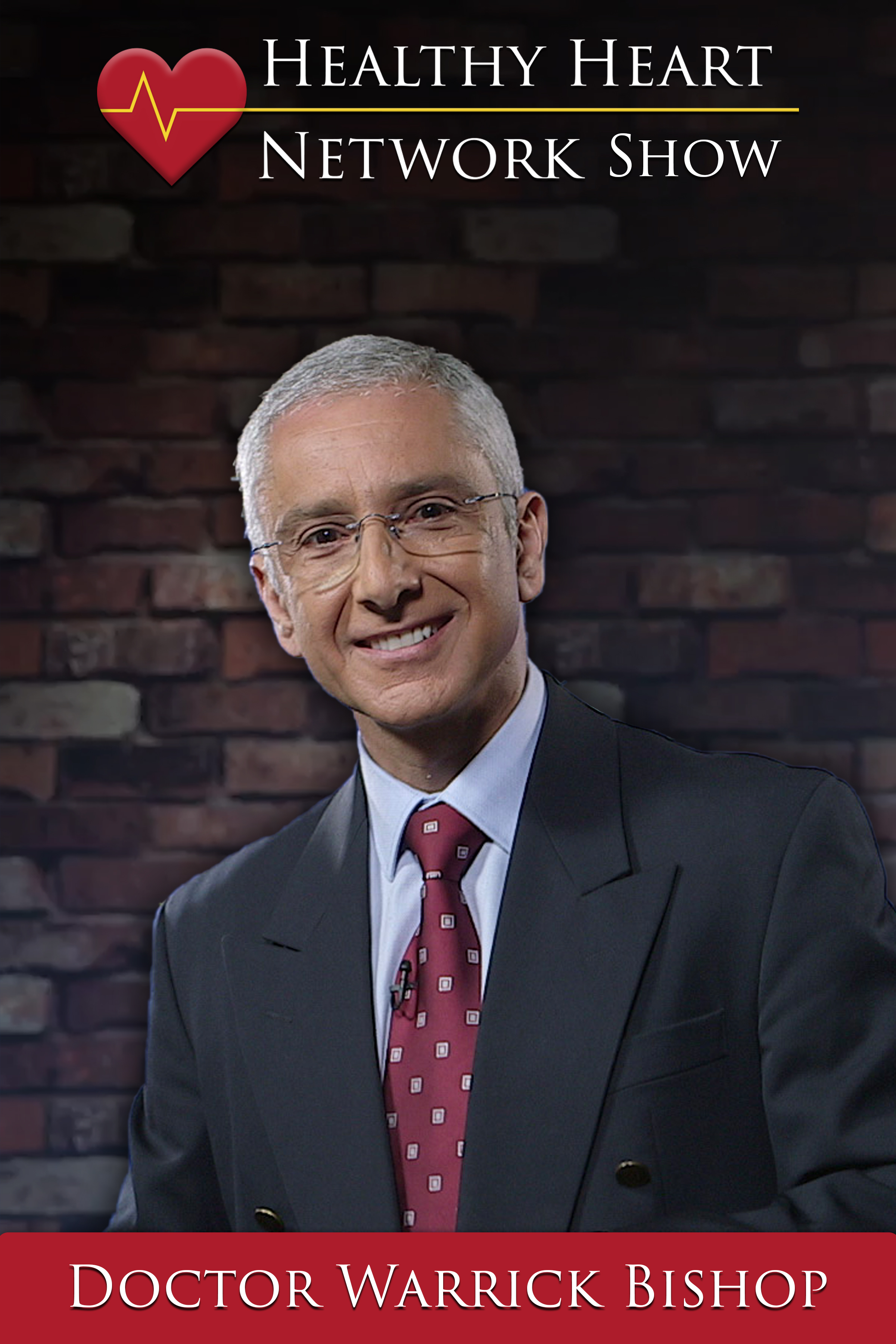
[0:00] Welcome, my name's Dr. Warrick Bishop. I'm a cardiologist, I'm an author and a keynote speaker. I'm CEO of the Healthy Heart Network. I'm all about trying to help people
[0:12] Live as well as possible, for as long as possible.
[0:15] Heart disease is huge in Australia.
[0:18] Every 20 minutes someone suffers a heart attack. Most of these could probably have been avoided if only we knew what to do. This podcast is all about helping you understand blood pressure, weight, cholesterol...
[0:32] for better health.
[0:33] If you enjoy this podcast, I would be honoured for a five-star review.
[0:37] you can share it with your family and friends. It may well save.
[0:41] someone you love.
[0:42] Hi, it's Dr. Warrick here and welcome to my podcast and videocast station. I really appreciate you joining me and listening in. And I really appreciate today's guest who is Dr. Diana Buona, a dentist of 25 years. She's of Colombian extraction but has been working here in Australia. She's in Miranda in Sydney. She has a particular interest in oral inflammation and...
[1:10] chronic disease and I'm super excited to speak with her around those really important issues. So welcome Diana, how are you?
[1:19] Very good. Thank you. Thank you, Dr. Rory, for your time today.
[1:23] Well, thank you. Thank you for joining me. And look, for those listening, you may
[1:30] Be aware I've done over 400 podcasts. And I know you're looking at me if you're looking at me on YouTube and you can't believe that I'm old enough to have done 400 podcasts, but it's true. But early on, I actually had the chance to speak about inflammation and oral hygiene, and it's a fascinating topic. So I'm really very pleased to be coming back.
[1:55] and opening up this topic again because it's so important. So
[2:01] Diana, tell me...
[2:03] As a dentist, how did you start to really become involved and interested in inflammation and chronic disease?
[2:14] Okay, so since I came to Australia, there was something...
[2:17] that it was always in my mind. I was seeing a lot of
[2:22] Um,
[2:23] Oral problems, a lot of people that, despite going to the dentist every six months, they ended up with gum disease, losing teeth.
[2:34] And I always was wondering what is happening.
[2:37] What is happening here? What is causing all this? Right? In year 2000, I got involved on lasers in my own practice.
[2:50] And as a result of that, I was invited to join a seminar with Dr. Larkin from America. And he runs a program in America called the Larkin Protocol.
[3:02] And the Larkin Protocol is basically...
[3:06] prevention.
[3:09] And what we learned and what we ended up actually adapting his system is,
[3:15] was
[3:17] What happens when there is dysbiosis in the markers?
[3:22] So it's all about...
[3:24] The macrobiotic
[3:27] So in the same way that we have the biggest microbiota in the gut,
[3:32] And when it's not balanced, it's going to cause problems. The same thing is happening in the mouth.
[3:38] The microbiota in the mouth is the second largest microbiota ecosystem.
[3:44] In the body.
[3:45] So, Dana, as you're talking there,
[3:48] The term microbiota, my understanding of that, and for those listening who may not have heard the term before, that simply means the range and variance of different species of bacteria existing within a particular area. Would that be the best way to describe it?
[4:07] Yes, so it's all the community of bacteria.
[4:11] that we have in our mouths, yes.
[4:14] And that importantly can vary between people and it can be related to disease as well.
[4:20] Yes.
[4:21] So we have about 700 species of microorganisms in the mouth.
[4:29] About 20 are considered either opportunistic or pathogenic.
[4:36] Okay.
[4:37] And those are the ones that will be the factor.
[4:43] to create disease in the mast.
[4:45] and also chronic inflammation.
[4:49] So it is a quite dynamic process.
[4:54] ecosystem
[4:56] It behaves like a humanity, exactly the same as it behaves in the gut.
[5:02] But because our mouth is the entry to our body, and so...
[5:09] For example, if we have a very high...
[5:12] a diet rich on sugars...
[5:16] We are going to promote...
[5:19] the profileration of these pathogenic bacteria.
[5:24] and then from there, chronic inflammation. If the oral hygiene...
[5:29] is not very good if we have poor oral hygiene.
[5:33] This is going to contribute even more to inflammation.
[5:38] And then from there, the disease is going to start.
[5:44] So I know...
[5:45] For example, Diana, that people are talking a lot about the gut issues.
[5:50] microbiome
[5:52] As I'm thinking about it, it almost doesn't make sense to think about the gut microbiome if the...
[5:59] oral microbiome proceeds, the gut microbiome, and can still cause problems. Should people be thinking about assessing
[6:08] oral and gut microbiome simultaneously and do they interact or interplay?
[6:16] Yes, there are a lot of studies now that are coming out since 2017. The microbiota project started, and they wanted to have a look what was happening in the gut initially, and this has moved now to the oral cavity. So now we know that because there's a lot of research coming out about the interactions between the oral microbiota and the gut microbiota.
[6:44] So, yes, it does make sense. If your oral microbiota is no good, it's also going to have some effect on the gut microbiota.
[6:55] So as people are listening, I imagine, and as I'm listening as well, I imagine that these...
[7:03] Pathogenic.
[7:05] bacteria and when we use the word pathogenic for those who are not sure of the term pathogenic means something that will cause a disease so bacteria that may cause a disease pathogenic bacteria if these are in the mouth diana are we anticipating that these people would have increased rates of tooth decay or inflammation of the gums is that what we would see locally in the mouth
[7:35] And I'm going to give you a two-part question. What are these pathogenic organisms going to do in the mouth? But really importantly, what might they do in the body remote to the mouth, affecting the whole...
[7:49] human being. Would you like to speak to that?
[7:52] Yes, so to answer your question, we all have in the mouth something that is called biofilm.
[8:00] Some people know it as dental kit.
[8:03] So to get it easy to understand, let's just...
[8:07] Call it dental plaque. Yeah.
[8:10] So in the dental plaque, we can have hard plaque and we can have soft plaque. So the biofilm is actually the soft plaque. And this is where the bacteria actually lives.
[8:22] So we can have...
[8:25] plaque above the GAM line, and we can also have plaque
[8:29] and they're the ganglar.
[8:31] Okay.
[8:32] Is the bacteria that is living under the gum line
[8:36] the one that can be quite pathogenic.
[8:39] So when we have a biofilm that is healthy, we have healthy species of bacteria. They do a lot of things for us in the mouth.
[8:50] Yeah.
[8:50] But when the biofilm changes, and these biofilms are going to mature, and they're going to change,
[8:58] the chemical composition is going to change.
[9:01] The microbiological component is going to change as well. So as it matures, it's going to attract more pathogenic bacteria.
[9:11] And this is gonna cause inflammation in the gut.
[9:15] And if this inflammation continues,
[9:19] So then as our immune system is fighting this inflammation,
[9:26] there's going to be some damage to the tissues.
[9:30] And that's the way gum disease starts. So the initial sign that we see is bleeding of the gums.
[9:40] Bleeding in the gums is not a normal thing.
[9:43] It's like your skin. If you touch your skin, it's not going to bleed. If your skin bleeds when you touch it, something is not right. Correct? So the same thing happens in the mouth. Mm-hmm.
[9:54] So once we have that bleeding, that means there is chronic inflammation in there. It's the only reason why the gum will flee.
[10:02] But this is going to bring some physiological changes because now we have a gum that is inflamed chronically.
[10:14] And the gum has vessels, blood vessels.
[10:20] And those blood vessels, they're going to be more permeable.
[10:24] So it's an entry for all those toxins of that fight that is happening between the immune system
[10:33] And that inflammation and the bacteria that is in there that is going to cause all that damage.
[10:38] Thank you.
[10:39] For those listening, I'll just jump in quickly. Permeable simply means that those blood vessels become leaky and some of the fluid, the inflammatory fluid around them,
[10:50] that inflamed site under the gums can move away, being drawn away by the blood vessels supplying that area.
[11:00] Yes, that's correct.
[11:02] So now we don't have a localized system.
[11:06] Hey
[11:07] problem.
[11:08] Now the problem is actually starting to move.
[11:12] towards the rest of the board, we are
[11:15] Our circulatory system, which is our arteries, right? Mm-hmm.
[11:19] I was going to ask in there, Diana, if I can, because people may be listening, and as I'm listening, I'm thinking gum health sounds incredibly important here, and bleeding gums is obviously a bad sign. We are often told to floss regularly. How does that tie in? Is that a...
[11:38] simplistic? Does that just...
[11:41] create space or open up that biofilm? Does that...
[11:46] clear up the soft dental plaque that you're talking about. How does flossing fit into that?
[11:56] So flossing is basically to be able to clean where the toothbrush cannot clean.
[12:04] So he's...
[12:06] Where the teeth join together, that's what we call the contact points, and underneath that contact point, so then there is gum, and debris and biofilm can accumulate on those areas.
[12:18] So...
[12:18] Flossing is very good if you do it the right way to clean those spaces. But we always can't leave something. So in my practice, for example, now, I ask my patients to use water pee.
[12:32] Because the water peak allows us to clean that biofilm that is...
[12:38] a little bit under the ground.
[12:40] which is the one that is going to cause problems.
[12:43] But also what we see in our practices that...
[12:48] And even with people that have very good oral hygiene, there are areas that are difficult to get in the mask.
[12:55] And that biofilm that sits there, disrupt it,
[13:00] is the one that is going to cause the problems. So that's why it's so important
[13:05] to have these regular hygiene appointments where that biofilm is going to be removed. So when it comes back again, because it always comes back, it's impossible to have a mouth without biofilm.
[13:19] Then that biofilm, you start with it healthy, and then it's going to change again.
[13:25] And then when you come for your appointment, we remove it again. So that is going to avoid...
[13:33] that we end up getting diseased.
[13:36] Because we're cleaning it and disrupting it regularly.
[13:40] But if we leave it for one year, two years, three years, that's when we start seeing problems.
[13:47] In those areas, we usually start seeing pockets in the gum, which is...
[13:52] Gram disease.
[13:54] And it keeps going from there. It keeps advancing and advancing, and then it moves to another place in the mouth. And then, you know, at the end of the day, it's what causes a tooth loss.
[14:08] and carriers and all these problems that we see in the mouth.
[14:12] But the important message here is all that...
[14:17] Battle that is happening in the mouth is not staying in the mouth.
[14:23] It's moving. It's moving to other areas of the body.
[14:27] I think this is really important, Diana, and this is what I was going to ask you some questions about.
[14:32] Because now we understand that if we're not looking after our biofilm, if we're not looking after that soft dental plaque, then we run the risk of pockets of inflammation, which then lead to leaky blood vessels, which will take some of those inflammatory products away. Now, I'd love your comment on this. My understanding from my own observation is there must be two different.
[14:59] types of inflammatory products that are taken away from the mouth. One must be the molecules of inflammation.
[15:08] because those molecules which have a role for activating inflammatory responses can be found remotely in the body and have an effect remotely. But the other thing that can get into the bloodstream is bacteria. So I'll give you two examples.
[15:26] And I'll invite you to talk a little bit more about that.
[15:29] I have a very clear recollection of a patient I saw a number of years ago who had terrible...
[15:35] atrial fibrillation recurrently going in and out of an irregular heart rate. And it was hard work to control it. This particular patient was troubled by the atrial fibrillation. They were relatively young in the scheme of the atrial fibrillation world,
[15:53] and we observed or realized that this patient actually had very bad dentition. Now she had severe periodontitis, so severe inflammation of the guns as it turned out. I didn't do a full assessment, but she went to the dentist and over the course of several months, she had a very bad dentition.
[16:14] had this all cleaned up, tidied up, treated appropriately, and to...
[16:21] all of our surprise, her atrial fibrillation went away. And so...
[16:27] My thinking around that was there must have been inflammatory molecules from the mouth, from the inflamed gums, literally going to the heart and triggering atrial fibrillation.
[16:41] Before you speak to the molecules, the other aspect of oral hygiene is bacteria, the actual bacteria from the mouth getting into the bloodstream. And if they travel to the heart and sit on a heart valve, which is called bacterial, because it's the bacteria, endo, meaning inside, carditis, meaning inflammation of the heart.
[17:11] you're in a lot of trouble. This is a very high risk condition and can have a mortality as high as 50%. So for those listening, you can have...
[17:21] Molecules?
[17:22] and bacteria,
[17:24] Am I missing something there, Diana, or does that all make sense?
[17:28] Yes.
[17:29] You are correct.
[17:31] So we have the molecules which can be, for example, cytokines,
[17:39] can be polysaccharides,
[17:41] Hey,
[17:43] But what is so important is that we know that when a patient has symptoms,
[17:48] and advanced periodontitis.
[17:51] they can have some of the inflammatory markers.
[17:56] Hi.
[17:58] So if you do an inflammatory panel,
[18:01] in a blood test.
[18:03] We can see
[18:05] interleukin-6 high is highly associated to
[18:11] Can't be six?
[18:12] And we also can see
[18:15] C-reactive protein, high. Okay.
[18:19] In some cases, for example, when we have...
[18:23] endodontic lesions,
[18:26] We can see the ameloperoxidase going up as well.
[18:31] Okay.
[18:32] So there are biological markers that are increased when we have periodontitis and when we have chronic inflammation in the mouth for a long time.
[18:46] So that's one of the things that happens because I...
[18:50] I understand that when we have high levels of...
[18:55] inflammatory markers in the body, so then are at risk.
[19:00] for heart disease and any other chronic conditions, for example, rheumatoid arthritis and inflammation in the gut. Even Alzheimer's is now being studied because of one of the bacteria that we have in the mouth, the porphyromona gingivalis, that is getting very well known around. So all those inflammatory markers are going to increase the inflammatory burden in the bone.
[19:28] So it just makes sense. So the case that you told me...
[19:34] Um...
[19:36] During the course that we did, we saw several studies that are coming from a group of cardiologists in America.
[19:45] which Dr. Larkin is very associated with them and is called the Bayledonine method.
[19:52] And I read some of the papers and just...
[19:57] by sending the patient to the dentist when they know that there is soft plaque in the arteries.
[20:06] they managed to reduce that inflammation in the arteries.
[20:11] Okay. Wow.
[20:13] So, yeah.
[20:15] It is...
[20:17] Very important. I don't like saying that gum disease is going to cause heart disease because the way I see it is as an association, as a risk factor. You need, you know, there are other things that are going to play in the first way.
[20:33] So...
[20:35] So, yes, in my opinion, it's a risk factor that we have. Another risk factor that we're going to have to add to all the other risk factors that we have, high blood pressure, weight, lifestyle, you know, all these things that we have as risk factors for heart disease, for example.
[20:59] So gum disease is another race fact.
[21:02] It makes perfect sense, Diana. I think, as you say, if you're...
[21:07] If you're creating an environment in the mouth where that inflammation can then, those inflammatory molecules, and that's what interleukin-6 is, and C-reactive protein, which is what you're talking about measuring in the bloodstream, if they're floating around the bloodstream, they may well have impact elsewhere. And we know that plaque rupture in the coronary arteries is closely related to inflammation. So trying to remove inflammation wherever you can makes perfect sense.
[21:37] Thank you.
[21:38] Dana, it's been brilliant talking. We are getting towards the end. I try and keep my podcast about 10 to 15 minutes. We've gone way over time, which has been an absolute delight. But what I'd like to do is, for those listening who really want to know how they can look after themselves, what would your recommendation be? What would you be telling people to do? And by the way, if you are in Sydney, Dana is in Miranda.
[22:07] in Sydney. I'm sure she'd love to help out if you wanted to go and check her out. But, Dana, what's your recommendation to people to really minimise their risk of this oral inflammation and maybe even talk about the invisible...
[22:24] Was it the invisible smile that you had?
[22:27] The Invisible Science of Smile, that is our YouTube channel. Invisible Psychos and What? A plug for your YouTube channel, which is the Invisible Science of Smile. Check out my YouTube channel as well. But Diana, what are the recommendations for those listening and how should they go out looking after themselves and their mouth?
[22:50] Yes. So there are different things that we look at. So, for example, when a patient comes to our hygiene appointment, we take a sample of the biofilm.
[23:01] and we look it up under the microscope.
[23:04] And then we can show the patient what is in their mouths. Right.
[23:10] So we can see whether there is a pathogenic bacteria, what is the relationship. We also have the option...
[23:19] to have a full microbiota mark.
[23:22] And we usually offer it to the patients who have gum disease.
[23:27] And then we can get actually a list of...
[23:31] all the bacteria that is in the mouth with the levels that they have, so we know whether there is a disease
[23:41] this biosis. This biosis is a disbalance of the biofilm.
[23:45] where the pathogenic bacteria is higher than the normal bacteria. So that causes some issues.
[23:53] Diana, can I jump in there?
[23:55] Is that normal practice for a dental surgery to be doing the oral surgery?
[24:01] oral microbiota because I
[24:04] I've been to the dentist for many years, and I don't think I've had a biofilm microscopy, nor have I had a...
[24:14] microbiome of the oral flora identified. So that's an unusual practice? No, it's not very usual, not yet. In Australia, in America, it's getting...
[24:32] more normal, but this was a program that I decided to
[24:37] training and getting all the equipment that I needed to be able to do this.
[24:43] And this helps me to...
[24:47] communicate to the patient
[24:49] What is the problem and why when I have people coming and saying, look, I've been going to the dentist every six months.
[24:57] And then, unfortunately, I have to say, yes, you do have gum disease.
[25:02] But now we do understand why, and I can show the patient why.
[25:06] Because I can show them in real time what is in the biofilm.
[25:13] But also when we do the disclosure of the biofilm in the mouth, which is coloring in the gums and the teeth, so then we can see...
[25:23] These dyes, they change color depending on the type of biofilm that is present in the mouth.
[25:30] So we can then educate the patient and help them understand where they need to improve.
[25:37] the hygiene. And then I talk a lot to them about diet because, well, diet is very important
[25:46] Lifestyle is very important.
[25:49] And then I explained to them what things they can do at home.
[25:54] to help...
[25:56] improve their oral hygiene.
[25:59] And also we work with our patients regularly.
[26:04] By...
[26:05] If someone, for example, doesn't have very good plug control,
[26:09] So then I said to them, okay, let's move your hygiene appointments a little bit closer so we can maintain this, right, rather than waiting the whole six months.
[26:21] So it is a very individual management of their condition, which is based on the findings that we have.
[26:29] So individual care and tailoring management to individual patients makes perfect sense.
[26:38] From what I hear, that practice that you run of microscopy of the biofilm, coloring of the biofilm and doing the oral microbiota, that's fairly uncommon.
[26:54] For those listening, how would they find a dentist who does that sort of service in their area? Is that something that they could search up or is it still sort of very uncommon to see this sort of approach?
[27:13] Well, they will have to either look for...
[27:17] A contrast phase microscopy or something that they talk about about bacteriological tests.
[27:26] or maybe if they find a practice that...
[27:32] uses a guided biofilm therapy, which is called a GBT. This is the
[27:38] the technology that we use to remove biofuel
[27:43] Um, how else can they find that I think those will be the the words that they will
[27:50] be able to use to find those practices.
[27:55] Sorry, Diana. Do you have any of that information on the invisible science of SMILE?
[28:03] Yes, there are some episodes where we talk about awareness of what happens in the body and how important is oral hygiene. There are some other episodes that are on the main where we're going to talk exactly about the...
[28:20] technology okay but in my website i do have a page and in my facebook page and my instagram page there are a lot of posts referring to microbiota to inflammation to gvt gvt is the
[28:40] is the guided biofilm therapy. Not every dentist that does GBT
[28:47] is going to do microscopy because that is something that we added to our protocol.
[28:54] Okay. Look...
[28:57] We're going to, just in the interest of time, we're going to have to wrap up, Dana. It's been brilliant speaking with you. I can't...
[29:04] emphasise how important it is for those people listening to look after that oral hygiene. And I think you've given me an understanding that I didn't have before. I just didn't realise that we could do things like a biofilm assessment, that we...
[29:23] could do things like a oral microbiome
[29:27] population, microbiota, and then act on that. So these are really important aspects. And for those people who have real concerns about their gums, please look up Dr. Diana Bueno, B-U-E-N-O, Dr. Bueno.
[29:42] Diana Buena, B-U-E-N-O. Look up her website, her Facebook page, her YouTube channel, and get some more information. Diana, I'd really like to thank you for your time this morning. Thank you. Thank you so much, Dr. Warrick. It was very nice talking to you. Really nice talking to you as well. For those listening, I'm genuinely grateful that you take the time to listen, and I genuinely hope that I give you something that's valuable and worth your time.
[30:12] If you have any queries or questions, drop me a note at info at drWarrickbishop.online.com.
[30:18] I'm going to sign off, and I do hope that until next time you live as well as possible,
[30:25] for as long as possible. Take care and bye for now. Join the Healthy Heart Network and become part of our growing community. If you're interested in your heart health and risk of heart attack, then join the Healthy Heart Network.
[30:41] for only $5 as a lifetime member. This represents $55 worth of value.
[30:48] we offer
[30:51] and help people understand their present state of heart
[30:55] health
[30:58] what their current level of risk is,
[31:00] and the positive steps they can take
[31:03] to improve their risk of heart attack in the future.
[31:09] go to www.healthyheartnetwork.com.
[31:14] dot au and click the join the family button.