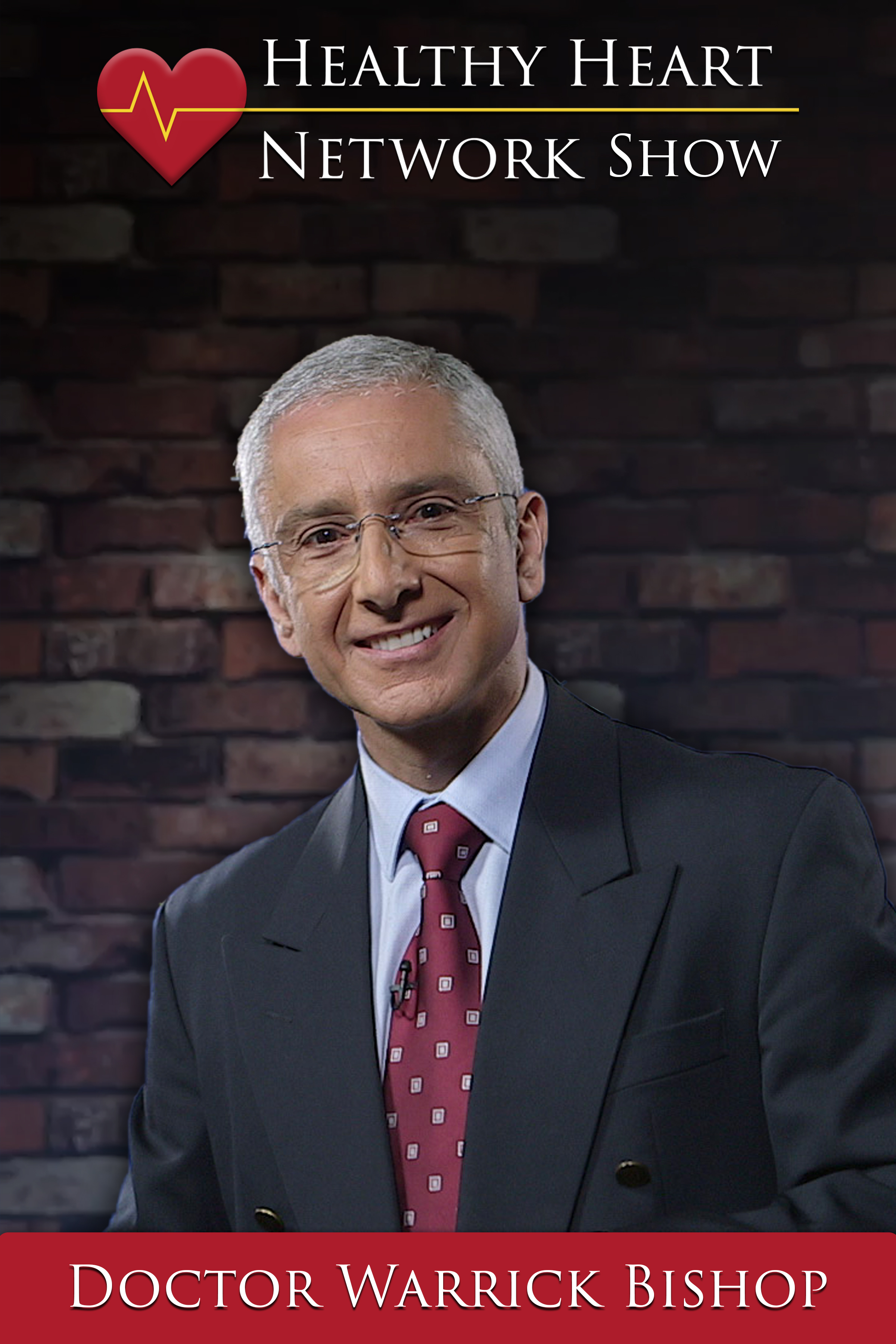
[0:00] Welcome, my name's Dr. Warrick Bishop. I'm a cardiologist, I'm an author and a keynote speaker. I'm CEO of the Healthy Heart Network. I'm all about trying to help people
[0:12] Live as well as possible, for as long as possible.
[0:15] Heart disease is huge in Australia.
[0:18] Every 20 minutes someone suffers a heart attack. Most of these could probably have been avoided if only we knew what to do. This podcast is all about helping you understand blood pressure, weight, cholesterol...
[0:32] for better health.
[0:33] If you enjoy this podcast, I would be honoured for a five-star review.
[0:37] you can share it with your family and friends. It may well save.
[0:41] someone you love.
[0:42] Hi, it's Dr. Warrick here, and thanks so much for joining me on my podcast or videocast station. I'm really pleased to have as a guest today, Rosie.
[0:53] Macavidi. That's perfect. That's perfect. I think I'm just lexic with that Max and the Evidi, so Macavidi. Macavidi. Perfect.
[1:04] Um,
[1:05] Rosie, apologies for getting tongue-tied on that, but for those listening, Rosie is a dear friend. She's from a background of pharmacy and nursing, and we've met through her being the founder of Ivy League.
[1:22] IV therapies in Sydney and across Australia. So welcome Rosie, thanks for joining.
[1:28] Thank you so much. Thank you so much for having me. I'm really excited to be here.
[1:32] Yeah.
[1:33] Look, I'm super excited to have you as well. For those listening, my disclosure is that I met Rosie through the IV clinic services that she provides, and I've actually opened a business in Hobart that aligns with IV League, and we're super grateful for their support and leadership in this space. But I know many people are not really across what
[1:57] IV therapy clinics may do. They're not
[2:00] broadly recognized in Australia they're really starting probably recognized more overseas and I think the opportunity to speak with Rosie about what these clinics can offer and do is a great opportunity to share so I'm really looking forward to today and for those listening an opportunity to really find out more about the sort of other things we can do to help and boost our health along the way so I
[2:27] Rosie, how did you get into this space?
[2:30] So I started the business about nine years ago now. It's coming on to nine years, so almost a decade. Time flies.
[2:41] And what I mean, working in the healthcare system here in Australia, I was exposed to some really great mentors. So I must disclose that I was actually very blessed to meet some great mentors such as
[3:00] well-known integrative doctors who's retired now, Dr. Sean Hall, founder of Biosteuticals, and most recently, Dr. Craig Conover. And so these mentors over the last nine years have really guided me and really came to fruition how preventative health in Australia was quite behind. So we had a really great focus on modern medicine, which is absolutely amazing. But however, there was
[3:30] which was quite prominent already overseas. And so we did just start with the very basic vitamins, such as vitamin C, B, magnesium, and zinc. That's how we started with just those four vitamins. However, over the last few years with collaborating our amazing pharmacy in Adelaide, we were then able to bring in a lot of the nutrients that they do use overseas and start
[4:00] eight to nine years we have now not have an extensive list of nutrients and vitamins and minerals. We've got chelation which is a heavy metal detox, NAD plus and now most recently that's really come to light is peptides. So we've really been able to broaden our horizons with what we're able to provide and
[4:24] really look into that preventative space that was sort of lacking back about 10 years ago. And now I think a lot of people are starting to realize that they can take their health into their own hands. And it's not a matter of let's just age and allow these comorbidities to build up. It's about, okay, how can I live and optimize my health as best as possible?
[4:49] Look, so that's a great starting point, but let's break it down because there'll be people listening who won't be familiar at all with some of the words you used there. Oh, sorry. And that's okay because that's the whole point of the podcast, so people can learn a bit. But one of the things I want to deconstruct that you rolled through was that you're...
[5:10] Dealing with vitamins, minerals...
[5:13] Elisha
[5:15] nad plus and peptides so maybe we just take a few moments to touch on each of those in a really maybe just a really very much an overview way and as people listen we can explain what they are so let's start with um minerals yeah so let's do a one-on-on vitamins minerals and i guess the difference that it makes when you do it intravenously versus taking it orally which i think
[5:45] when you're administering IV intravenously, which means through the vein, you are able to administer vitamins at certain concentrations. That's a big difference between taking it orally and doing it intravenously. So for example, vitamin C is a really great example of not being able to reach a certain concentration within the body if you were to take it orally. So when you do high
[6:15] certain properties such as antiviral, antibacterial, because you're changing the pH of the blood and so how it's working, whereas you wouldn't be able to do that when you're taking it orally. So we have, I won't list all the 25 nutrients that we have, but the most common ones I would say is your B vitamins, which are great for energy, zinc, zinc.
[6:37] vitamin C, magnesium, these are all great for the immune system. And also just in the replacement of the quality of food that we have these days, it's really hard to obtain that level of nutrients from your food unless you're really getting that raw organic produce. It's really hard to actually extract that in your gut. And then it comes to gut health, which is a really, I guess,
[7:07] diverse problem we have these days is people not having optimal gut health. And so there's a lot of different factors why someone would choose to do intravenous vitamins. We do a very thorough consult to really determine what is the best concentrations and vitamins for a certain individual. But that's a very 101, I guess, high level of what intravenous vitamins and minerals are.
[7:33] Just some examples.
[7:35] We certainly, I think most people who would be listening to this are probably aware, and I've seen stuff, articles and things come across my desk, talking about a broad...
[7:45] population deficiency of magnesium. Yeah. Any people are short of magnesium, mainly through, as you allude to, modern agricultural practices, actually. Mm-hmm.
[7:58] And so...
[8:00] magnesium, which we know is so important for so many things. I think it's a cofactor in over 400 different chemical reactions in the body. It's great for blood vessels and hearts. That's why I'm interested in it. Yes.
[8:15] sleep, relaxation, stress levels, a whole lot of things. And I think it's even related to collagen formation. Yeah. Well, magnesium, yeah, it's one of the most important minerals that is out there. Look, magnesium through an IV is actually excreted quite fast. So we do, that's one of the supplements we actually recommend orally taking as well daily. I myself take oral magnesium daily because it is so important.
[8:45] at high concentrations, it does actually help with activating the thymus gland, which is really important, as you know, for the immune system. So there's different elements as to why you would do certain concentrations, different vitamins in an IV. But magnesium, I completely agree. I think a lot of the issues these days is the...
[9:07] The produce that we are buying from our supermarkets, I mean, at the end of the day, we do understand for it to go from the farms to then the shops and then, you know, the big, like Woolworths and Coles to actually sustain. They need their produce to stay clean.
[9:24] alive. They can't rot that quickly. And so there's obviously the preservatives and what they spray on it. And it does end up changing the quality of the produce that we do have. So it's just the world we live in. And I think for me, a lot of my nutrients come from my supplementation. It's really hard these days to really ingest and take that from your diet. A lot of it is mostly for me
[9:54] days.
[9:55] Look, for those listening, just we've talked about soils and minerals, but we also often think of vitamin C as something that comes from our food. And what you're talking about, Rosie, the current sort of practices of supermarkets and growers, um...
[10:17] is really important because I came across fairly recently someone who was expert in vitamin C and citrus fruit and other fruits in actual fact. And it turns out that the vitamin C levels in the fruits are very low until just before that fruit is fully ripened and drops on the ground. And the reason you have the antioxidant in there is to protect the seed on the ground.
[10:47] your average orange, just before it hits the ground in anticipation of it rotting and then seeding a new tree. So if you're... So interesting.
[10:57] Yeah, so if you're picking it early, the tree hasn't even had the chance to infuse that...
[11:04] Fruit with the vitamin C. Yes, yes.
[11:06] For protection of the sea. That's what it's all for. That is so interesting. Yeah, yeah. So this is real stuff. And I think...
[11:16] I think our current modern practices where things are refrigerated, picked early, are
[11:22] I had a tomato last night given to me by a patient growing in his backyard. And I have to say, it doesn't taste anything like a tomato you buy from the supermarket. It was beautiful.
[11:35] You'll find that. You know, I've been to some health retreats where everything is obviously grown in the backyard and in the place where I'm actually doing the retreat. And it is just day and night when it comes to taste, when it comes to feel, look, and how you, you know, when you're eating it, how you feel even. But, you know, in this day and age, as you know, it's virtually impossible to do that unless you have a full-time garden at the back to sustain.
[12:05] that what we're doing is trying to fill in that gap where we can really fit into that modern lifestyle.
[12:12] Look, I want to also be clear that as we're talking about this, there may be people listening, thinking that we're advocating this for everyone and saying everyone should have IV vitamins and IV minerals and so forth and so on. And I think you and I have spoken about this offline and I'll just reiterate, we're not...
[12:30] pushing that as the situation tool. We're really opening this for people who want to be proactive and think that they may wish to explore whether they're a bit low in vitamin C or a bit low in magnesium and whether something like this helps them or not. I guess you confront the opportunity to speak with people about this regularly.
[12:52] Oh, absolutely. I have to agree with you there. I would say the, you know, the numerous amounts of people who would approach me and say, you know, how often, what should I do? For us, the real goal out there is educating people to be able to really feel in their own bodies when they feel their immune systems lacking or their bodies overrun and educating them and teaching them which vitamins are for what use and how that works also within the body.
[13:22] for myself even,
[13:24] I'm not, I don't do drips every single week or every, I'm not on a strict vitamin IV drip regime. I really am in tune with what I need. And, you know, if your immune system, if you've been eating really well, you know, you're taking a vitamin D supplementation, you don't feel under the weather, then there's almost, there is no point to do a high dose vitamin C with the zinc because you are maintaining that on your lifestyle.
[13:54] So it totally, I have to agree with you when it comes to, we're not advocating, say, every single person needs this. It's really about the people who can benefit and educating the population to say, these are the options out there if you would like to take them.
[14:13] 100%. So, I mean, our own experience here, again, to reassure people who are listening, our own experience here in Hobart, and we're only open very recently, are people who may have travelled, who may have not had the opportunity to eat their usual diets, may be fatigued, run down, and are looking for something to just help support their immune system, their body, and recognise and respect that they may not have been able to make the dietary choices that they
[14:43] space and really importantly, all of our, all the people who come through the service as, through your service, because we follow what you do, have all been involved.
[14:54] by a medical person, a registered person, appropriate bloods if required are reviewed, medical histories are taken, and whether it's appropriate for these individuals is decided on a one-to-one basis, so really important.
[15:13] Yes, very important to know. It's completely individualized and we like to –
[15:18] Look at everything, at every aspect of that person's lifestyle, not just, you know, what they're feeling. So how they're sleeping, what their diet's like, their job. We like to look at everything as a holistic view.
[15:31] Yeah. Look, I'm going to touch on two other things, but reasonably quickly, because I think I really just wanted people to realize that there's a service there that can allow them to access things like vitamins and minerals, which may give them a boost, may make them feel better. I know I had my B12 and magnesium drip when I came up and did the training with you guys, slept the best I had for as long as I could remember that night and felt super rocket.
[16:01] So...
[16:03] You certainly can feel a benefit from these things. Yes.
[16:07] these infusions. Mm-hmm.
[16:11] The...
[16:12] I won't get on to chelation, but for people who heard the word chelation and don't know what it means, it simply means that we're able to infuse a molecule into the bloodstream that floats around in the bloodstream and draws any energy.
[16:31] heavy metals out of the tissues, particularly things like mercury, which you could be exposed to through eating, um, predator fish, um,
[16:43] Things like lead, which you may have been exposed to if you grew up in the era of lead paint or in the era of a car. Petrol not being lead free. And things like arsenic, which can turn up even in the drinking water. So chelation is another story. We might do it another time. But chelation simply means taking those toxins out of the body.
[17:08] But NAD Plus is almost certainly a conversation of its own. Yes. Let me two or three lines on that. Okay. And then we'll look to wrap it up because I'm sure we could talk about NAD Plus. Yeah, we could talk about FURB. We can continue the conversation a different time. But just a little 101, I guess. It is a chemical cousin of B3.
[17:38] in your body and mostly abundant when you're born. So you've got an abundance of it and declines about 50% every 20 years. So there are quite a few different pathways that it's involved in, but the one that we're most interested in is its ability to repair and restore your cells. So over time, as you can imagine, it starts declining,
[18:05] You are exposed to toxins in the environment. There's stresses in your body. And though that you've got less NAD+, that means less ability just to repair yourselves. And so that's the main one that I believe a lot of people are, it's in conversation these days about how your NAD plus levels is directly linked to, I guess, the aging within your biological aging is a good way to say it.
[18:35] affects all the other cells in your body. The other pathway that's really important is your Krebs cycle, which I'm sure everyone who's, if anyone's done biology, they know that's your energy production. And so when you think about less NAD, you're thinking about less energy. So those are the, that's, I guess, the highlight of NAD+. And what we can talk about next time is obviously the replacement, you know, how you can do that orally, how you can do that home,
[19:05] how you can do the IVs and the different, I guess, pathways you can take with that and replacing NAD+.
[19:11] Look, I think it's a very interesting space. And if anyone's read David Sinclair's book, which I think is called Life.
[19:22] Life span. I think so. He talks about...
[19:26] Um...
[19:27] maintenance of the integrity of our DNA as part of our aging process, and really NAD Plus ties closely into that. But let's put a pin in that one and talk about it another time, because we could go on about it for hours. I could speak about it for hours. I've got an NAD Plus training I'm doing tomorrow, so I'm ready. Yeah, beautiful. The other word that you mentioned early on was peptides.
[19:57] And just for anyone listening who heard that, didn't know what it means, a peptide is really just a sequence of amino acids. Amino acids are the building blocks of proteins. And a peptide is just a small sequence that has a biological action. So you could literally take a protein like testosterone, which is a male sex hormone, but you could take off or break off the active end of it,
[20:27] the signal to behave like a male or behave in a male hormone way and that little piece of the testosterone protein is called a peptide because it's multiple amino acids.
[20:40] Just a couple of very quick words on peptides and then we'll...
[20:44] Is it?
[20:45] Yeah, peptides, just as you mentioned, it is just a short chain of amino acids. And they're very powerful in the sense that they're already present in our body. But when you inject peptides, which is how you generally take them or take them orally, they just cascade certain events in your body.
[21:15] enhance your immune system. So there's a variety of peptides, which we can jump into as a separate podcast, but they are definitely emerging. And what I would say, it's one of the...
[21:28] I would say, the greatest integrative health tools that we have. However, I will just mention with caution, as it is growing in popularity, it's really important that the one thing you do is do see a qualified medical practitioner and ensure that you are sourcing this from a compounding pharmacy that has all the qualifications and certifications for safety as they can now be ordered anywhere online.
[21:58] one of the most, what I've seen firsthand, really powerful. And I'm really excited for it to be utilized probably in the next few years.
[22:07] Yeah, look, I think you're right. It will be a very interesting space. And
[22:11] Let's put a pin in talking about peptides on that one.
[22:14] Yep, yep. For now, though, with a sheer disappointment that we've got to wrap it up just in a minute. But I will bring you back and we'll talk a bit more. I'm going to wrap up now. Rosie, thanks so much for joining us.
[22:31] No, thank you so much for having me. We'll have to continue the conversation on each topic next time.
[22:37] For those that are listening, I really hope you've got something out of it. I do appreciate that you've put aside your valuable time to listen. So it's always my effort to try and give you something that's valuable to listen to. If you have any queries or questions, please let us know at info.doctor.bishop.online.
[22:54] Follow me on YouTube. I'd love you to do that. And look forward to the next time you tune in. Until then, I hope you live as well as possible. For as long as possible, take care and bye for now.
[23:06] Hi. Ever wondered what your risk of heart attack is? You should. It's the single biggest killer in the Western world. We're talking one death.
[23:15] less than every 30 minutes in Australia one death
[23:19] less than every 60 seconds in the United States, nine
[23:24] million deaths globally.
[23:26] per annum. Well how do you check your risk? Well you can go to
[23:31] www.virtualheartcheck.com.au. You'll find out about your risk and what can be done beyond that to be even more precise.