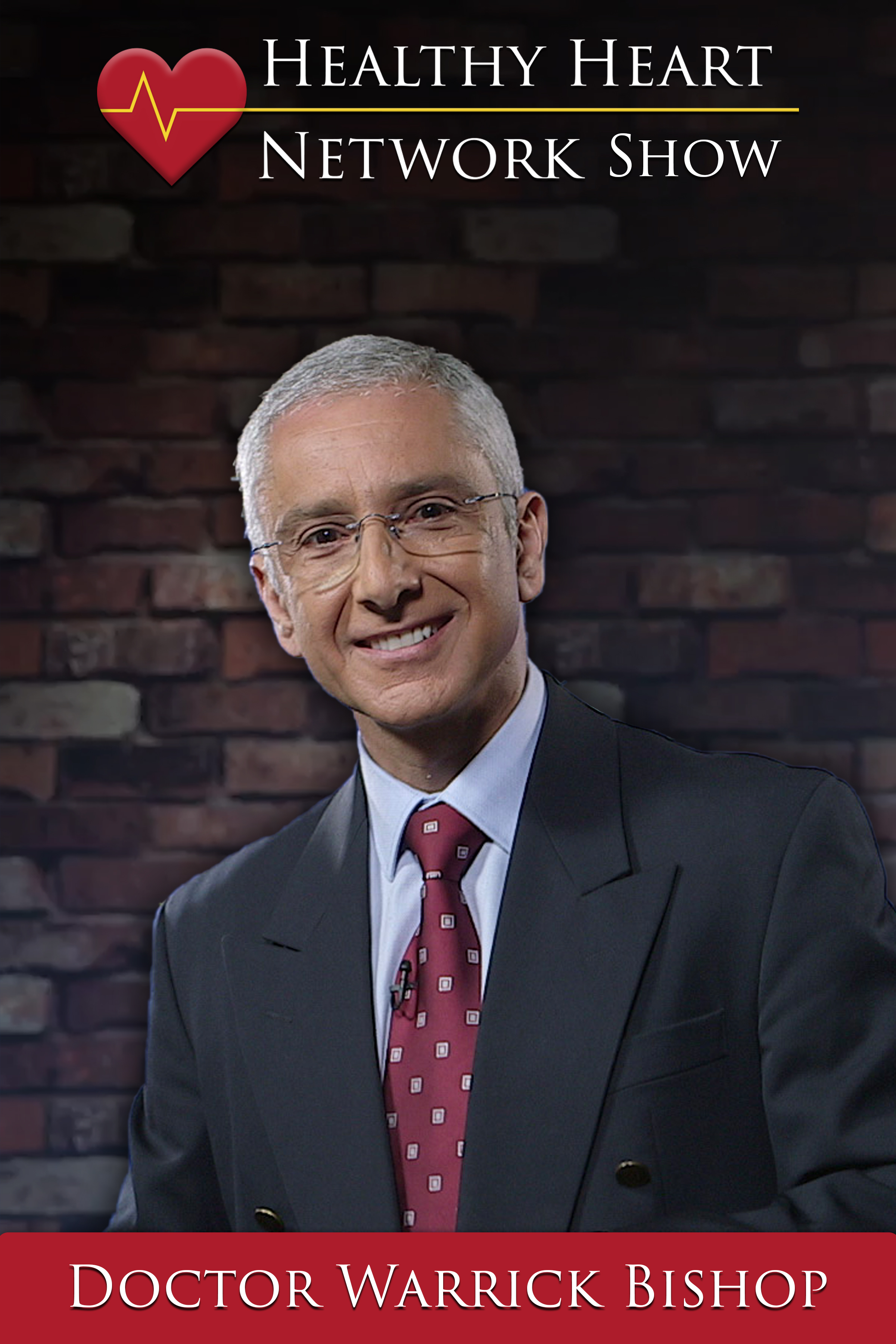
[0:00] Welcome, my name is Dr. Warrick Bishop. I'm a cardiologist, an author and a keynote speaker. I'm CEO of the Healthy Heart Network. I'm all about trying to help people
[0:12] Live as well as possible, for as long as possible.
[0:15] heart disease is huge in Australia.
[0:18] Every 20 minutes someone suffers a heart attack. Most of these could probably have been avoided if only we knew what to do. This podcast is all about helping you understand blood pressure, weight, cholesterol and weight.
[0:32] for better health.
[0:33] If you enjoy this podcast, I would be honored for a five-star review.
[0:37] you can share it with your family and friends. It may well save
[0:41] someone you love.
[0:43] Hi, and thanks for joining me on my podcast.
[0:47] and videocast station, I'll be talking about glutathione. Well,
[0:52] You've probably heard about glutathione. It pops up here and there. But what is it?
[1:00] What does it do?
[1:02] Who would take it and why would you take it?
[1:05] And where does it come from? And what can deplete it? So let's talk about glutathione a little bit. It is interesting. I'm only learning about it now.
[1:16] It's not something I use regularly.
[1:19] I have used regularly in my practice, but it is now.
[1:22] Part of my own regular shake.
[1:26] So,
[1:27] What is it?
[1:29] Well, it's a tripeptide. That means it's made up of three amino acids,
[1:36] glutamine, cysteine and glycine. It also contains some sulfur. So for people who have a sulfur allergy,
[1:46] be aware it is a problem.
[1:48] for those people.
[1:50] So glutamine, cysteine and glycine are amino acids and they help form
[1:56] glutathione
[1:58] It is found in nearly every cell in the body.
[2:02] So you could say it's pretty well ubiquitous and to a large degree it's central in the deep
[2:10] Toxification?
[2:11] and the antioxidant defense and immune functions of the body. So we use it.
[2:18] really quite a lot.
[2:19] Very important for protecting body mechanisms.
[2:25] So why do people take it? Well, like I said, to support things like detoxification, to reduce
[2:32] oxidative stress, reduce the impact of
[2:36] free radicals
[2:37] It can boost immune function, so it's pretty important for that. And for people who may be traveling, run down, stressed,
[2:46] Could help them.
[2:48] It's good for skin health, and in fact, some people take glutathione,
[2:54] to brighten skin complexion, believe it or not. So some people take it simply to lighten their skin colour. And there is a whole industry where people do that.
[3:06] And importantly, because it does that detoxification, because it's involved in dealing with free radicals,
[3:13] It's supportive for people who have chronic inflammation.
[3:18] So why would you take it intravenously rather than...
[3:23] consuming it.
[3:24] Well, importantly, and it's the same for many things, IV delivery bypasses,
[3:31] the potential for
[3:33] degradation within the gut. Well of course if you do eat something you chew it up. It doesn't necessarily damage the molecule but then you run it through acid and then you've got variable absorption depending on what's going on with the microbiome. So intravenous.
[3:50] make sure it gets...
[3:51] into the body and to the cells without having to negotiate some of the difficulty of getting through the gut.
[4:00] intravenously of course also make sure you're able to get higher levels within the bloodstream then you'd be able to achieve with oral forms that just makes common sense and it is the case with many other uh compounds uh both from pharmaceutical right through to minerals and vitamins
[4:20] Intravenous is preferred because of those high levels, particularly in people who have severe oxidative stress.
[4:29] These could be people who are going through cancer therapy, chronic illnesses of various degrees, and of course, people with impaired absorption, because they just may not absorb the compound appropriately.
[4:43] So who might benefit? Well, we've already alluded to people with chronic illnesses, autoimmune conditions, liver disease,
[4:53] possibly renal disease, people who have some sort of chronic process going on, people who are exposed to external toxins, things like pollution,
[5:03] Alcohol.
[5:04] medications, chemotherapies, all these people may benefit from having the body's ultimate antioxidant levels topped up.
[5:16] People who are undertaking greater physical or emotional stress
[5:20] may be helpful there, as you might imagine, the body could become deplete if it's being
[5:27] needing to respond to those extra challenges. And people undergoing or recovering from surgery or preparing to go under for surgery, recovering from surgery and people undergoing cancer treatment therapies, whether that's chemotherapy or radiation, both have a significant impact on oxygen.
[5:47] free radical formation.
[5:51] Well, what could increase your need for glutathione? Well, we've sort of alluded to those heavy stresses, whether it's physical or emotional, but
[6:02] the aging process itself will lead to natural declines in glutathione so
[6:09] Just as we age, we may need to think about having a little bit more.
[6:14] Okay.
[6:14] Pollution and environmental toxins, particularly if you're exposed to somewhere where there is a heavy pollutant load or environmental toxin load exposed to...
[6:26] Um...
[6:27] During your travels, perhaps a city with high levels of fog being caught in traffic for periods of time without air conditionings, particularly, again, if you're travelling and maybe sharing a tuk-tuk or something where there's lots of smoke and petrol fumes and various other things.
[6:46] processed foods and alcohol consumption may mean that glutathione could be really good for your body to help deal with some of the toxic components of alcohol, the acetaldehyde, and...
[6:59] Processed foods, chronic stress and inflammation we've touched on, and of course, smoking and illicit drug use would mean that glutathione could certainly be helpful.
[7:12] So where does it come from? Well, sulfur rich foods obviously need to contribute because there's a sulfur moiety, so things like garlic, onions,
[7:21] broccoli, cauliflower, kale,
[7:24] Um,
[7:25] Protein, whey protein in particular is particularly rich in cysteine. Vitamin E and vitamin C help recycle glutathione. So that's a good thing to bear in mind.
[7:40] particularly if you were supplementing with glutathione, you could add in vitamin C to help...
[7:47] maximise the effect of the glutathione being infused.
[7:52] And selenium is important as a cofactor for glutathione peroxidase, so it helps it do its job. So an interesting and important component supported by a couple of other components.
[8:07] important mechanisms in the body.
[8:10] Well, glutathione is your body's master antioxidant, more so than anything else. It's almost ubiquitous. It's incredibly supportive in terms of detoxification.
[8:23] Supporting immune health.
[8:26] and resilience.
[8:28] IV delivery makes sure that you get it in rapidly, that you get high levels in, and it's effective. You just know it's there. So it's a very good way to be thinking about things.
[8:41] getting that vitamin in.
[8:44] And so for those reasons, particularly in some of those situations, it can be a very powerful part of your wellness strategy.
[8:52] Bye.
[8:53] Well, I'm going to wrap it up there, but if you did want to know more, I'm...
[8:58] presenting this information on glutathione because I've had to learn...
[9:03] about it myself. We're delivering it at Longevity Labs, Ivy Hobart. We've got, um,
[9:10] clients patients who are coming in looking to support their immune system and improve their antioxidant therapies so if you did want to know more contact the team at lliv hobart longevity labs iv hobart they'd be happy to help in regard to my podcasts thank you so much for listening i really do appreciate that you've taken your valuable time
[9:32] to listen to this. I hope it has been valuable for you. If you've got any queries or questions, drop me a note at info at drWarrickbishop.online. I'd love to hear your questions. It gives me a chance to answer and know what people are looking for. I'd be super grateful if you could subscribe.
[9:49] to my YouTube channel. And if you share it, I'd be even more delighted. So please do that. There's lots of stuff coming through. If you are interested in any information that's...
[10:02] being produced by myself particularly podcasts i don't have them well indexed the very best way to find them is to jump onto my dr Warrick bishop website dr Warrick bishop website in the bottom right hand corner there's a ai bot grab that little fellow put in there i want to know about cholesterol give me some podcasts
[10:25] It'll shoot up a whole list of options for you. There's over 400 pods and I'm well on my way to 500. If you have any queries or questions, as I said, drop me a note. If you've got anything that you'd like to cover in the future, let me know.
[10:40] For now though,
[10:42] Again, thank you so much for listening and I hope you live as well as possible for as long as possible. Take care and bye for now.
[10:50] Did you know that coronary artery disease kills one in four people? So most of us are likely to carry some risk or know someone who does. If you're interested in finding out more about how to evaluate that risk,
[11:06] check out
[11:07] www.virtualheartcheck.com.au. It'll give you information about risk,
[11:14] And what else can be done to be even more precise?