**EP420: Anti-Aging Toolkit with Dr. Khanh Part 2**
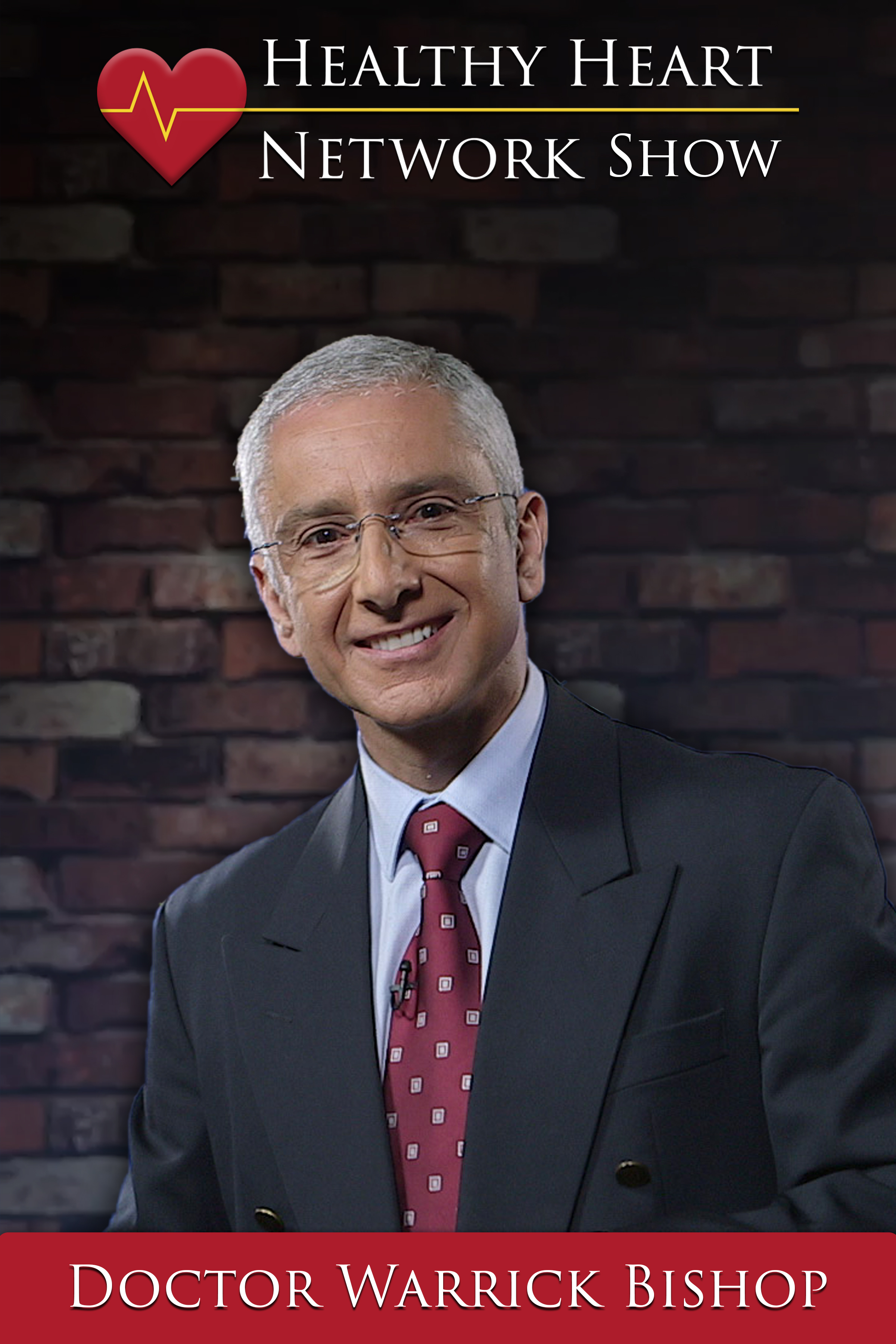
**Dr Warrick Bishop:** Welcome, my name's Dr Warrick Bishop. I'm a cardiologist, an author, and a keynote speaker. I'm the CEO of the Healthy Heart Network. I'm all about trying to help people live as well as possible for as long as possible. Heart disease is huge in Australia. Every 20 minutes, someone suffers a heart attack. Most of these could probably have been avoided if only we knew what to do. This podcast is all about helping you understand blood pressure, weight, and cholesterol for better health. If you enjoy this podcast, I would be honored for a five-star review. You can share it with your family and friends. It may well save someone you love.
**Dr. Warrick Bishop:** Hi, it's Warrick Bishop here, or Dr. Warrick. Welcome to my podcast and videocast station. As always, I really genuinely appreciate that you've used your valuable time to tune in, and I hope you find that what I'm producing, the content that I'm sharing, is something that helps you or someone you love with your best medical journey. I feel really quite grateful. This is a great opportunity.
A regenerative therapy center in Austin, Texas, joined me already for a podcast where we talked about some of the concepts behind anti-aging, preventing people from getting sick, and optimizing hormones. It is a fascinating space, and it's new. So first of all, welcome Dr. Khan. Thank you for joining me again.
**Dr. Khanh:** Yes, hello again! Let's do it.
**Dr. Warrick Bishop:** For those listening, I promised that what we would talk about this time is some of the available therapies or techniques that can be used for this area of anti-aging medicine. Now, we've already touched on hormone replacement therapy, so maybe we start with that just very quickly. Dr. Khan, when you're seeing someone for hormone replacement therapy, I think you mentioned the hormones you check. Maybe a quick run-through on those just as a reminder.
**Dr. Khanh:** Yeah, to set the scene. So typically, you know, people come to see me and they already have an idea that maybe my hormones are great. So there's already some awareness. Sometimes not, but most of the time they're aware. So what I start out with is a very comprehensive list of questionnaires so that I don't miss anything in terms of symptoms. And then, you know, they already have their extensive blood panel. So we have a panel for hormone replacement, and I have a more comprehensive blood test in terms of hormone replacement. We look at total testosterone, free testosterone, the sex hormone binding globulin, DHEA. We look at the full thyroid panel, including TSH, free T3, free T4, TPO, and then we look at cortisol levels, fasting cortisol levels. We look at ferritin levels, CBC, just the basic metabolic panel to look at the electrolytes, kidney function, liver function as a basic. And then what else? We look at HCRV, CRP for inflammation. And then we look at homocysteine levels. I always check vitamin D levels. What else? For women, we look at estrogen, progesterone, FSH, and for men, I forgot to mention that we also look at the metabolic panel, and that includes hemoglobin A1C, fasting glucose, and probably insulin at the same time as well, I'm guessing.
**Dr. Warrick Bishop:** And fasting insulin, right?
**Dr. Khanh:** Right, fasting insulin, which would be if I only have to do one test, that would be the one, actually. My own practice for insulin, those listening in may be aware because I will have spoken about it before, is I regularly use the homeostatic metabolic assessment ratio, which is basically a calculation on fasting insulin and glucose to give some sort of general insight into insulin resistance.
With those tests, Dr. Khan, for those listening, when would you start to see these changes occurring? And therefore, what sort of ages should people be starting to think that their hormones might be dropping off? So, for example, at 90 years of age, what percentage of women might have low testosterone? What percentage of women will have low estrogen, progesterone, things like that?
**Dr. Khanh:** Yeah, so, you know, for human peak performance, it's 18 to 25. Okay? So after that, every year is going down. And when you are, you know, past 30, like around mid-30s is when, you know, if you have symptoms, there's a role for optimization. And of course, the selection of which hormone to replace, even for men for testosterone, we have, you know, it's very based on age. But we really go by symptoms. We look at the range, but that is just to guide us. Symptoms are more important. That drives the decision in terms of what to do and when to do it. And it's really not a question of if somebody should start on hormone replacement; it should be when is the right time to do it. It's not if, in my opinion.
**Dr. Warrick Bishop:** And for those listening and for my own education, once you've started hormone replacement therapy, are you pretty committed for the rest of your life? Because if you withdraw it, has the body been turned off? So are you sort of stuck with it forever?
**Dr. Khanh:** Right. So it's a philosophical question. There's nothing wrong with accepting the normal decline associated with aging. And if you're okay with that, you have the option to do that. Or if you want to do something, you want to be proactive. And if you want to bring your hormone level to the peak function for humans and not push it to a crazy high supraphysiologic level, that's the other option. Now, in terms of once you get started, can you stop or are you going to be depending on that? The reality is you can stop when you start, but you're just going to feel bad again. So if you're willing to do that, you can certainly stop. And what I suggest is, you know, to slowly wean off. With age, you just kind of progressively go, you know, less and less. And you can, let's say a 60-year-old male goes on testosterone, feels great, and then decides, "Hey, I just want to go off. I don't want to be on it. I don't want to be bothered." Yes, they can go off. They just kind of feel bad. And if you want to go back on it again, you can, but I give people options. So it's not like you actually cannot, but just knowing that when you get off, you're going to feel worse, and then you're going to lose the protection against multiple medical issues, you know, including heart disease, stroke, dementia. So this would be a conversation that an individual would have with their anti-aging specialist.
Let's move past the hormones and let's try and cover some of the different modalities available for anti-aging. As we've spoken about, you know, that locally here, I'm involved with the delivery of IV vitamins, minerals, chelation, and NAD+. For those who haven't heard what NAD+ is, it's really an energy source for the mitochondria to help the cells work as best as possible. So it's giving the cells an energy supply. Where do you see things like vitamins, minerals, NAD+, or even chelation fitting into that anti-aging journey, Dr. Khan?
**Dr. Khanh:** Yeah, so, you know, due to our current environment, the soil is depleted. So the amount of minerals and vitamins in the food that we eat is a lot less. And so, yes, we do measure. And if the level is low, we should have replacement. And we can do oil supplementation. And then IV is definitely another modality that is more direct and is more effective. I have people that will come regularly to have IV vitamins, NAD. We have different mixtures for immune optimization, for repair recovery. There are different things.
I have my patients before they go on a big trip to Europe, or, you know, they will come in and do that, and when they return, they will come back and do that just to get rehydrated and just to get replete with all the minerals that are needed. And then, NAD is another source of... They kind of need it to feed the mitochondria, and the mitochondria are needed to produce ATP, which is like the currency for energy, right? And with age and with poor health, that NAD level is lower. And so this is an attempt to help to optimize our mitochondria. The mitochondria is kind of like the battery of all cells, and so when that gets optimized, then across the board, across all cells, all organs will be optimized so that can be used for energy, for repair, recovery, for traumatic brain injury, you know, autoimmune conditions. It's just so many things.
**Dr. Warrick Bishop:** Have you seen clinical examples or patient examples where this has made a profound difference for people, Dr. Khan?
**Dr. Khanh:** Yes, absolutely. I have multiple, but one story that is really profound: during COVID, I had a fairly young professor who got COVID, and he just became, you know, debilitated. Brain fog. He would go for a walk for 15 minutes, and then he would have to sleep for hours, just like debilitated. So we did a combination of a peptide combination and a series of NAD. It was really life-changing. I remember he, when he came to me, said, "Well, you know, in a few months, I have a conference in Europe. It's an academic conference. I really want to go. But the way it is now, there's no way." And sure enough, I received an email from him, you know, from Europe. He's like, "Well, I'm here. I'm completely normal, and I'm fixed." Wow! It's, you know, it's... and I have to say it's a combination. And that's the theme for what I do. You know, you can do one thing, but the best is to figure out, you know, what's missing, what's suboptimal, and optimize everything to get the best result.
**Dr. Warrick Bishop:** So one of the things you mentioned in that story about that young professor was peptides as well. Well, what is a peptide, and how did you use that for this person?
**Dr. Khanh:** So this is my passion, and, you know, I'm an expert in that. And I, you know, in medicine, as you know, we can't guarantee anything, really. But in terms of peptides, I have to say I have the most confidence in, right, in terms of the effectiveness and the benefit. Peptides are small protein sequences of amino acids. For the amino acids linked together, or less is a peptide. And then bigger than that is a polypeptide and then a protein. So what that means is it's natural; it's amino acid, and the body makes these peptides. When we use, when we talk about peptide therapy, we copy the exact sequence of these peptides, but they are being made in the compounding pharmacy.
So with peptide therapy, I think of that as, you know, what do I want to achieve? Peptides are under different big categories such as repair recovery. There's a big category for immune modulation, and then there's peptides for mitochondria, there's peptides for telomere length, and there's peptides for, you know, brain—it's called neural peptides. So there's just many different categories. To take that to the next level is sequencing, combining these peptides in a way that it’s best for you. Like everyone comes in with, you know, different situations, and then we have to figure out, okay, what is needed to address first? Because if you use a peptide in the wrong sequence, you might get the benefit right away, but then you get burned.
Meaning it's just like, for example, we talk about a car analogy. If we take a sports car without looking at the oil and the engine check, and then you just, you know, floor it and go really fast, it can go fast, but then, you know, it gets burned down and gets crashed. So the sequence, you know, when to start, what is very important. And, yeah, it's very effective.
**Dr. Warrick Bishop:** Okay. Well, look, for those listening, and you're wondering if these peptides are on the fringe of medicine or not, you may well have heard of some very common peptides that are used regularly. And these are the semaglutide to zepatide type peptides, which you might know as Ozempic or Wegovy or Monjaro. And these are the weight loss peptides. A very easy way to understand a peptide, as Dr. Khan was saying, is it's almost a piece of an active protein. So for example, testosterone is a protein, but if you imagine that protein floating around the body and then connecting or linking to a cell, that whole protein may just have a reactive end or a particular point within that protein that interacts with the cell receptor. The peptide is just replicating that bit that reacts, not the other stuff. So it is, as Dr. Khan said, natural. We use them a lot. And it sounds like there are many available, Dr. Khan, which is interesting.
And mainly they signal the body to do specific tasks, as you mentioned. And so we, you know, depending on what outcome or what signal we want, then we use the appropriate protein. Insulin is the very first peptide that was made years ago, and it's life-changing.
**Dr. Khanh:** Yeah, of course. And, you know, it would be a miss to not talk a little bit about the GLP-1, GIP, because everyone talks about that. And there's a lot of, you know, misunderstanding about that because I think GLP-1 is probably one of the best peptides available. And it's beyond weight loss. It is part of the toolbox for cardiovascular protection, for brain protection, for gut protection, and so forth. And when used appropriately under the right care, meaning you want to monitor closely your muscle mass and your protein intake so that we drop the fat and not lose muscle, which is really, really important. And it can be done if it's done correctly, with the correct monitoring, with instruction to tell patients specifically how much protein to eat. And we have to monitor your muscle mass and not just the number on the scale. So that is important. So when it's done right, it's amazing. And then you're not staying on it forever, right? We train patients to eat correctly, to eat the right things. And then once they achieve the goal of a healthy body composition, then we can switch that into a preventive low dose. You know, like somebody who has a high risk for heart disease or already has heart disease, a low dose GLP-1 is definitely part of the toolbox for that.
**Dr. Warrick Bishop:** Okay. Let's keep skipping through some of the agents that are available. One of the things, because I took an opportunity to look at your website, if anyone's curious, and particularly if you live in Austin, Texas, check out Dr. Khan Wen's website, which is the Austin Regenerative Therapy (ART) website. But there's a whole list of things. One of the things you've got in there is PRP. What is that, Dr. Khan? What's PRP?
**Dr. Khanh:** Yes, yes. So PRP stands for platelet-rich plasma, and that is under the category of regenerative therapy. It's using the body's own growth factor to address various conditions. PRP is mainly first used in the orthopedic world, and now we use that for aesthetic purposes, you know, for skin rejuvenation, for hair rejuvenation, for sexual optimization. Using the same principle is under a category called biologic, meaning it's just a natural option to help the body to repair and regenerate. And under that category, you know, PRP is kind of like the foundation.
And then we also have young plasma, which is the plasma from healthy donors aged 18 to 25, and that is proven to be a lot more potent. I'm happy to share more information about young plasma because it is like one of the most advanced options in regenerative medicine. We use that in a therapy called young plasma exchange, which is a procedure where we remove the old plasma, which is loaded with the senescent cell or zombie cell byproducts, a lot of inflammatory byproducts, toxins, microplastics, and so forth. And then we have the option of replacing that plasma that was removed with albumin or normal saline or with young plasma, which is like the best option.
**Dr. Warrick Bishop:** Where are you getting the young plasma from? Are these people who are paid to donate for your center?
**Dr. Khanh:** This is through a private AABB accredited center. They screen for qualified donors. And as I mentioned, it has to be 18 to 25 because that's kind of like the peak performance. And then they get screened, and they have to be qualified. And talking about the safety of the plasma product, I mean, we've been using, as you know, we've been using plasma for over 100 years. The safety is well established, meaning, you know, for example, in 2021 to 2022, there was no reported death from plasma transfusion. In 2019, there were over two million units being transfused, and there was one preventable death. So, you know, using plasma, that has a long history and is well-established. But what's new is that using young plasma, which now it turns out, young plasma has a very rich combination of thousands of proteins, hormones, cytokines, and particularly, it's just loaded with small extracellular vesicles or exosomes.
And, you know, there are studies that show that it is these exosomes that carry the message to the aged cells in the recipient and pretty much tell these aging cells to act younger again. And so it’s just fascinating.
**Dr. Warrick Bishop:** Have you had young plasma exchange?
**Dr. Khanh:** I sure did! Yeah, I have gone like three rounds of young plasma exchange, and I have had like a total of five liters in me.
**Dr. Warrick Bishop:** Wow! And how did you, what did you notice from that?
**Dr. Khanh:** Yeah, so definitely, you know, almost immediately, you just feel a sense of like mental clarity; like the cognitive function is insane, and the energy surge is definitely there. And then, you know, just like the subtle aches and pains. And when you look at the blood, the biomarkers definitely... Blood sugar control improved. Hemoglobin A1C would be reduced. Inflammation markers across the board would be lower. And then we also track for biological age. And in terms of the heart, there's evidence of improvement in left ventricular hypertrophy and improved cardiac ejection fraction.
**Dr. Warrick Bishop:** Yeah, wow, wow, wow.
**Dr. Khanh:** Yeah, yeah, yeah.
**Dr. Warrick Bishop:** Well, let's cover this last tool on your list of accessible tools in your toolkit. You've got sexual optimization on your website. What sort of, there's a P-SHOT and an O-SHOT. Do you want to talk about those briefly, Dr. Khan?
**Dr. Khanh:** Well, P-SHOT stands for... And so that's for men. And O-SHOT stands for orgasm shot. And that's for women. But it's based on the same principle. P-SHOT is where we have the option of using PRP or, you know, higher options such as young plasma, as we talked about, or exosome. And we inject that into the shaft of the penis in the cavernous cavernosum and also directly into the gland penis into the tip. And why we do that is to deliver growth factors and signaling agents to improve the health of the tissue in the erectile tissue, to improve microcirculation, to improve the health of the nerve, and therefore that leads to a stronger erection, longer-lasting erection, and a more satisfactory orgasm.
For women, we inject biologic PRP and so forth into around the G-spot and directly into the clitoris. And again, it will signal the body to make the tissue there healthier, leading to more lubrication, tighter feeling, and improved sensitivity. And these are the procedures that I find really rewarding as a provider because, A, I make all of my patients aware that, you know, it's not your fault. There's nothing to be ashamed or embarrassed about because it's just part of life. And if you can do something, you know, it's pretty minimally invasive, it's natural, it's safe, and it's life-changing because when you improve sexual function, it will definitely improve your self-confidence, improve your relationship, right? And you can be a better husband, better wife, better boss, better friend. Because when you feel good about yourself, healthy sexual health is equal to better health.
So I'm a big fan of that. And of course, we have to address all different topics relating to sexual health, meaning we discuss hormone optimization. We need to fix that. We need to fix the lifestyle, you know, alcohol, sleep, substance abuse, medication, optimizing health. You know, if you have uncontrolled diabetes, hypertension, all of that we need to address. And also, when somebody comes in with ED, it's kind of like a prompt for me to screen for cardiovascular disease because it's an earlier sign of that, right? And so we look at the patient's blood pressure, look at the inflammation, look at blood sugar control, and lipid panel.
**Dr. Warrick Bishop:** Okay. Luca, this has been fantastic. For those listening, we've covered all sorts of stuff. We've talked about hormone replacement therapy. We've talked about IV minerals and vitamins. We've talked about NAD+. We've covered a range of different peptides in a very superficial way, but there's obviously lots out there. We've talked about PRP, which is plasma, sorry, platelet-enriched injections. We've talked about young plasma exchange, which is something I've never heard of, and we've touched on sexual optimizations. I think we've covered a huge amount of stuff.
If you're interested, go and look at Dr. Khan Wen's website, which is the Austin Regenerative Therapy website. There's lots of information there. But what I'd like to do is thank you for sharing, and we'll wrap up now. Maybe come back for those listening who want to know more; we'll come back and do a case study, and that case study might be a 60-odd-year-old male and how you might approach that.
Thank you again, Dr. Khan, for sharing.
**Dr. Khanh:** Thank you!
**Dr. Warrick Bishop:** For those listening, it's always a pleasure to share. I really hope you've got something valuable out of it. If you've got any queries or questions, drop us a note. And as always, I hope you live as well as possible for as long as possible. Take care and bye for now.
Did you know that coronary artery disease kills one in four people? So most of us are likely to carry some risk or know someone who does. If you're interested in finding out more about how to evaluate that risk, check out www.virtualheartcheck.com.au. It will give you information about risk and what else can be done to be even more precise.