**EP406: Dr. Sara Tariq on Bias and Emotional Intelligence**
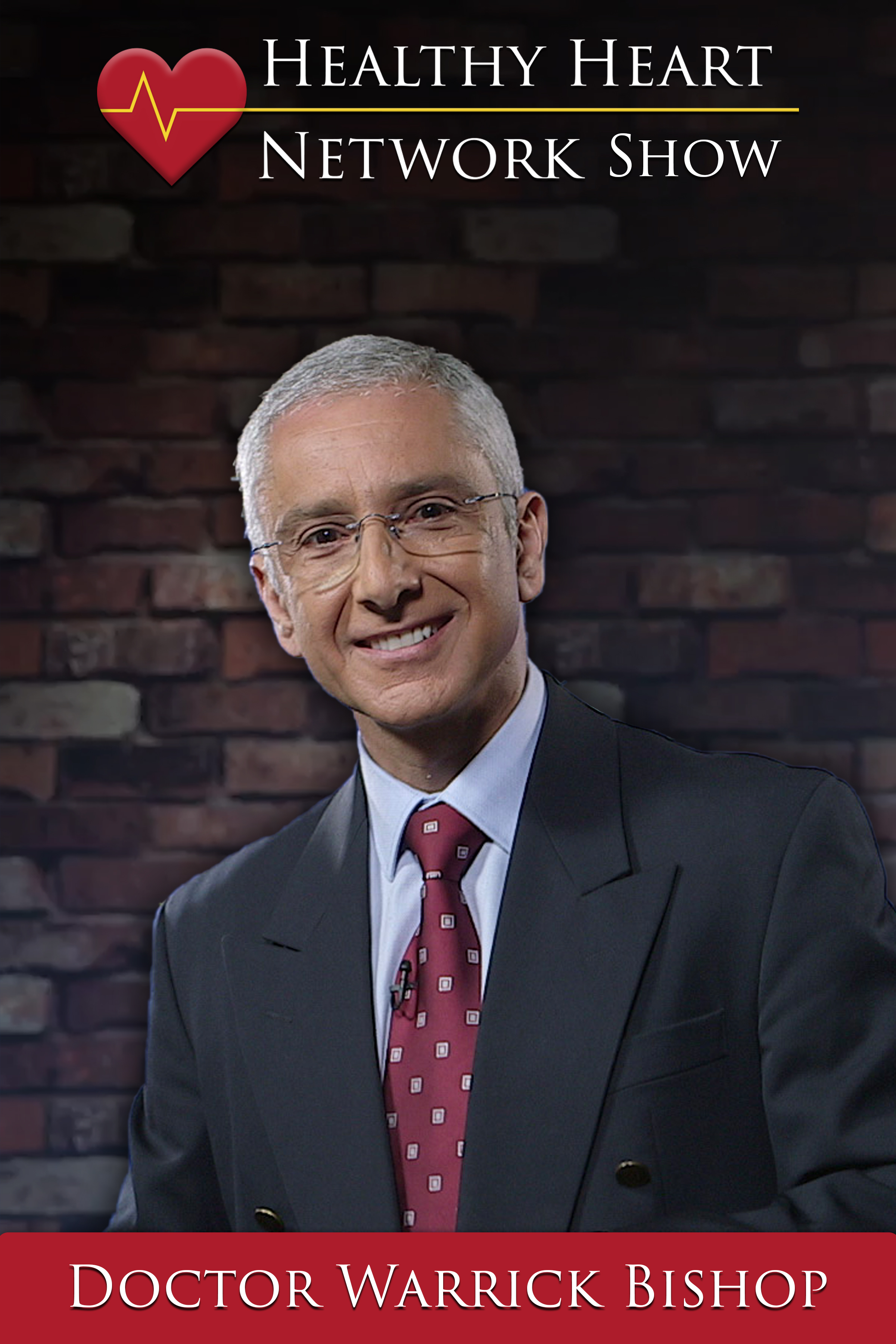
**Dr. Warrick Bishop:** Welcome, my name's Dr. Warrick Bishop. I'm a cardiologist, an author, and a keynote speaker. I'm the CEO of the Healthy Heart Network. I'm all about trying to help people live as well as possible for as long as possible. Heart disease is huge in Australia. Every 20 minutes, someone suffers a heart attack. Most of these could probably have been avoided if only we knew what to do. This podcast is all about helping you understand blood pressure, weight, and cholesterol for better health. If you enjoy this podcast, I would be honored for a five-star review. You can share it with your family and friends. It may well save someone you love.
Hi, my name is Dr. Warrick, and welcome to my podcast and videocast station. I'm really delighted today to be able to introduce Dr. Sara Tariq, who has over 20 years of experience in internal medicine. She's worked as an academic at the University of Arkansas and, in more recent times, has been working in the North Virginia Family Practice. She has a particular interest in bias within medicine, women's health, and equality. I'm really delighted that we're able to connect, actually on opposite sides of the world, and share. So welcome, Dr. Sara. Thank you for joining me.
**Dr. Sara Tariq:** Thank you so much, Dr. Warrick. It's a pleasure to be here.
**Dr. Warrick Bishop:** So we've actually got lots to talk about. I'm going to jump in as quick as we can. Some of the information here is so important to the delivery of healthcare that I really hope that if you listen to this and you find it informative, which I know you will because Dr. Sara and I have already been talking and we've blown 15 to 20 minutes getting ready to start recording this because it's so rich in content. If you find this interesting, please share it with someone because this information needs to get out, and people need to be aware of it—patients and doctors.
What I want to kick off with, Dr. Sara, is the importance of medical bias. First of all, tell us what that means.
**Dr. Sara Tariq:** So, yeah, absolutely. I think you're absolutely right. As humans, we all possess biases, right, that are informed as a result of our culture, upbringing, and environment. The part that I'm really interested in is the unconscious bias that we have in medicine as physicians. Of course, unconscious bias is those biases that we're really not totally aware of. If you look at the literature in medicine, we have seen data out of Australia that has shown that emergency medicine physicians, for example, hold biases against people of different races. We hold biases against the LGBTQ community. Even though we don't overtly have conscious biases, oftentimes in medicine, because we're taught to heal and care for patients, we still have those unconscious biases.
What the literature and the data show is that unconscious biases on the part of the physician can result in worse outcomes for our patients. The most notable example that comes to mind is there are several studies in your field of cardiology, where in the United States, when Black people come into the emergency room with chest pain, they are dismissed at a higher rate than non-Black patients. We know that that's associated with unconscious biases. It's not that physicians are horrible people or that we are racist; it's not that, but we do have unconscious biases. I think it's really important, more than ever in this world right now, that we work to uncover those. And that's hard because it takes awareness on the physician's part.
**Dr. Warrick Bishop:** As you're discussing this, Dr. Sara, all I can think of is that we know what we know. We often know what we don't know, but we don't know what we don't know. I think what you're doing here is really shining a light on that area of what we don't know we don't know. I have to say, it's almost making me a bit uncomfortable because I'm trying to think through what my biases are. So how does someone like me or another medical practitioner start to unpack that and understand where those biases may be coming from? How can we appreciate them so that they don't impact or diminish the care we give to our patients?
**Dr. Sara Tariq:** Absolutely. I think the point you made just hit the nail on the head, which is that it's uncomfortable first. It's uncomfortable for us to feel that we are biased against other people who are not like us. So that's one. The first step is really getting comfortable with the idea. The way to learn about our biases, the simplest way to do this is free and quick. You may have heard of the Harvard Implicit Association Test. It's a test that's been used thousands of times. It's been cited in the literature—psychology literature, education literature, medical education literature—hundreds and hundreds of times. It's probably the most validated test on implicit association and unconscious bias.
**Dr. Warrick Bishop:** Sorry, Dr. Sara, could you just repeat that test again slowly in case someone wants to go and jump online and try it?
**Dr. Sara Tariq:** Absolutely. It's called, if you Google Harvard Implicit Association Test, or Harvard IAT, you can get on that website and choose which areas you feel you might be biased in. For example, there's one on people who are overweight, one on Black people, women, LGBTQ individuals, and one on Muslims and Arabs. You can take all those tests. I've taken the test before and have not been pleased with my results.
**Dr. Warrick Bishop:** Okay. So this is a self-assessment on how you might be subconsciously processing some of these biases, is that correct?
**Dr. Sara Tariq:** That's absolutely right. There's also a movement across many medical schools in the United States where we are doing implicit bias workshops for not only our faculty but for our students as well.
**Dr. Warrick Bishop:** Wow. This is a fascinating space. I mean, you obviously worked in clinical medicine, and anyone out there who's worked in clinical medicine or even in the service industry, which is really what medical practitioners are, we are completely comfortable with this idea that people are different and we get different personalities coming at us. It takes you a few years to realize that when someone's personality rubs you the wrong way, that's really a problem that they have and you need to unpick. You don't take it personally and fight back. It's taken me a little while to learn that. But this is another space again. Has someone done any economic modeling to sort of say the cost of this to the community? Has anyone done any outcome data to say the cost of this to individuals is a certain amount? Really, through that awareness or that gap, force us to focus on it more?
**Dr. Sara Tariq:** So actually, I did a pretty detailed literature review on bias and the outcomes about three or four years ago. Really, there haven't been any articles or studies that have come out specifically examining economics and the financial implications. What we have seen, though, which is what I worry about as a primary care physician, is not only the outcomes—in terms of worse outcomes in cardiovascular disease, worse outcomes in mental health, and in terms of the time that the physician will give to the patient that they have an unconscious bias against—but it also erodes trust on the part of the patient.
**Dr. Warrick Bishop:** 100%. I have medical students, and there are a couple of things I try to teach them. Actually, I don't teach them medicine because they should learn that in the classrooms. They do just an experience in the clinic with me. I teach them three things. The very first thing is people don't care how much you know until they know how much you care.
**Dr. Sara Tariq:** Absolutely.
**Dr. Warrick Bishop:** If that relationship is not right, patients will not get better. They won't take your tablets. They won't embrace exercise. They won't trust you and work with you. That's huge. Actually, that's almost a neat segue because one of the other things you're particularly interested in is personalized care and chronic disease. I can only imagine that requires a really close relationship and connectivity where you and the patient own the journey. Tell me a little bit about how you look at that personalized care and chronic disease impact.
**Dr. Sara Tariq:** Sure, absolutely. For me, when I think about personalized care within the context of chronic illness, I'm thinking of a couple of things. Number one, I'm thinking of a partnership with the patient, right? Depending on their background, depending on how much they feel or want to be involved in the decision-making or their family. So that's part of it. The other part of personalized care is helping my patients feel empowered to be my partner. Empowerment is associated with giving agency, and people feel like they have agency when they feel heard and validated, right? And so that takes time.
In our rushed world of seeing patients back to back to back, we really don't have that luxury of time often. I try to be very intentional about attempting to understand the beliefs and attitudes of my patients about their illness. Every human has an emotional experience of their illness. Particularly in the context of chronic disease, we see four major emotional issues with patients: feelings of isolation—oh my God, I'm the only person in the world who's dealing with this; coming to terms with the loss of an organ, of the ability to function as they used to, of the ability to work; facing and managing uncertainty, which traditionally medicine has not done a fantastic job of helping, right? We tell the diagnosis, here's the medicine, and we might tell you two or three things about it, and then we move on. We really don't spend time helping the patient manage that uncertainty. And then, of course, the loss of trust within the physicians and loss of trust within the system. When we're attuned to the emotional experience, the data even shows that we invariably improve the motivation for our patients and adherence, leading to better outcomes. There's tons of literature behind this as well.
**Dr. Warrick Bishop:** Dr. Sara, can I jump in there just really quickly? Uncertainty. I had an amazing patient just in this last week who had seen another cardiologist and came to me for a second opinion. The other cardiologist had done a cardiac CT scan and identified a plaque in the left anterior descending artery down the front of the heart. This is a really significant finding. I'm speaking to language here, actually. Chronic disease, because atherosclerosis is a chronic disease. Language, uncertainty. I'll have one other thing I'll add at the end of this. But this woman came to me with palpitations and anxiety. As I went through the consultation and wrapped what was underneath it, she'd been told that this plaque in her main artery down the front of her heart was a ticking time bomb by her cardiologist. Now, I'm sort of laughing because I'm uncomfortable about it, and I just suddenly realized how critical our language is.
**Dr. Sara Tariq:** Yeah, you're speechless. I could see where you were going as soon as you said that. I thought, oh, bless it. So number one, I think we have to be so careful about creating that environment and removing some of that uncertainty. What I'll also say is those things that you're talking about, in my own experience for what it's worth—I'm not psych trained at all—but I think when people have a chronic illness, they actually go through the process of loss. It's exactly, you know, as if you would mourn an individual. You mourn good health, and there are those stages of grief.
**Dr. Sara Tariq:** That's right. I think we see that in chronic disease. I'm sure that's what you sort of touched on in these points of view.
**Dr. Warrick Bishop:** Absolutely. And we've all made those mistakes, right? I deal with type 2 diabetes every day, and we tend to get a little casual about it and not feel with the patient. I made the horrible mistake one day when I gave a new diagnosis to a patient over the phone of type 2. I thought, oh, it's type 2 diabetes. She was pre-diabetic for a couple of years. She was expected; we knew this would likely happen. I told her the diagnosis, and she called me back and said, "You just gave me a life-altering diagnosis and didn't even spend the time with me." I thought, oh my gosh, I made a grave mistake. I wasn't there for her in that process of mourning and through those stages and through the disbelief and the concerns and the questions, right? I think those things, we all learn the hard way.
**Dr. Sara Tariq:** Yeah, yeah. Our patients teach us more than any book, actually. There's no question about that.
**Dr. Warrick Bishop:** Absolutely. So, look, I'm super interested in how that personalized care dovetails with something that you're also very interested in, which is this concept of emotional intelligence. Now, it's a relatively new term for me, emotional intelligence. We know what IQ is. But for those listening, can you talk about what emotional intelligence is and how it may be the single most powerful tool we have for medicine?
**Dr. Sara Tariq:** Absolutely. It's a topic that I originally got interested in about seven or eight years ago when I first read a book about it. Basically, in short form, emotional intelligence is the ability to recognize emotions in others, in the moment, and in ourselves, right? It's a sense of emotional awareness. The sort of street word phrase that we use is "read the room." How are you able to assess what your patient is feeling based on their facial expressions, based on the way they respond? How can you, in real time, respond to that? What we've seen—and there's a growing amount of literature that shows that physicians really need this training on emotional intelligence—because we are in, again, a very fast-paced environment. We're very highly stressed. And of course, when we're stressed and rushing, our manners and our frontal lobe probably release a little bit when we're tired and overworked. Tuning into that is really important, and it is absolutely connected to being attuned to that patient's emotional experience of chronic illness, right? That we just talked about, which is trying to read the emotion beneath the words. That takes practice. That takes training.
There's actually another quiz that you can take. I forgot the name of it, to be honest, but if you Google emotional intelligence quiz, you can take the quiz from the book that was written several years ago. It really categorizes our emotional intelligence in four different areas: situational awareness, the ability to regulate your own emotions, and awareness is one area, and then the ability to regulate it once you realize it.
**Dr. Warrick Bishop:** You said something that demonstrated to me that you have pretty decent emotional intelligence. You said you were talking about the discomfort that you felt, and you said, "I'm laughing because I'm a little uncomfortable." That shows you're really in tune with what you're feeling and very comfortable sharing that.
**Dr. Sara Tariq:** Right. So that's a perfect example of it.
**Dr. Warrick Bishop:** Well, I'll give you another one. This makes me wonder if we actually need our own headspace to have emotional intelligence. I used to work like a normal cardiologist—100 hours a week, did that for a very long time, constantly stressed, constantly battling through the consultation processes, stuff on the wards, everything. Life in general, actually. In recent times, shaggy dog story, those listening might know that I had open heart surgery for a dilated aorta. I've had that fixed and I've gone back to work, but part-time and really just as it makes sense. There's a bit of fatigue that follows open heart surgery. But the consequence of going back part-time, Dr. Sara, has been that I work three mornings a week, three hours on each of those mornings. I see, after an hour and a half, I have a coffee break. So I have this extraordinarily different environment where I work. There's no pressure at all; if I run over time, it doesn't matter. I had this cathartic moment six to nine months into this new sort of work pattern where a patient was sitting in front of me, and in the back of my head, a voice said, "Gee, Warrick, this person would have really irritated you a couple of years ago." And another voice said, "Yeah, isn't that interesting?" I think what I realized was I was burnt out, and I didn't have that insight. I didn't have the space for that emotional intelligence, which actually requires energy.
**Dr. Sara Tariq:** You are so speaking to my heart, Dr. Warrick. This is really part of the reason why I left academic medicine. I had always wanted to care for patients in the way that I was never able to care for patients, which was with intentionality. I've had a couple of experiences with patients in the clinic room that were deeply, almost spiritual—just beautiful connections. I wanted more of that. Joining a Northern Virginia family practice, which is a concierge practice, allows me to see eight to ten patients a day instead of 11 patients in a half day, which is what I'm used to. This opportunity is something that I decided to do a 180 and try something different, and it's been wonderful.
**Dr. Warrick Bishop:** Yeah, look, my learning is that as medicos, we have to look after ourselves first. If we don't make sure we're okay, then we can't. We don't have the reserve. We don't have the spare emotion. We don't have stuff to give. So, yeah. Totally. Pretty important.
Dr. Sara, I think we could talk easily for hours and probably share stories. I'm aware of the time; we've run way over my normal 10 to 15 minutes because it was effortless speaking and sharing and talking. I'm going to thank you for joining me. It's an absolute pleasure.
**Dr. Sara Tariq:** Thank you. I feel the same. We could have talked forever.
**Dr. Warrick Bishop:** Look, maybe another day. Maybe we schedule another one. I'd love to do that. For those listening, I'm 100% sure you will have found this incredibly important, and you would resonate with it because we've talked about stuff that we've all experienced. I'd love you to share the podcast or check out the videocast. You can see us talking on the videocast. If you've got any queries or questions, drop us a note at info@drWarrickbishop.online. For now, I'm going to thank you again one last time, Dr. Sara. I really appreciate you joining us. And for those listening, I really appreciate your time. If you've taken the time to listen to this, I know how valuable your time is. If you've given it to me, I hope I've respected it. Until next time, live as well as possible for as long as possible. Take care and bye for now.
Hi. Ever wondered what your risk of heart attack is? You should. It's the single biggest killer in the Western world. We're talking one death less than every 30 minutes in Australia. One death less than every 60 seconds in the United States. Nine million deaths globally per annum. Well, how do you check your risk? You can go to www.virtualheartcheck.com.au. You'll find out about your risk and what can be done beyond that to be even more precise.