**EP389: Inflammation, CAC & Metabolic Dysfunction**
**Dr. Warrick Bishop:** Welcome, my name's Dr. Warrick Bishop. I'm a cardiologist, an author, and a keynote speaker. I'm the CEO of the Healthy Heart Network. I'm all about trying to help people live as well as possible for as long as possible. Heart disease is huge in Australia. Every 20 minutes, someone suffers a heart attack. Most of these could probably have been avoided if only we knew what to do. This podcast is all about helping you understand blood pressure, weight, and cholesterol for better health. If you enjoy this podcast, I would be honoured for a five-star review. You can share it with your family and friends. It may well save someone you love.
**Warrick:** G'day, it's Warrick here, and thank you for joining me on my podcast and videocast station. I often say I'm really appreciative of you tuning in. And I'll say it again, I am. Thanks so much for listening. I really hope you find something informative, interesting, and possibly even entertaining as we talk and share today.
I'm going to be talking about inflammation. This word comes up an awful lot. I'm going to talk about arterial calcification and how we can use that for risk prediction. And I'm going to talk about metabolic dysfunction, really meaning how the body's just not running clean fuel, like our car not being properly tuned.
So, let's talk about inflammation, the invisible spark to the fire of illness that we often confront. Often when we think of heart attacks, we think of them as a plumbing problem—blocked pipes, clogged arteries. That's sort of only part of the story. Many heart attacks happen not because of gradual narrowing, but because of plaque rupture, where a soft plaque becomes inflamed. The covering for that plaque cracks, splits, and the contents of the blood come into contact with the contents of the plaque. They're not meant to happen, and there is formation of a clot that suddenly blocks that artery. That inflammation, that plaque rupture, that cracking—that's inflammation. That's inflammation at work.
And it doesn't just happen in response to injury or infection. It can be much broader than that. In modern life, we often think of it as a driver of poor metabolic health, with inflammation associated with stress, lack of sleep, and visceral fat. The sort of fat that wraps around your organs will generate inflammation of its own, and chronic conditions, unfortunately, will often be linked to inflammation—things like diabetes, but even joint problems like arthritis or psoriasis. So, we need to think of where inflammation may be problematic for an individual, what we can do to help that particular individual, and are there lifestyle changes that may mitigate or at least modify that risk.
Sleep actually is really important when it comes to reducing inflammation. Exercise helps, which is ironic, obviously, because we think of exercise as creating lots of free radicals when you're burning oxygen through your electron transfer chain in the mitochondria. But by burning that oxygen, you actually then free up space and reduce subsequent inflammation or free up ions and so forth so that there's less inflammation subsequently. So yes, inflammation when you exercise is reduced subsequently. Managing stress and looking at diet are all important things as well. And we've even touched on salt as being a significant contributor to inflammation. If you do have a chronic condition linked to inflammation, the sort of autoimmune disorders, then those being addressed and appropriately treated will contribute to the reduction of inflammation in the longer term.
You probably know that I'm a strong advocate of coronary artery calcium scoring, and it really is one of the most powerful tools that we can use to show us what's going on within the heart. It's super valuable because it takes us past guessing and it takes us past traditional risk scores, which look at things like age, sex, cholesterol, smoking history, and blood pressure. Those risk scores are population-based; they tell us a rate of event within a population or how often that event will occur within a population of a certain number of people. But it doesn't give us real insight into the individual.
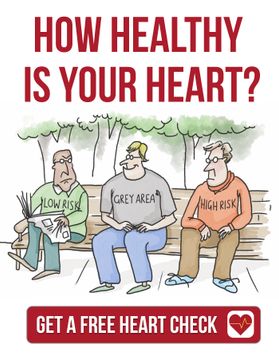
Coronary artery calcium scoring literally takes a picture of the arteries and shows us whether there is plaque in that person—yes or no—and if present, is it mild, moderate, or severe? Really reassuringly, we know if you've got a zero calcium score, you're at pretty low short-term risk. That's over the next five years, and we don't even need to do much in terms of therapy for most people. Even if there are high cholesterol levels or pre-diabetes, these people will still tend to be at very low risk. It doesn't mean we shouldn't address their other risks, but it's a nice reassurance.
Once the score starts to go up, then there's a significant uptick in people's risk. At about 100, a score of 100, we think people should be treated and probably deserve aspirin. At a score of 300, we've got information that tells us that you're at the same risk as someone who's had a heart attack, stroke, stent, or bypass. So how useful is that to identify in someone who hasn't yet had a problem? In my opinion, I think coronary artery calcium scoring is a game changer.
I've actually produced a platform called the Virtual Heart Check, which allows individuals to jump online at www.virtualheartcheck.com.au, put in some details, and purchase a calcium score without the need to see a GP or a specialist. Therefore, saving time and money and delivering convenience, but most importantly, potentially saving a life. So if you or someone you love is a male aged 45 to 50 and above, or a female aged 55 to 60 and above, and hasn't had their heart checked, please talk to them about getting a heart scan. You may want to use the Virtual Heart Check because it's a really simple way to access a scan in any major centre in Australia.
The last thing I wanted to talk about was metabolic dysfunction and metabolic health, which really relates to insulin resistance. That's probably the main thing that we talk about. Importantly, if you're carrying extra weight and that weight is around the middle, and your triglycerides are up, and your HDL is on the lower side, you've got a slightly high fasting glucose and/or high blood pressure, you may be the sort of person who has the features of metabolic dysfunction. You may not be diabetic yet because your numbers may not be quite there, but I can assure you you're on the way. And that's a problem because we actually know that people with pre-diabetes run the same heart attack risk as people with diabetes. So don't kid yourself. I'm not diabetic; I'm not at risk yet. It is not that straightforward.
That's because metabolic dysfunction is associated with inflammation. It really does fuel it. It is associated with plaque formation. We do know that these individuals, even before they tick over to being full diabetics, carry an increased risk of heart disease, stroke, dementia, and cancer. So that central adiposity, that weight around your tummy, that belt going out, those HDL levels dropping down a bit, those triglycerides creeping up—these are all the canaries in the mine shaft indicating that things are not right. You should be thinking about the best ways to mitigate that and look after yourself, implementing some simple changes: reducing your carbohydrates, reducing alcohol, and exercising regularly is a great way to start straightening out metabolic dysfunction.
So, what did we talk about today? We talked about inflammation. It's a really big deal. That ties in with the last thing we talked about, which was metabolic dysfunction. These almost go hand in hand. And really, really importantly, think about coronary artery calcium scoring, which gives us a window into what's happening in the individual. I've even told you about the Virtual Heart Check. If you Google that for someone you love or they can do it themselves, it's a great way to find out what's going on.
I'm going to wrap it up there. As always, it's fantastic to speak and share, and I hope that you found something beneficial out of today. For now, I'm going to wrap it up. As always, I do hope you live as well as possible for as long as possible. Take care and bye for now.
Join the Healthy Heart Network and become part of our growing community. If you're interested in your heart health and risk of heart attack, then join the Healthy Heart Network for only $5 as a lifetime member. This represents $55 worth of value. We offer and help people understand their present state of heart health, what their current level of risk is, and the positive steps they can take to improve their risk of heart attack in the future. Go to www.healthyheartnetwork.com.au and click the "Join the Family" button.