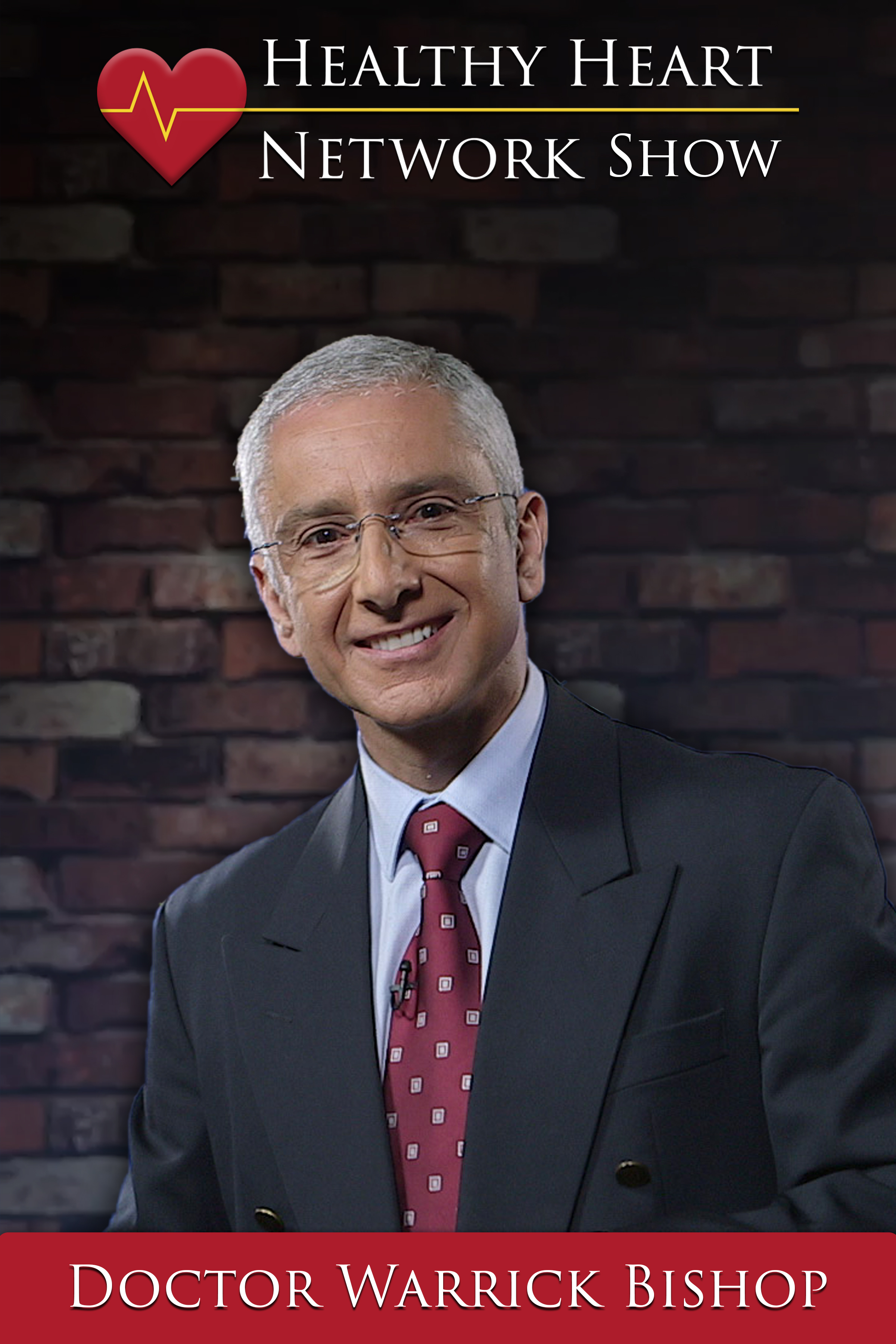
Hi, my name is Dr. Warrick Bishop and welcome to my podcast and videocast station. Now I'm really pleased today to have with me Perry Eckhart. Perry, we go back a little while now, Perry is actually the master franchisor for Australia and New Zealand for OsteoStrong International, which is now obviously OsteoStrong Australia under perry's guidance welcome perry hi Warrick thanks for having me on your show look uh for those who listen to my podcast with any regularity you'll realize that i cover all sorts of things about heart health general health literacy and in the last couple of years i've touched on bone health and my disclosure there is that i'm an osteo strong franchise owner co-owner with my partner shell so i know Perry, very well. We talk about bones, osteo strong and all things around that with some regularity and into great depth for hours at a time. But today, what I'd really like to do is give Perry a chance to share what osteo strong is about and try and give those who are listening some sort of insights into what the service is, how Perry came to chance upon it. and where we think it's going to go, together with a little bit about knowing Perry's background and where he came from. So without any further ado, Perry, how would you describe OsteoStrong to someone who's just tuning in, listening or watching this? So OsteoStrong is a very unique health and wellness program designed to improve the health of your bones and your muscles, reduce your fall and fracture risk, And some of the side benefits of those obvious improvements are reduced joint and back pain, reduced muscle pain, which is called fibromyalgia. We get a lot of our members report really positive bone density improvements, muscle strength gains, improvements in balance, grip strength. And there's also a fair amount of evidence now that we improve blood glucose regulation. So we lower circulating blood glucose because OsteoStrong increases the density of your muscles. So the exercise program that it, I'll take that back. It's not an exercise program. It's what we call physical medicine. So we apply self-applied loads to your bones and muscles through four very special machines called Spectrum. And those machines apply loads on your... actual bone so the the load is through the axis of the bone it's called axial loading and the loading triggers a natural process called osteogenesis improving your bone density but it also challenges your central nervous system and improves your muscle strength and your balance over a period of months so we get quite dramatic improvements in grip strength balance muscle strength, agility, the ability to get your foot out and prevent a fall. And in the bone area, we get improvements in bone density. So we have many members that have reversed osteopenia and osteoporosis over a period of six to 12 months. It's certainly... For those who have not checked out the website or been past an OsteoStrong Centre, there's a couple of pieces of equipment, and these are the Spectrum machines you're alluding to. It's so worth actually dropping in to a centre and feeling how those machines work, because if you were to walk past and look in or check them on the internet, you might think that they are like any piece of gym equipment, but they're quite different, aren't they, Perry? They're very different. So most gym equipment works by progressively overloading muscles and it's either through eccentric or concentric loading of those muscles. You use a, I'll demonstrate through a range of motion and you're weak back here and you're weak out here, but we're eight to 10 times stronger here where our arms and legs are bent at 120 degree angle. So we can actually load in this position, weights eight to 10 times more than with conventional gym equipment. And based on some very old medical science called Wolf's Law, we know that bones adapt to the loads that you apply to them regularly. So if you go to the gym and you typically work out with weights that might be 20 or 40 or 50 kilograms, your bones and muscles adapt to that load. If you go to an osteo-strong centre, today I was pushing over 500 kilograms in the upper GT position. So this is a machine where you're compressing the bones in your arms. I'm able to exert more than 400 kilograms of force quite safely in this position. In the leg position, I'm doing something like 1.3 tonnes. So I'm adapting to weights that are significantly greater than you can safely use in a gym or in a conventional weights workout. So it's very different. We now have more than 10 million loaded sessions from... Spectrum machines with a very, very, very low injury rate. No exercise program or exercise equipment or spectrum equipment is totally risk-free because you are using muscles and joints. But in Australia, we're more than 400,000 sessions without injury. And globally, we're well over 10 million sessions. So it's highly safe. It's a very controlled, slow. system whereby it's self-applied load. There's no moving parts to the machines and you are placed in your strongest mechanical position so that the loads you apply are significantly higher than in a gym. The key to that is a study going back to 2012 by a group of doctors. One was Kevin Deer and it was in the UK and they found that If you didn't apply more than 4.2 multiples of your body weight on your legs and femur and your hips, you didn't improve bone density. So the core to our business is making sure that people get to the 4.2 multiples of body weight trigger. And that seems to work. There are a lot of studies out there that say that high impact aerobics, for example, helps reduce the rate of loss of bone, but it doesn't build new bone. And post-menopause for women, it doesn't work at all to build or reduce the rate of loss of bone. So OsteoStrong is quite unique in that regard. Look, I can only reiterate that. Obviously, I get the chance to share. our program with people on a regular basis and i really try and uh as you've just done share with them that we're dealing with the most cutting-edge science and the most up-to-date technology delivering that science science so one of the things that i'd love people to get if they're listening is that concept of a one maximal rep. The very strongest your muscles can do in one rep is what we're able to deliver through the program. And that's the very best way to make people stronger. And the other thing that you're alluding to is that we find the very strongest position in any range that we're looking to challenge and use the strongest part of that range. So I think these are... These really make OsteoStrong unique. And for anyone who's listening and has issues with their bones, I really do strongly encourage you to look at this as something to consider in your best health journey. It is a natural solution. Look, I'll add one other thing, Perry, and this is again for people listening. We're called OsteoStrong. But as I watch our members come in and out through our own center, I often realise that no one comes in describing that they feel their bones are a little bit thin or a little bit osteopenic or a little bit osteoporotic. They're reports from either a bone mineral density scan or from having a fracture. Most of our members, though, really do report a sense of improved wellbeing, better strength, better posture. and feeling genuinely better. And I guess you would probably concur that I think osteo strong is much more than just strong bones. Yes, that's a good summary to what most members experience because osteoporosis is called the silent disease. It's hidden until you fall and fracture. And that to some degree leads to why I'm in the business in the first place. My grandmother fell and broke her hip. in her 80s, died nearly a year to the day later. My mother has had severe osteoporosis all her life. And the history of going to the doctor and being told to take calcium and get vitamin D didn't work for her. And she continues to have, she's still alive. She's 96, but very, very fracture prone. And you only have to look at her and something fractures. And unfortunately it's too late for her. She's not able to use the equipment because she's bed bound. It's been a sort of a factor in my family where there's either been bone or muscle issues. And from a very young age, health and fitness became my high goal in terms of lifestyle. I call myself a biohacker. Biohacking is the practice of becoming the best version of yourself by hacking your biology, by making changes that through either epigenetic factors, which are lifestyle or nutrition or exercise to become the best version that I can possibly be and live a long lifespan, but also a long health span. And that's the period of life that we have in good health. And my family in particular, I went to a cousin's dinner recently and everyone sat around the dinner table and all anyone wanted to talk about was what doctor they'd seen recently and what their latest prognosis was. And sitting at the table, I certainly wasn't the youngest one there. I wasn't the oldest, but I think I was the only one there that didn't have a medical condition. And that's the reality today that, you know, 50% of the population over age 50 in Australia has two or more comorbidities. A lot of those are related to diabetes. A lot are related to obesity. But certainly bone density is an increasingly common situation for most people. We lead sedentary lives. We're no longer running and jumping. We don't get eaten by dinosaurs in our 20s. So we live too long. Our bodies don't repair themselves. And the mechanisms that we have to enable them to grow stronger aren't activated. So we're not triggering those very old natural responses in our body that are hardwired into us. And so these are adaptive. responses to environmental stimulus so what we've done at osteo strong is replicate the events that that happened years ago when we were children running around and stomping and jumping off high things and absorbing high impacts building our bone density and our bone banks to age 30 and then from that age unfortunately men and women lose about one percent of their muscle per year which is a natural progression due to sedentary behaviour and nutritional problems. We eat less. We don't eat as well as we used to. Food today no longer has the nutritional value that it had 50 years ago. Everything's processed. I think the American standard diet, the SAD diet, is 60% processed. UK, it's 57% or 55% processed. I don't know what the number here in Australia is, but I suspect it's similar. Look, we might do nutrition another day because I think it's super important and it really ties in. But what I'd like to know is how clearly there's been a lifelong interest in fitness, well-being, and you're currently doing the very best to look after yourself. That makes perfect sense. There's a family history of osteoporosis. and even some frailty. But how did you find OsteoStrong? How did that come about? Did you seek it out or did it find you? It found me to some degree. I suppose having been involved in health and fitness all my life, involved in gyms, going back to early days, a sponsored triathlete. I've worked in gyms for probably 20 years of my life, aerobics. I was a gymnast in a young age. All of those activities led to where I got to a point where I thought that preventative medicine needed a kick up the butt. You know, with 3% of our national medical budget is spent on preventative medicine, we're really good at... Chronic care, you know, 97% of our budget goes to chronic care health. We're not spending money on preventative medicine and detecting and curing something or preventing it is way easier and makes more sense, but people want a magic solution of a tablet or something. So I was looking at in-body assessment equipment, thinking that as a business, corporate Australia should be, doing more to assess the health of their employees. And the in-body equipment had just hit the market and it gives you 20 or 30 markers of general health based on obvious factors like BMI and fat content and muscle. It gives you some bone information, but it also gives you a lot of other very valuable information. that that sort of a business model would work really well in corporate. The problem was there was no barrier to entry for that business and everyone can buy them and there's now a dozen different manufacturers and they're all over gyms and health and wellness businesses, physiotherapists, chiropractors have them. So I didn't think that was a good business model because we call that a saturated red ocean business. And in researching that, I came across Tony Robbins. who was a strong supporter and still is a strong supporter of OsteoStrong. He calls it the ultimate biohack. And I believed that it was a technology that was unique. It's a blue ocean. There's no one else manufacturing anything like it. The equipment's robotic. It adjusts to your perfect body position every time. It records the measurements. It's got very low injury statistics. you know there were a number of studies already done on the equipment and i knew of new studies coming so there's there have been recent studies in greece and sweden we're doing a big study at monash university our participants have just completed that and the we know from the strength point of view the average increase in strength on the four machines was over a hundred percent for every participant and they were all female over 55 with osteoporosis Wow. The average strength was 124%. And on the lower GT, I think the average was 145%. So in an eight-month exercise program, which I'm calling it an exercise program only because it's physical medicine, they come and they did 10 minutes once a week. So it's not what anyone else would think of as exercise because you sit on a machine, you do a one rep push and you relax and it takes 20 seconds. You do that on four machines. It takes 10 minutes. And that change for those people was profound. Over 100% increase in strength on the four machines. You could not do that in a gym or in a Pilates program or in a yoga program. I'm not knocking those programs. And I think functional fitness in terms of cardio and strength and mobility is so important. OsteoStrong isn't the only thing you should do. You should potentially do a range of exercise activities that tick the cardio box. They tick the strength box. And OsteoStrong is bone strength. Well, look, we might wrap it up there, Perry. Easily covered lots of information as we often do when we get the chance to talk. For those listening, I really can't recommend enough to go and check out one of these centres. If you're looking to build bone strength, looking to build muscle strength or looking to maintain independence, looking for general wellbeing. and a reduction in aches and pains and even improving and reducing falls risk. So where are the centres, Perry? Just so that people who are listening know exactly where they are. And then we will wrap up. And what I'd like to do is if we can schedule another time, maybe talk about some of the other fantastic technologies that are within these centres separate to the Spectrum machine. So where are these centres at the moment? Eight centres open, Warrick. Obviously, your centre is in Hobart. We have a centre in Launceston in Tasmania, Manly and Crow's Nest in Sydney, Hawthorne and South Melbourne in Melbourne and Kernel Lake Gardens in Adelaide and one regional centre in Ballarat, Victoria. You can find those on the internet at www.osteostrong.com.au. Perry, thanks so much for sharing. Really appreciate it. For those listening, if you've got any queries or questions, always drop me a note at info at draricbishop.online. Till next time, I do hope you live as well as possible. For as long as possible, take care and bye for now.