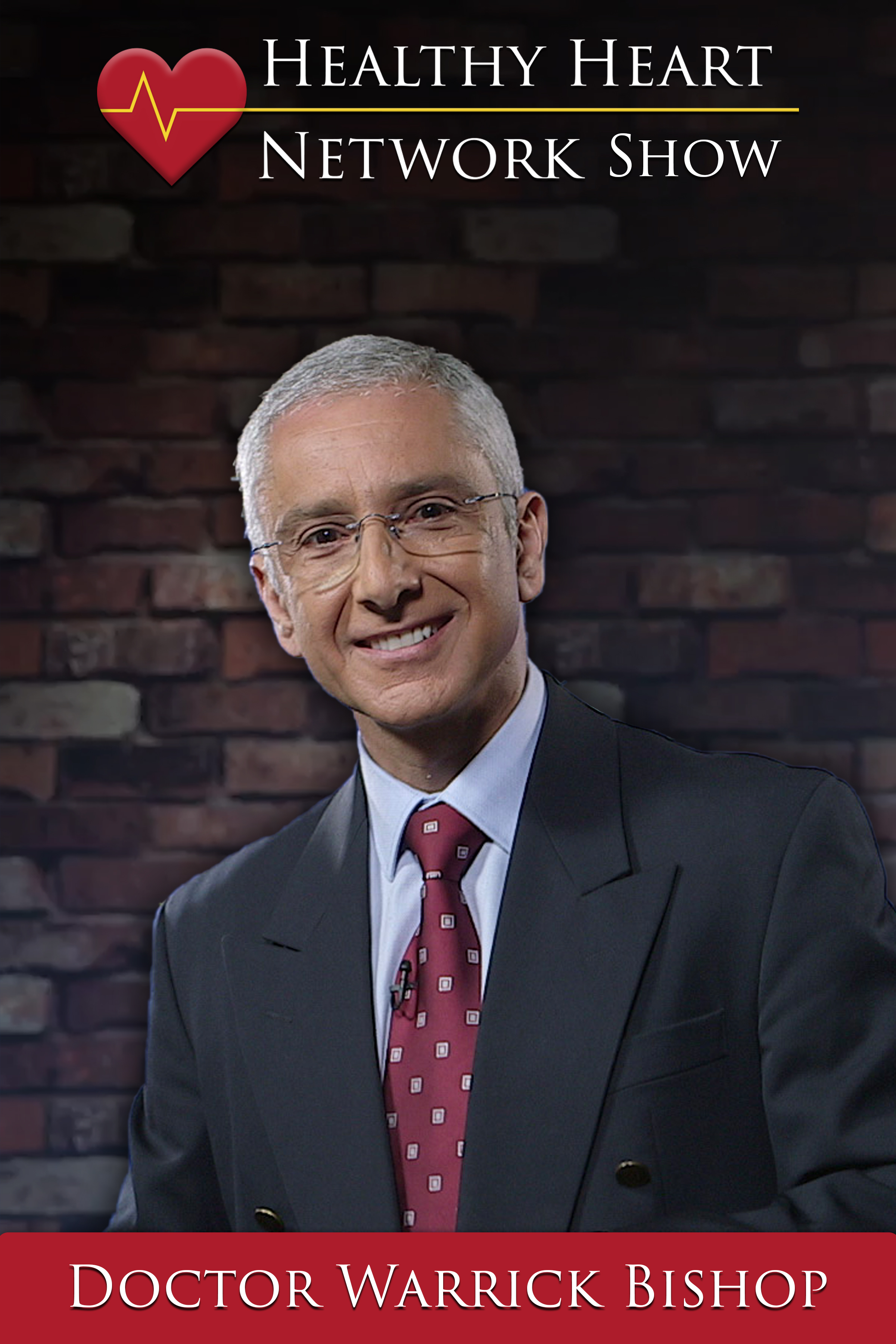
Welcome, my name's Dr. Warrick Bishop. I'm a cardiologist, an author and a keynote speaker. I'm CEO of the Healthy Heart Network. I'm all about trying to help people live as well as possible for as long as possible. Heart disease is huge in Australia. Every 20 minutes someone suffers a heart attack. Most of these could probably have been avoided if only we knew what to do. This podcast is all about helping you understand. blood pressure, weight, cholesterol, for better health. If you enjoy this podcast, I would be honoured for a five-star review. You can share it with your family and friends. It may well save someone you love. Hi, my name is Dr. Warrick Bishop and welcome to my podcast and videocast station. As always, I really am grateful that you've decided to tune in. I really hope that what I put together is something you value and something that's helpful for you. Well, I hope you find it interesting given that you're donating your time to listen to it. Look, before we get on with this particular episode where I'm going to share about cardiometabolic health, because I've just been to a conference on it and it is super interesting, what I'd like to do is go back to episode 338 called Placebo Nocebo, where I had the chance to interview... James Z. G. Buckley. And we were talking about the nocebo effect. And I've had one of our listeners, Peter, reach out and raise a couple of points. I'd like to share those points back. And I'd like to genuinely reflect that Peter has made some really valid points. And if anyone thought that our representation in that podcast was inappropriate, please be reassured. that the intent was to focus on nocebo, not the particular specifics around pointing the bone, which is what Peter fed back to us. Peter says that first of all, the term witch doctor is derogatory. We completely agree with that and really wanted to use a term that had been in vernacular, but quite reasonably. Just as Peter points out, it does have some connotation. Peter also pointed out that it wasn't always a bone that was used, and indeed we concede that is the case. It's not driven by the individual, more by the group, the clan, the community, and so it's not a personal vendetta. It's not done just because you don't like someone and it is done with the support of the community for really crimes that are beyond reproach. People did not start bleeding from ears and die within a few days. They were often banished and in fact had no visible injuries but would become listless and pass slowly. So Peter, I really do appreciate you feeding back. I do respect your thoughts. Please understand our intent was to focus on nocebo and not to provide specifics around pointing the bone. But I really do appreciate you taking the time to listen and feed back to us. Having said that, I would very much like to get on with cardiometabolic health. On Saturday, September the 14th, I was lucky enough to join a number of other doctors in Melbourne at a cardiometabolic academy. This was hosted by Amgen and the two conveners were Professor Steve Nichols and Professor Gerald Watts, both monumental figures within the world of lipids. and cardiovascular disease prevention. Well, what is cardiometabolic health and what am I going to tell you about? Well, bits and pieces as we go through, because it's really the intersection of heart disease and diabetes and fatty liver and even to a degree, dementia. But it's complicated and it's really challenging. And I'll go through some of the presentations because there were points from many of them that I took and found really valuable. So if you will indulge me, I will share some of the bits and pieces that I took notes on. In the first session, Professor Jerry Greenfield flagged for me something I had really not appreciated, and that is that the risk of... cardiovascular disease is essentially the same for type 1 and type 2 diabetics. Now, I had always thought that type 2 diabetics carried a far greater risk. So, a little bit of a surprise for me. He also went on to describe how the two fairly new agents on the block for diabetic care, which are empagliflozin, which works through a sodium glucose transporter in the kidney, which sounds a bit complicated, but basically swaps the kidney from reabsorbing sodium to losing sodium, so it allows the body to get rid of sodium. This drug, empicliflozin, or SGLT2, was first put together or first trialed for diabetics. proved to be beneficial for cardiovascular patients. So sodium glucose transporters are one type of medication he touched on. The other were glucagon-like peptide, agonists, and the one that we know in common vernacular would be ozampic or semaglutide. Well, interestingly, these agents, the Sodium glucose transport inhibitors and the glucagon-like peptides, so the emperglyphlozin and the XAMPIC, actually reduce cardiovascular events remarkably separate to their impact on glucose control and separate to their impact on weight change. So what does that mean? It means that it must be doing something, both these agents must be doing something hormonal, separate to the impact on glucose management itself and separate to the impact they could have on weight reduction. So really, really interesting space. What I did take from this was we need to be very careful and aware that when we use empicliflozin, and we're using this agent more and more, the sodium glucose transport inhibitor, we need to let patients know that there are small but real risks associated. They are uncommon, but it is probably the responsibility of the prescribing doctor to let individuals know that there's a very small risk of diabetic ketoacidosis, which is a metabolic instability, which really can require hospitalization, and also a condition called Fourier's gangrene. Extremely uncommon, but... If you are starting someone on that sort of medication, you need to be aware of it. We also then had a second talk. The follow-on talk in the first session was by Associate Professor Sarah Glastris. And she shared plenty of good information. Really, her focus was on how we manage weight. And for those who aren't aware, the current medications... which have been cleared for use in Australia. Full weight loss include Saxenda, Duramine, Orlistat, Naltrexone, Bupurone, Ozampic, and Merjano. Now, I don't know if you've heard of those. Saxenda's been around for a while. Duramine is that sort of... amphetamine type agent, turning off the appetite. All the stat binds fat in the bowel. Naltrexone buperone alters appetite. Sensizozampic is semaglutide and Mergiano is tazepatide. All these are available, but there's other medications on the horizon. One called Bimagrumab. And this interesting agent seems to be able to lead to weight loss without muscle mass loss. Now that's a little bit of a holy grail because losing weight, if you're losing muscle, may not be so good for longevity and quality of life and function. It turns out that these GLP-1A agents, the semaglutide, osampic-type agents, actually seem to have receptors right through the body, including the pancreas, the heart, the kidney, the brain, stomach, and liver. And this means that their effect is broadly felt through the body. We also know that the GLP-1 semaglutide has been studied in the SELECT trial, looking at a well-treated population when it comes to cholesterol levels and sugars. But the SELECT trial took people who were overweight and assessed for cardiovascular risk, basically showing us that treatment with this GLP-1A agent, this Zampic, reduced risk of heart attack. So quite remarkable. Really quite remarkable. We then had Dr. Andrew Joham speak to us about polycystic ovary syndrome, which is a condition where there is an interplay between reproductive abnormalities, so the ovaries, as described, are polycystic. There's an increased androgen response in these ladies. There's a metabolic interplay and there's invariably some sort of psychological interplay as well. Very common condition affecting up to 10% of the female population and seems to have a clustering of cardiovascular risks as well. Dr. Yoham really talked about her interest in using metformin early on in these individuals. An imaging professor from Western Australia gave us some wonderful information about the way we can image the arteries in individuals with metabolic syndrome looking for plaque, but not just presence of plaque. We can use it to rule out plaque. We can use CT imaging to evaluate a degree of stenosis, and we can even ascertain high-risk plaque. which is not stenosed, but still needs aggressive therapy. And even more than that, we're starting to get more and more information around the way we can use imaging to determine inflammation within an individual. And this is using PET scanning, so positron emission tomography, where particular isotopes are picked up by areas which are essentially using that isotope and give us a clear indication that there's inflammation occurring. Dr. Stephen Vernon also talked about cardiovascular disease and the metabolic syndrome. He also touched on the ability for us to now determine where there's inflammation and particularly perivascular fat. So this is fat around the arteries. Believe it or not, we can look at an artery on a CT scan and figure out if there's inflammation around that artery. And that, as you might guess, is not a good thing. It's actually linked to increased risk in the future of an event. The other thing that Dr. Vernon spoke about, which I found absolutely fascinating, was this concept of healthy metabolic obese. So you may have heard this idea that you can be overweight, but healthy with it. Well, he actually blew that out of the water for me, suggesting that observational data points to approximately 50%. So half of these so-called metabolically healthy overweight people becoming diabetic over the next decade to 15 years. So not so healthy after all. We then moved on to another presentation, this time looking at lowering the lipids or managing the lipids. Dr Nick Lan, again from Western Australia, was able to share with us. He talked about the EVAPORATE trial where acosapentaetoic acid, which is a derivative of fish oil, was used in an imaging study to show that just a fish oil additive could literally reduce plaque within the arteries, which is pretty amazing. And we know that EPA, the same agent in the REDUCER trial, reduced relative risk of heart attack in the individuals who were treated by approximately 20%. So, for sure, good or bad, we've talked about that 100 times. Probably not bad. I take a bit at the moment. There's lots of other bits and pieces on the horizon when it comes to lipid management. and specific management for APO C3, which is directly linked to significant elevations of triglycerides, we're going to be seeing changes in that space as well. Well, we then went on to some non-cardiology presenters. We had Carol Pollack, who's basically a professor of renal disease. who is also involved with transplant, an absolute leader in the field in Australia, both presiding over renal and liver transplantation because of expertise, really explaining how chronic kidney disease, CKD, needs to be thought of as cardiac, kidney and diabetes because they overlap so much together with... chronic renal impairment, we get cardiovascular disease, diabetes, and heart failure with preserved ejection fraction. She really talked about how the cardiometabolic syndrome, this extra obesity, is such a concern in people with renal failure and how renal failure to a large degree is one of the single most significant contributors to risk when it comes to the metabolic syndrome and cardiovascular disease. She also reiterated that these sodium glucose transport antagonists, the empicliflozin type agents, really do well for protecting the kidneys in these individuals. Professor Jacob George was a gastroenterologist, hepatologist, so liver specialist and gut specialist. talking about fatty liver. Now, if you haven't heard about fatty liver, you should. This is super duper big. Fatty liver probably affects one in three of the population, and a significant portion of those individuals will actually not be obese. Well, why is this important? Well, over time, we know that fatty liver seems to be closely linked as a preliminary indicator. of cardiometabolic disease. So if you've got signs of fatty liver, then there's every chance, given time, without any intervention, you will develop features of fatty liver disease, cardiometabolic disease, diabetes, and the end sequelae of that is fibrosis within the liver, cirrhosis within the liver, and then liver cancer. Whoa, that sounds miserable, but... If you identify it early, if you keep that weight down, if you understand, if you are prone to that central adiposity and therefore not just central adiposity, but the fat that goes around your tummy tends to also go to your liver, you can put in place strategies to reduce that risk, whether it be reduction of carbohydrate consumption, reduction of alcohol consumption, improved exercise, and in certain circumstances. even medications. Well, we're on the home stretch and Professor Catherine Samaras ended off a fantastic session looking at the GLP-1 agents, the azampic type agents and cognitive function, really talking about dementia and how dementia overlaps between Alzheimer's disease and vascular dementia and it's very hard to have one without the other because both processes seem to have similar risk factors and therefore are likely to occur together. So a super interesting presentation talking about how the GLP-1, the zampic type agents, semaglutide, may well reduce progression of dementia by offsetting some of the risk factors associated with both Alzheimer's dementia but also vascular cognitive impairment dementia so what can we do for our brains well it turns out that the metabolic syndrome where we've got impaired metabolism of glucose elevated insulin levels increased inflammation is bad not just for the heart not just for the pancreas not just Bad for the liver as well, but it's bad for the brain too. So what do we do? Well, metformin, SGLT2s like Zampic, sorry, SGLT2 like ambigliflozin and GLP1A receptor agonists like semaglutide may all be beneficial. But again, highlights the importance of this interconnectivity. We think about cardiometabolic, but it's much more. your heart it's your blood pressure it's your inflammation it's your liver it's your brain and it's your kidneys so what was the take-home keep your weight down sugar is almost certainly toxic and we should do everything we can to be aware that we don't start the journey down these paths. So locking in with your GP, making sure you don't put on too much weight, making sure you don't overdo the sugar. And if you're in any way unsure, get those cholesterol levels checked, get those triglycerides checked, get a liver scan done and be proactive in that space because the whole body is affected by... cardiometabolic disease. Well, I went pretty quickly. I had a lot to cover. There was a whole day's worth of seminars and I've just knocked it off in about 20 minutes, but I hope you found bits of that interesting. So think about the SGLT2 inhibitors. These are the empicliflozin type agents that change. sodium and glucose reabsorption in the kidney so that the body loses it started as a diabetic therapy but helpful for the heart think of the glp1a antagonists the ozampic type agents which beyond weight loss and sugar control seem to offer a reduction in risk of heart attack and think carrying too much weight progression to diabetes progression to fatty liver progression to dementia and look after yourself. Well, I'm going to wrap up there and then. I hope that was helpful. I hope you found it valuable. If you've got any queries or questions, please reach out. As always, delighted to hear feedback. And if you've got any suggestions for any future podcasts, please let me know. Otherwise, I genuinely do hope you live as well as possible for as long as possible. Take care and bye for now. Hi, ever wondered what your risk of heart attack is? You should. It's the single biggest killer in the Western world. We're talking one death less than every 30 minutes in Australia. One death less than every 60 seconds in the United States. Nine million deaths globally per annum. Well, how do you check your risk? Well, you can go to www.virtualheartcheck.com.au. You'll find out about your risk and what. can be done beyond that to be even more precise.