**EP338: Placebo Nocebo With James Buckley**
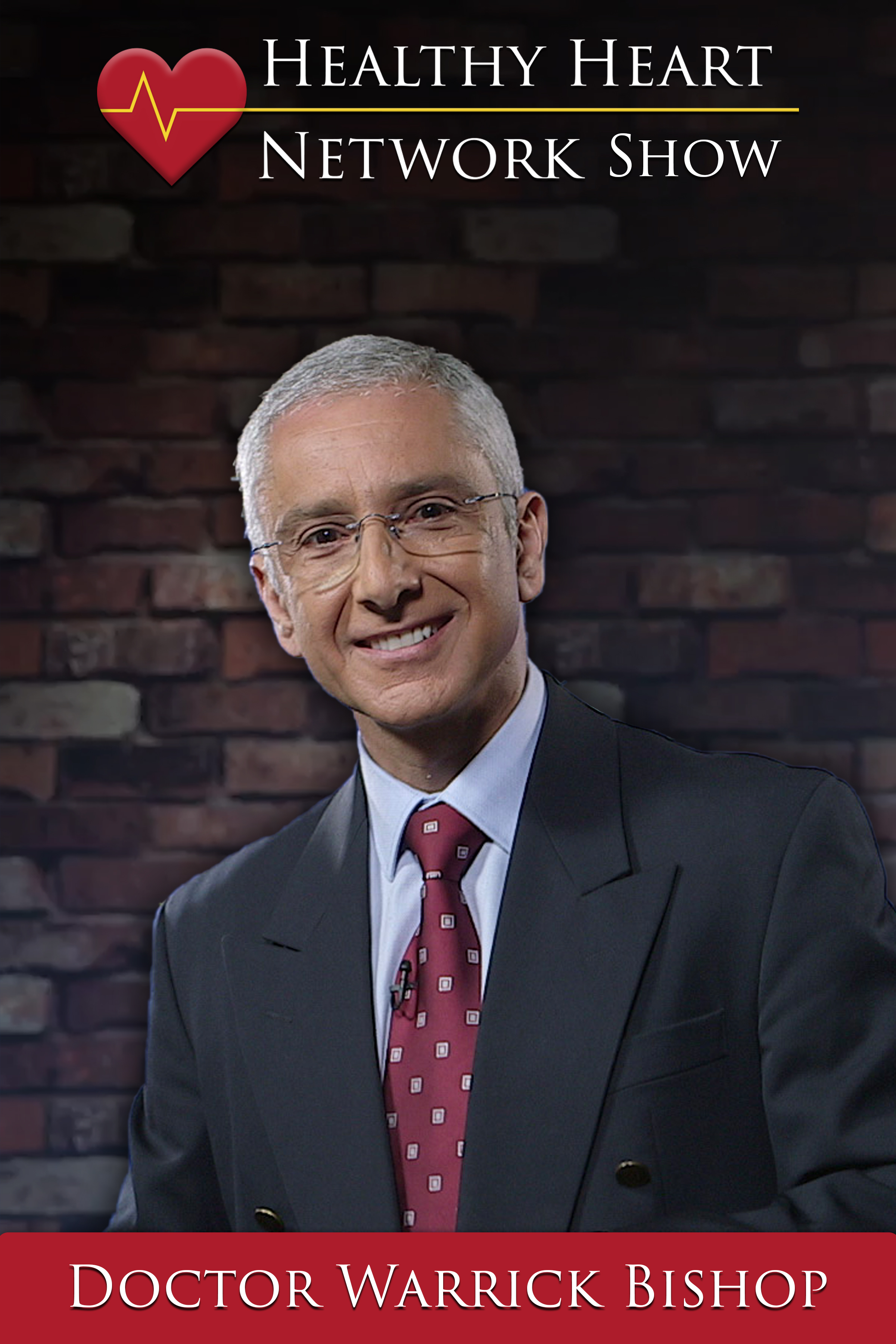
**Dr. Warrick Bishop:** Welcome, my name's Dr. Warrick Bishop. I'm a cardiologist, an author, and a keynote speaker. I'm CEO of the Healthy Heart Network. I'm all about trying to help people live as well as possible for as long as possible. Heart disease is huge in Australia. Every 20 minutes, someone suffers a heart attack. Most of these could probably have been avoided if only we knew what to do. This podcast is all about helping you understand blood pressure, weight, cholesterol, for better health. If you enjoy this podcast, I would be honoured for a five-star review. You can share it with your family and friends. It may well save someone you love.
**Warrick Bishop:** Hi, my name's Warrick Bishop and welcome to my podcast and videocast station. Today, I'm delighted to have the chance to share with James Buckley. Hi, James.
**James Buckley:** Hey, Warrick. And hi, everyone.
**Warrick Bishop:** So, James has been on before. We've talked about all sorts of bits and pieces, but today I'm very keen to talk about the placebo effect and nocebo effect. Before we go any further, James, can you just give us a definition for placebo and nocebo? For those who are listening who may have heard the terms, be across a definition.
**James Buckley:** Sure. My definition may be slightly different to what yours is, and my understandings are different based on my background as a hypnotherapist. Placebo is the process of the brain being able to create a chemical reaction within the body and also a psychological experience outside of any chemical substance that's been put into the body. That's my understanding of a placebo.
**Warrick Bishop:** So I can resonate with that, but I would share with you my definition. An example would be we could give a patient a sugar pill with lots of reassurance and encouragement and belief that that sugar pill would make a positive difference for that person, and that person then feels that positive difference.
**James Buckley:** Correct.
**Warrick Bishop:** Alternately, we could give somebody a sugar pill with a belief and an understanding that that sugar pill would give them side effects and problems, and then that person feels those side effects and problems. So really, placebo is the positive aspect of no real chemical interaction leading to sensations, while nocebo has negative effects from really a sham drug or what we call a placebo.
**James Buckley:** I also believe that placebos were first researched after World War I, where they had run out of morphine and they were doing amputations and giving saline injections, saying it was morphine, and noticing that the soldiers were experiencing morphine-like experiences.
**Warrick Bishop:** So that wouldn't surprise me. My understanding is that a nocebo or placebo effect can be nearly as effective as some of the drugs we use, with a 40, 50, or even 60% response rate in relation to what would be expected from taking that tablet.
**James Buckley:** Correct. Yeah. Correct.
**Warrick Bishop:** So that's a definition. The mechanism. James, can you speak to how our bodies create this effect, this placebo effect?
**James Buckley:** Well, I have an unshakable belief, Warrick, that our brain is the most sophisticated and intelligent machine on the earth, although not everybody's been given the keys or the driver's manual to that machine. It proves how miraculously powerful and the potential of our human brain and body is. The interesting thing for me is that it must mean that there are ways that a drug can drive perhaps sensory change. Let's imagine taking a couple of Panadol for a headache. So the Panadol alters some of the prostaglandins, and our brain's pain receptors dull down that response to the pain, and our brain feels that. Placebo must be seeing the brain driving the changes in those receptors and parts of the brain where we register, doing it even without that drug being present.
**Warrick Bishop:** So it's a down, it's a from above down process almost.
**James Buckley:** Correct. And in fact, there's even research that I was reading where people were injected with barbiturates, which is a substance that's meant to slow the system down, but they were told that it was an amphetamine, which is something that's supposed to speed the system up. They were able to block the effects of what they were injected with and produce the effects of what they weren't injected with.
**Warrick Bishop:** Yeah, so amazing. So really, we're talking about the body generating the response that the pill or drug might have, even without the chemical of that pill or drug being in the body.
**James Buckley:** Correct. So then, that becomes super interesting. One of the reasons I'm drawn to it, and one of the reasons it's on this podcast, is we get lots of people who have problems with cholesterol and medications, the statins. There was a nice study which I've covered on a previous podcast called the SAMSON trial, looking at the nocebo effect of statins. What they did for the trial, as a very quick recap, was done in the UK with about 60 patients, ran for about a year, could be two years, but they basically gave the participants three different pill jars. One was an empty pill jar, one was a pill jar with a sugar pill, and one was a pill jar with an active ingredient statin in it. They gave the participants these pill jars for a month and rotated them. The participants didn't know what they were taking, and on a daily basis during these different months, they would record on an app on their phone their pain or ache level.
**James Buckley:** Don't quote me on these exact numbers, but it was in the order of during the time that they had an empty pill jar and were taking no pills, they had a score out of 25 of, say, 3, 4, or 5 a day on average. On the sugar pill, a score of about 15. On the active ingredient, a score of about 16. This meant that the difference between active ingredient and no ingredient was a score of 1 out of 25, which flagged that the side effects that the people were having from taking the statins was 90% explained by the nocebo effect, which is pretty powerful.
**Warrick Bishop:** Amazing. So tell me, James, this is the bit that I primed you for. What's going on in people's heads to drive this basically a potential gap in their ability to take a medication because of a perceived problem? Where are those influences coming from?
**James Buckley:** Well, every time we make a thought, we make a chemical. Our thoughts are neurochemicals. They're not clouds in the sky. They're not things in the ether. Every single thought we have, 70,000 to 90,000 thoughts a day for most people, is creating chemicals. Those chemicals are creating chemical reactions in the body, and that's creating a whole host of other processes that's going on. It almost says to me that our minds can will us into a state of feeling. That state of feeling might be feeling better in a positive placebo effect. That state of feeling might be a feeling of feeling worse in a nocebo effect.
**Warrick Bishop:** Correct. Yeah. I can talk to a process, an indigenous process called Pointing the Bone here in Australia that was actually outlawed by law. It was made illegal for people to do that process because it had such power within the indigenous communities and those that actually believed in the process. If you didn't like somebody, you could go to the local witch doctor and say, "I don't like this person." They would give you a bone, take you through a process. You would point that bone at that person, and they would start bleeding from the ears, bleeding from the eyes, and they would die in a matter of a few days.
**James Buckley:** We also know, however, that there are preachers in the deep south of America that will handle deadly snakes, which should kill them in a matter of moments if they're bitten, and they get bitten multiple times and they don't die. Those preachers have an unshakable belief that they won't die. Whatever that is doesn't really matter, but there's a belief there that they won't die, and therefore, they don't. They also drink strychnine poison, which should kill them, and they also don't die. I'm not promoting any of this stuff at all. I will never do that myself. However, again, it proves the power of the human brain and that we have potential, which is untapped in all of us.
**Warrick Bishop:** So these are extraordinary stories. Let's bring it back to our day-to-day and now practical situations where we confront, let's say, for example, statin side effects. In fact, you and I have done some work together in statin side effects. I remember, let's call him John, for argument's sake, was a patient who I was seeing who had issues taking a statin medication. Now, this is before I'd really had a good handle on placebo and nocebo, but you and I had been talking about could meditation or hypnosis change people's ability to cope with the side effects and maybe take a medication that they had previously perceived to be problematic. So I sent John your way. I saw him some six to nine months later, and believe it or not, he was taking a statin. I don't know what happened in between, but James, do you want to tell me a little bit about that?
**James Buckley:** Well, John, for argument's sake, we were doing a lot of work with breath work, meditation, and hypnosis. There was some quite acute anxiety that was present within John, and there were some other traumatic issues that had occurred previously, which was driving, I believe, a lot of these symptoms that they were experiencing. Through that process, they were able to recognize the power of their own mind. John was able to recognize the power of his own mind and he got a handle on those things and was able to clear out the anxiety, get control over his thought processes, over his emotions, over his body. John was then able to cross over the bridge, which he had not been able to do—the bridge here in Hobart where we are today. He was able to cross over that bridge, which he had not been able to do for decades.
**Warrick Bishop:** Yeah, so we were talking about this previously. Just to bring that even more clearly, in Hobart, there is a large bridge. There was a boat crash that knocked down a segment of the bridge some 25 to 30 years ago. There are various reasons why people don't like crossing the bridge. It's quite high off the water. This particular patient had a genuine anxiety, a phobia, if you like, about crossing that bridge. The ability for you to support him through actually being able to do that physically was both a physical and a metaphysical bridge in many ways.
**James Buckley:** Yes, absolutely. Amazing. Truly was.
**Warrick Bishop:** I find this stuff particularly interesting. If there are any doctors listening to this, I'm sure you'll resonate. But we do get patients from time to time who are just allergic to everything. I wonder if really we are not thinking this through enough and we're trying to give these people tablets when really what they need is...
**James Buckley:** Support.
**Warrick Bishop:** And guidance.
**James Buckley:** Empowerment.
**Warrick Bishop:** Empowerment. And an understanding of the strategies needed for them to deal with probably what are some of the issues in their lives that are holding them back.
**James Buckley:** Unresolved issues, I'm guessing.
**Warrick Bishop:** Suppressed.
**James Buckley:** Suppressed, yeah.
**Warrick Bishop:** And then they're manifesting as well-perceived intolerances to drugs, perhaps. Complicated space. So any closing thoughts on placebo or nocebo, James?
**James Buckley:** I know that occasionally I'll get home, I have a glass of wine, and I feel very relaxed. Is it my anticipation that that will do that, or is it actually the wine?
**James Buckley:** Potentially. I would love to finish with just acknowledging the supreme intelligence of our brain and our body and the creation of that, and that it's an untapped potential that we can all tap into. It's a space that I really encourage everybody to explore because that is truly where we will find solace, it's where we'll find peace, it's where we'll find harmony, and it's where we'll find resolution in the challenges that we have in our life.
**Warrick Bishop:** I won't talk about those aspects too much, but I will say I've followed some of James' teachings in terms of hypnosis, meditation, his 21-day challenge. For anyone who's interested, I think, where would they find your link? Or you can look up any number of people who do hypnosis, meditation, but James has got some stuff, and his address to look that up would be?
**James Buckley:** TheMindMasteryInstitute.com.
**Warrick Bishop:** I think that's all one word.
**James Buckley:** Correct. All one word, all lowercase.
**Warrick Bishop:** Yeah. You check it out. Are there free resources there?
**James Buckley:** There are. You can also find our YouTube channel, the Mind Mastery Institute, three separate words, and you'll be able to get lots of free resources there. You can always look me up on Facebook, social media, Instagram, James ZG Buckley.
**Warrick Bishop:** Yeah. So placebo, nocebo, and anticipating the response from, well, from an intervention. Remarkable, fascinating, and incredibly powerful. Thank you so much for sharing, James.
**James Buckley:** Such an honour, Warrick.
**Warrick Bishop:** As always, I hope you've enjoyed listening. It is my passion and privilege to share. If you have any queries or questions, drop us a note. Any thoughts for anything in the future, let me know. Until next time, live as well as possible for as long as possible and take care. Bye for now.
**Join the Healthy Heart Network** and become part of our growing community. If you're interested in your heart health and risk of heart attack, then join the Healthy Heart Network for only $5 as a lifetime member. This represents $55 worth of value. We offer and help people understand their present state of heart health, what their current level of risk is, and the positive steps they can take to improve their risk of heart attack in the future. Go to www.healthyheartnetwork.com.au and click the join the family button.