**EP334: Death & Dying Part 1**
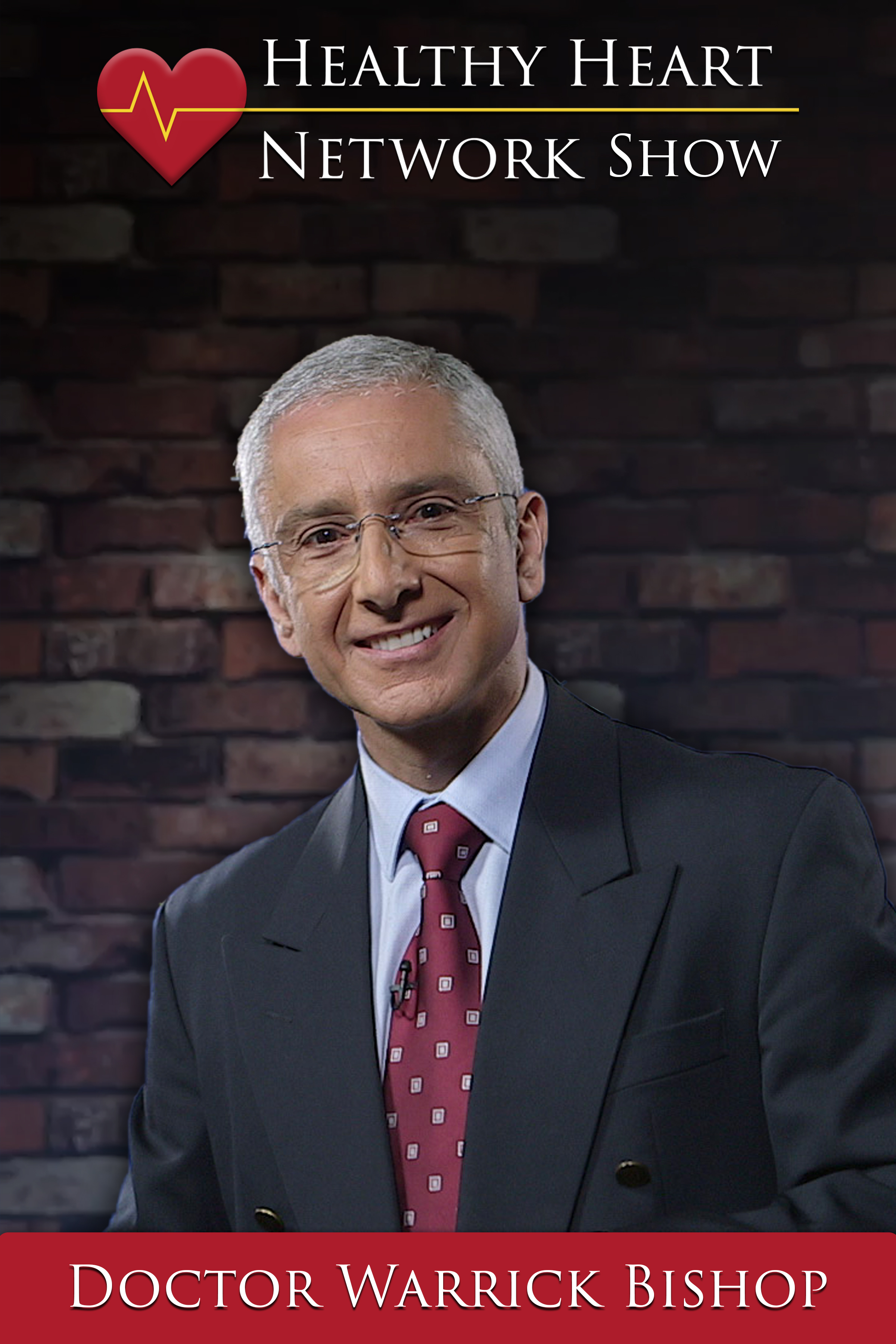
**Dr. Warrick Bishop:** Welcome, my name's Dr. Warrick Bishop. I'm a cardiologist, an author, and a keynote speaker. I'm the CEO of the Healthy Heart Network. I'm all about trying to help people live as well as possible for as long as possible. Heart disease is huge in Australia. Every 20 minutes, someone suffers a heart attack. Most of these could probably have been avoided if only we knew what to do. This podcast is all about helping you understand blood pressure, weight, and cholesterol for better health. If you enjoy this podcast, I would be honoured for a five-star review. You can share it with your family and friends. It may well save someone you love.
**Warrick Bishop:** Hi, my name's Warrick Bishop, and I'd like to welcome you to my podcast and videocast station. I'm super excited today to have the opportunity to share a podcast with James Buckley. Hi, James.
**James Buckley:** Hey.
**Warrick Bishop:** For those who have subscribed to my podcast, bless you, thank you so much. You may well have heard James and I speak in the past. James' background is, well, it's multifaceted, but in more recent times, he's been a personal guidance support and does that through meditation, hypnosis, with spiritual teachings, and a wonderful understanding of how humans and hearts connect together with other humans and hearts. So, yeah, it's a delight to share with you today, James. It's an honour and a privilege, my friend.
So, you will have already seen the title of this podcast. It's called Death and Dying, and I've been umming and ahhing about producing this podcast for a good period of time. I'm fortunate enough to have James and his family visiting at the moment, and it's a catalyst for me to share with you something that I think is incredibly important for all of us. As you'd be aware, my podcasts and most of the stuff I do end in hoping you live as well as possible for as long as possible, and that's true. But unfortunately, in amongst all that, we are only human and fragile, and death and dying is part of that.
What made me think about wanting to produce this podcast was the experience I had last year with my mother passing and Shel, my partner's mother, passing. Because these were different experiences and they contrasted with the loss of my good friend Dave some 20 odd years ago, who died during an accident. So the reason to flag this particular topic is it's complicated, and I think the situations are different for the person who passes, and of course, they're different for the person who's left behind. I know James has recently had a loss as well. Do you want to share with us?
**James Buckley:** That loss, James, was only very fresh, very recent. It was last Sunday. I lost my great aunt, who was 100 plus years old, unexpectedly after hip surgery, a fracture in the hip. I was there at her side during that process, as I shared with you. It was incredibly confronting, yet spiritual and profound at the same time. And so quite profound that we get this opportunity to discuss this. I think that death is such a taboo thing that most people avoid thinking about it or looking at it. And I think that creates a lot of misperceptions and misconceptions and an inability to deal with it when it inevitably comes. And that's just how society is set up at the moment. So I'm really honoured and excited to talk about it. So if I do get a bit emotional or pause or stutter, you'll forgive me, I'm sure.
The thing that I noticed particularly through the experience of my mum passing was that she passed in her mid-80s, about 86 years of age. Some five years earlier, she'd had a stroke which left her completely dependent on my father, who has his own medical issues with Parkinson's disease, and he was her primary carer. In the last year or two, and certainly in the last months, my mum, with sheer frustration at existence, I think, had really reconciled to death, and I think we had all reconciled the same. It was pretty inevitable that mum and dad were not going to continue to exist independently. One thing led to another, recurrent admissions to hospital. Mum was placed in a nursing home, and some three to four months after that, she was affected with a lung infection, which ultimately is what took her away.
Now, the reason why this stuck in my mind was, although the loss was huge, I felt relatively comfortable with the process because it seemed like her age was good. The process was compassionate. Everyone was with her when she passed. And she had not been happy in the last month, certainly in the nursing home she was. She wasn't enjoying life on a daily basis. This contrasted with Shel's mum passing, who was younger. She was 73. She had been vibrant and had a long run of illness with a heart operation that she recovered from, but then wasn't right. Over a course of a year, the family and Shel's mum, called Sandy, had presented looking for answers. The culmination of that year was a diagnosis of metastatic cancer which really took her very quickly to such a degree that one of the things that sticks in my mind was she'd bought a new set of golf clubs not long before her eventual demise. Her passing affected me differently and was more raw, I think greater emotion, and I think I was struck by what she'd lost. The age was really important, and how although when she did pass, we'd had the chance for family to be around, this eased that pain, but it just didn't seem fair. This contrasted again with my good mate Dave, who passed at 40 years of age in a mountaineering accident. This was somewhat out of the blue. I can still remember hearing the story on the radio. It was an accident in New Zealand. I heard the story of a mountaineering accident in New Zealand, and the hair on the back of my neck stood up. This was a different loss. It was unexpected at a young age. There was no preparedness. And it still touches me enormously to think of it.
James, I could probably continue to share, but I think the really important thing that I wanted to try and talk about is how we, as the people who are left, how do we reconcile these things? How do we deal with these things? I felt differently with each of these situations in my own life.
**James Buckley:** Sure, that's a great question, a big question. Dealing with death is really how we perceive death and what it means when someone passes away. Of course, that's individual for everybody, but that determines how we're able to process that and how we're able to cope with the emotions and the thoughts and the meanings that we place upon all of that stuff. And that's why I think it's so important that we talk about death so that we are prepared for when that happens, no matter how different it is between each person that passes in our lives.
And so for me, personally, that grieving process is emotional. It's a very physical process, and I'm quite close to that, given that my great aunt passed only last Sunday. That process I can talk to, if you'll allow me, is that I was there in the room with the ICU team, trying to revive her and bringing her back to life. And again, it was unexpected. But at that moment that she actually passed, even though they continued to do everything they could, I felt an enormous amount of physical emotion burst in my heart, burst into tears, which is not often something that happens for me. Emotion has been with me for several days, and I've been doing my best to clear that. What I use to clear that personally has been breath work. I find that that releases a lot of that emotion in my body. It allows me to process it psychologically as well. It seems to sort out my thought processes, and it certainly soothes my body from that tension that occurs for me personally through that grief.
**Warrick Bishop:** And so that's been really helpful for me. I'd love to come back to some of those physical feelings that you're describing. And maybe we'll talk a little bit more in general terms and maybe dedicate our next podcast interview to those physical or somatic responses to that grief process. Listening to you made me realise that when we think about loss, we think of loss of that individual and their loss in terms of their future and the things they might do. Perhaps that was why I felt my mum's loss quite differently to the loss of Sandy, quite differently to the loss of my friend Dave. Each of those individuals had, if you like, different amounts of life in front of them. But I've also realised that we quite possibly grieve our loss with those people as well. So we're grieving the chance, the missed opportunity of sharing more in their lives or them in our lives. It's big, isn't it?
**James Buckley:** It's huge. The five stages of grieving. I'm sure you're across them all.
**Warrick Bishop:** Yes. Do you want to walk us through them?
**James Buckley:** Sure. So denial is really obvious, and that's something that we all do. We can't believe that it happens even when we expect that it's coming. And again, that's because we somewhat, as a society, or at least in my own experience within this society, we're not given the tools or the processes to be able to cope with it. And so we try to suppress it and ignore it and push it down and hide from it and stay busy with other things. And so when it happens, of course, it's going to be very confronting and stimulate a lot of denial.
Anger is absolutely something that I experienced with the passing of my great aunt, given that it was unexpected. It was due to a physical reaction to some pain that she was having to rehabilitation, at least in my perception. And that made me quite angry, as well as my wife, and not necessarily angry towards that person, but angry that that had happened. I guess that's part of the denial as well.
**Warrick Bishop:** Before you move past anger, I heard a saying some time ago, which I've sort of clung on to, and it may resonate. The saying is, "anger is repressed sadness."
**James Buckley:** Yes, so true. In the therapy that we do, specifically timeline therapy, we work with anger first, always, and that reveals sadness. And so that absolutely rings true on a psychological level. But also on a personal level, that's been my experience, absolutely. So I think, I suspect, a lot of the anger we see in that grieving process is that sadness bottled up, not dealt with, and coming out in a way that is a pressure valve, I guess. And a protective mechanism as well. That anger is to try and protect ourselves from the sadness that we don't want to feel.
**Warrick Bishop:** Yeah, yeah. They then talk about bargaining in those five stages of grief. What does that mean?
**James Buckley:** That's a good question. I guess trying to process and really assimilate that experience. And so I interpret it as bargaining with the situation and really trying to deal with that whole loss. We try and reconcile everything in our own minds. Again, that's at least my own experience. It's not my area of expertise, but trying to apply it to the experiences I had. For my mum, I could bargain and say, well, look, she'd had a good existence. She'd seen her children grow up and be happy. She had been unhappy for a number of years and was very upset about being in a nursing home. She went pretty quickly, pretty peacefully with all the people she loved around her. I think bargaining is the way we reconcile that it's okay in ourselves.
And I know people stood up at my mate Dave's funeral and said he died doing what he loved to do. I have to say, that made me angry because I know he wanted to keep doing it. So I found that sort of remark just made me angry. It seems so stupid, actually. But what I think it probably is, is people trying to bargain or reconcile with... It's the way to accept it or part of that process of acceptance.
Of course, we move in the group process supposedly from bargaining to depression. I'm sure we don't move through these stages in that process. But do you want to talk about that depression that then follows or speak to that?
**James Buckley:** Sure. I guess the depression is really the process of going through the loss and realizing that you're not able to have those experiences with those people anymore and the loss of their life and what we feel for them can be depressing. Then also our own selfish needs and wants and loss within that is also depressing. We don't get to have those experiences that we want to have with those people that we love and care for so much. So depression makes perfect sense that that's part of the process.
So when we speak in the next podcast, we'll talk about the physical changes that occur with depression. But of course, there are things like increased sleeping, lack of volition, lack of enjoyment about stuff. These things are all significant. Hopefully, they pass in relation to that loss. But I'm keen to talk about some of the physical processes behind that.
We cover that, and then the grief process would dictate that we come to some term of acceptance. I have to say, I'm more accepting of my mum's passing than I am of Sandy's passing, and I'm more accepting of Sandy's passing than I am of Dave's passing. It still shifts emotions in me, actually, substantially. So I'm not sure. Is acceptance something that we aspire to? Are there degrees of acceptance? How does that... What have you seen there and what have you experienced yourself, James?
**James Buckley:** I guess we have to accept it. It's something that happens. And that's really the reconciling process is that we move ourselves through to the point where we can accept it and move on with our lives. And that absolutely happens after the depression. Acceptance is really something that's quite difficult to grapple with given various circumstances and different situations. I think that acceptance is something that we have to do. If we can't accept them, then we become stuck in those emotions or any of those stages, or perhaps we can become stuck in a loop or a pattern with those stages. So learning how to accept these things is really an art and a skill that we should develop.
And look, I think the world will continue to turn. I think that's what acceptance... The world accepts it.
**Warrick Bishop:** Yeah, yeah. The world keeps marching on. Just as an aside, yesterday was my mum's birthday.
**James Buckley:** Yes.
**Warrick Bishop:** And we went out with Dad and made sure we had a meal, accepting that she's no longer with us but that we still think and care for her. So I don't think there's much else I wanted to say around. I just really wanted to give people something to think about in their own journeys. And I think it relates to some of these aspects of how old is that person? What was the expectation that this person may have in terms of their future life? The preparedness we have and how that grief process impacts us. Did you want to add anything else, James? And I know you're raw with the recent events of your great aunt. Is there something else you wanted to add?
**James Buckley:** I think that the acceptance stage is something that we can really work on, and we can utilise tools, resources, and knowledge and wisdom of the past to help guide us through that. Developing that skill is something that not just supports us to process the death or the loss of someone, but it empowers us to support other people around us. I really think that acceptance is a skill, and I'm learning on sharpening that skill and getting better at it.
**Warrick Bishop:** Well, on that, we might accept that that's the end of the podcast. I'm really grateful that you shared. I hope those listening have found this valuable, and I hope it gives you something to think about. If you do have any queries or questions, drop us a note at info@drWarrickbishop.online. If you've got any suggestions for future podcasts, drop us a note. We will roll this into a second episode where we'll talk about the physical or somatic impact of grieving and probably touch on some of those issues of the stages of grief in more detail. So please check out the next podcast. For now, I wish you the very best and hope you live as well as possible for as long as possible. Take care and bye for now.
Join the Healthy Heart Network and become part of our growing community. If you're interested in your heart health and risk of heart attack, then join the Healthy Heart Network for only $5 as a lifetime member. This represents $55 worth of value and helps people understand their present state of heart health, what their current level of risk is, and the positive steps they can take to improve their risk of heart attack in the future. Go to www.healthyheartnetwork.com.au and click the "Join the Family" button.