**EP322: Interview With Dr. Kaplan Part 1: Cardiologist Talking Diet**
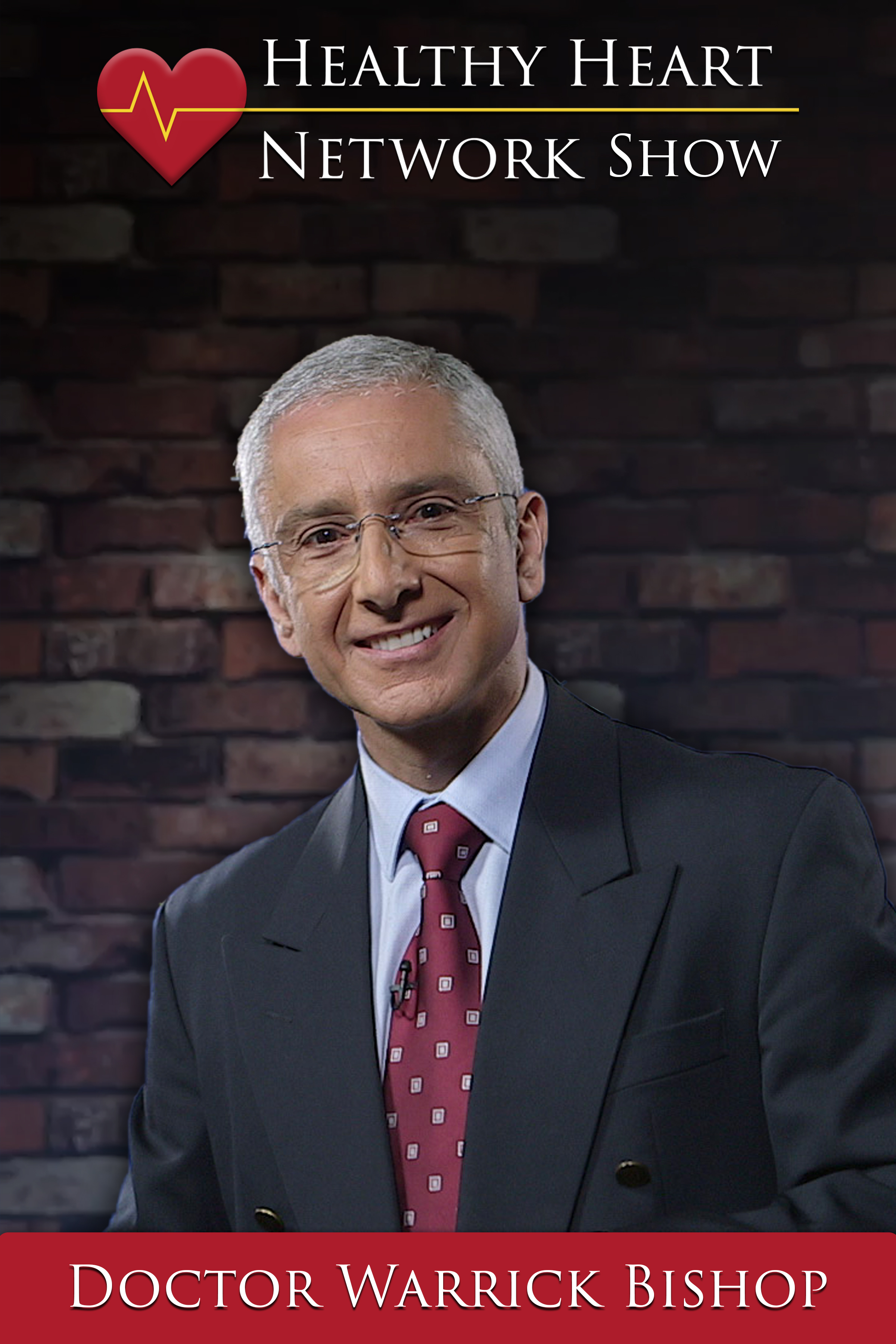
**Dr. Warrick Bishop:** Welcome, my name's Dr. Warrick Bishop. I'm a cardiologist, an author, and a keynote speaker. I'm the CEO of the Healthy Heart Network. I'm all about trying to help people live as well as possible for as long as possible. Heart disease is huge in Australia. Every 20 minutes, someone suffers a heart attack. Most of these could probably have been avoided if only we knew what to do. This podcast is all about helping you understand blood pressure, weight, cholesterol, and better health. If you enjoy this podcast, I would be honored for a five-star review. You can share it with your family and friends. It may well save someone you love.
Hi, my name is Dr. Warrick Bishop. Welcome to my podcast and videocast station. I'm really pleased today to have the chance to catch up with Dr. Jason Kaplan, a colleague, and it feels like so long since we got together. Jason, welcome.
**Dr. Jason Kaplan:** Warrick, thank you very much. It's great to start 2024 speaking to you and especially talking about cardiovascular health. Look, Jason and I share a common passion, and that is trying to stop people from ending up in the hands of our colleagues who do interventions with balloons, stents, bypasses, and all those things. We really, really want to keep people as well as possible for as long as possible and keep them out of the jaws of intervention if at all possible.
So, Jason, what I thought we might kick off with is really the sort of things that you do for yourself on a day-to-day basis—your lifestyle choices. If we share that with the people listening or viewing, just so they really get that you and I both not just talk the talk, but we walk the walk. Would that be okay with you?
**Dr. Kaplan:** That'd be great. Thank you for inviting me to do so, Warrick. You know, one other point I just want to put forward is that besides us being passionate about preventing cardiac events and people ending up with interventions, I think that you and I share a passion for actually arming people with the tools that they need to do it. There is so much information out there about lifestyle and dietary choices and heart disease, and to be able to give people really good scientifically backed information that they can apply in their day-to-day life is something I feel very passionate about as well.
In fact, Jason, for those listening and wondering, you and I are actually doing this on a Sunday afternoon on our own time to make a real and meaningful difference in people's lives because both you and I know that the best educated people get the best healthcare. We're so committed to that, we're actually doing this for the greater good and for the benefit of those listening. So please, please share it. This is gold, this stuff. And thank you again, Jason, for taking time out from your family.
I'll just mention to those listening, Jason has three kids under nine years of age. So I've had two under that age, and I know it's full on. So all kudos to you, Jason.
**Dr. Kaplan:** It's a pleasure. Thank you, Warrick.
**Dr. Bishop:** So I think one of the first things I'd like to share with people is that a large part of my dietary program is plant-based eating. Initially, it was my wife, Jessica, who helped bring me on the journey. Then I had the great opportunity to meet Kim Williams and Dean Ornish at one of the American College of Cardiology conferences in 2017. After meeting Kim Williams, and for many people who don't know, Kim was the ex-president of the American College of Cardiology. Kim actually became vegan after his first heart attack and has been an amazing advocate for plant-based eating for the prevention of cardiovascular disease.
I felt if I was going to be recommending the best dietary pattern for my patients to help prevent heart disease, I wanted to be both an advocate and a practitioner of it. So now for the last seven years, my wife and I have been mostly plant-based in all of our eating. We are fairly close to, I would say we are vegan. We do have some fish, but otherwise mostly vegan. I firmly believe that for people who are serious about heart disease prevention, moving however is appropriate for you in that sort of direction will be a very, very positive step.
You know, Warrick, one of the other things that I've been really passionate about the last few years in practice is especially about the benefits of aerobic fitness. As you know, we all tell our patients that your aerobic exercise capacity is one of the strongest predictors of longevity. So I do my best to try and practice that. I think in the mornings is a great start because then it's done.
This morning, on a Sunday, I was out swimming in one of the ocean pools in Sydney, and it was a beautiful sunny morning and invigorating. Often, I'll complement aerobic exercise with a more contemplative practice and movement-based practice such as yoga, which I think is an outstanding practice, or a similar slow movement practice that both builds strength and stability as we get older. They're both some of the cornerstones of my daily routine.
As you know, sometimes it can be difficult to get the adequate amounts of sleep when you're in busy mode, and we're about to get back into the clinical year. But what's really interesting is that now it's become the American Heart Association used to have Life Simple 7, and now they've included sleep as part of the eighth principle. Warrick, you might have seen their recent review by Luigi Fontana in the European Heart Journal just published, but he put it as one of the keys for cardiometabolic longevity.
**Dr. Bishop:** Look, great, great kickoff there, Jason. I appreciate that. What I'd love to do is circle back, tease out a couple of bits, and then maybe go through your day if you have time. I'll share what I do at my end as well. I'm not vegan, so I'm particularly interested to hear how you made that change. How difficult was it? It sounds like your wife was already on that journey. Can you speak to that for me, please? And the listeners, so that they get a sense of what the world might be like without a sausage on the barbie.
**Dr. Kaplan:** It helps immensely having a partner or someone to help you on that journey and encourage you in working together. My wife came to it for more humanitarian reasons. We are fortunate that we live in Sydney, where there are wonderful choices to eat. We have wonderful produce in Australia with fruits and vegetables. Moving towards a more vegan or a more plant-based lifestyle can be a challenge for some of us, and it's different from how we've traditionally been brought up.
I was born in South Africa, Warrick, where meat was very predominant and a big part of our upbringing. My late grandfather was a butcher, so we had lots of meat growing up. But learning to adapt to plant-based eating has been a very positive step. There are now so many resources for people who want to adopt a plant-based eating style. I usually refer patients to Michael Greger's website. There's a great website called Forks Over Knives, which also provides meal plans for people.
It's about learning how best to prepare meals from a vegan perspective. It's certainly about introducing more legumes into your diet and realizing that you can get enough protein sources and feel full and satiated on a plant-based diet. It's great to also learn vegan recipes. There is so much more out there. Even now in Sydney, we're very lucky that you can go to some of the top fine dining restaurants, and they will have a vegan option. We went to one of the top restaurants called Omeggio last year, and there was a vegan menu for us. It was the most unbelievable food—nutritious and fulfilling.
I would encourage people to think about how they can even move a few nights a week or a few nights a week plant-based. You don't have to do it all in one go, and that can be a bit overwhelming. But just try meat-free a few nights a week.
**Dr. Bishop:** Some good suggestions there. I really appreciate you sharing some of those resources because that'll give people something else to go and have a look at and drill down a little bit deeper. One of the things that I'm sure you are probably thinking about as you made that transition was the impact on some of your own personal biochemistry and your own physiology.
So one of the questions that I'm sort of thinking of is, you know, what did you notice, maybe with your LDL cholesterol level, the so-called bad cholesterol, the total cholesterol, the triglycerides, your blood sugar levels, your weight maybe? Did you, I'm guessing you probably measured some of those things or you've measured them over time. What sort of impacts have you noticed there, Jason?
**Dr. Kaplan:** For most people who adopt a plant-based diet, we generally see around a 25% reduction in LDL-C. We often see a reduction in C-reactive protein, which is a marker of inflammation, and often a normalization of triglycerides. I've never had, fortunately, blood pressure has always been pretty good, and I've been able to maintain what I think is a healthy weight.
For people that adopt vegan diets, we also interestingly can see a reduction in lipoprotein little A, which is a whole other story that perhaps you and I should discuss as well. But we do see a reduction in biomarkers. So, look, it has been a very positive metabolic benefit for me.
**Dr. Bishop:** One of the things that you mentioned, which I'd really like to put a little bit of a spotlight on for those listening or watching, is you talked about catching up with Dean Ornish, who's incredibly well known in that space of dietary intervention for coronary artery disease.
I'm going to guess that you remember the references better than me, but as far as I can recall, 20 odd years ago or more, Dean Ornish ran a randomized double-blind control trial with lifestyle intervention and follow-up invasive coronary angiography. What that means is that they actually stuck a tube inside people's arteries in the legs or in the wrist, passed that tube up into the arteries of the heart, took pictures, measured irregularities, measured narrowings, did that at time zero, and then did it again after the dietary intervention.
Now, my understanding is that they showed regression of plaque with this lifestyle study. Would you like to speak to that?
**Dr. Kaplan:** Absolutely, and happy to do all of that. So Dean Ornish in the late 90s did exactly as you said, a double-blind randomized trial comparing people on the standard American heart association diet. I will give you a caveat that I didn't back then, and I wouldn't think that that is such a healthy dietary pattern compared to now. However, compared to a mostly vegan, which is a very low saturated fat diet.
Unfortunately, the reason probably why it hasn't got much more fanfare in literature is that these studies are very difficult to do. Dietary intervention studies are very difficult to control for, but he did around 50 people, and you're right, he did show a mild regression of atherosclerosis in the people adopting a very low saturated fat plant-based diet.
I know for a lot of people listening and for a lot of patients that you see, Warrick, the concept of atherosclerosis and plaque regression is one that comes up very often. I'm always asking in clinic, "Am I able to reverse some of this atherosclerosis plaque? Can I do it with diet and lifestyle? Or what will be complementary to the medications that you are suggesting to me?" This is where we have some evidence that this dietary pattern is able to regress atherosclerosis, and I think it forms one of the cornerstones of why we might recommend a mostly plant-based diet.
**Dr. Bishop:** Look, I think there's no question that this is an incredibly important area. We know from other observational studies and some of the long-term longitudinal studies that have looked at Seventh-day Adventists certainly support that in that cohort, their preference for a plant-based diet without question appears to be contributory to their reduced rate of cardiac events.
When we're talking to our patients, or as people may be listening to this, we talk often about the Mediterranean diet. Can you, and just in the interest of time, Jason, we might wrap this particular podcast up after this last discussion point, but how do you bring that Mediterranean diet into the plant-based sort of conversation? How do you explain that to people and give them the knowledge and resources to explore that?
**Dr. Kaplan:** I like to suggest to people to think about, I'm sure you've read this, Warrick, or recommended to your patients about the Blue Zones. The Blue Zone diets are dietary patterns, as you've mentioned, one of the Seventh-day communities in Loma Linda, where it's a predominantly not vegan but vegetarian diet that they have.
Then there are a couple of regions centered around the Mediterranean—Sardinia, Ikaria in Greece—and there are also some similar regions around Ikaria that have a Mediterranean diet. In actual fact, when you go in and analyze some of those diets in a little bit more detail, they are predominantly plant-based.
The people there, some of them weren't able to afford meat very often, so they maybe had meat once or twice a month on celebrations. The amount of dairy was actually fairly small, perhaps a small amount of cultured dairy, small amounts of cheese, but not large amounts compared to what we would have in a more Western-style diet.
So, in fact, most of the Mediterranean-style diet was predominantly plant-based. There are other aspects of that dietary pattern that have made it, that also make it probably more palatable and more, say, more westernized in a way, and that's plenty of olive oil, plenty of nuts, and they have plenty of legumes, unrefined carbohydrates, and whole grains—all of the dietary components that we know are associated with positive cardiovascular outcomes.
One of my other favorite plant-based cardiologists is Dr. Ostfeld, who's in New York. He's actually done an analysis of the PREDIMED study, which was one of the largest dietary intervention studies published in New England in 2013. It's over 10 years old now, and he reanalyzed it about six or seven years later. He showed that the more plant-based you made the Mediterranean-style diet, the better the outcomes on biomarkers, meaning lower cholesterol, lower CRP, lower blood pressure, and higher levels of HDL.
**Dr. Bishop:** Look, it's been an absolute pleasure sharing all this, Jason. For those listening, I'm super grateful that you've hung in and enjoyed all this information. I've certainly learned some bits and pieces, as I always do, sharing with colleagues. I hope you've learned something as well. If you've got any queries or questions, if you've caught this on Facebook, drop us a note in the chat.
Please subscribe or drop us a note at info@drWarrickbishop.online if you have any queries, questions, or suggestions for other podcasts. For now, Jason, I'm going to thank you so much for sharing. I really do appreciate that and the chance for us to get together and do this, as I said, after what seems like a couple of false starts. I really appreciate it.
**Dr. Kaplan:** Thank you, Warrick. I'm going to wrap up. I wish you the very best. Hope you live as well as possible for as long as possible. Take care, and bye for now.
**Dr. Bishop:** Hi. Ever wondered what your risk of heart attack is? You should. It's the single biggest killer in the Western world. We're talking one death less than every 30 minutes in Australia, one death less than every 60 seconds in the United States, and nine million deaths globally per annum.
Well, how do you check your risk? You can go to www.virtualheartcheck.com.au. You'll find out about your risk and what can be done beyond that to be even more precise.