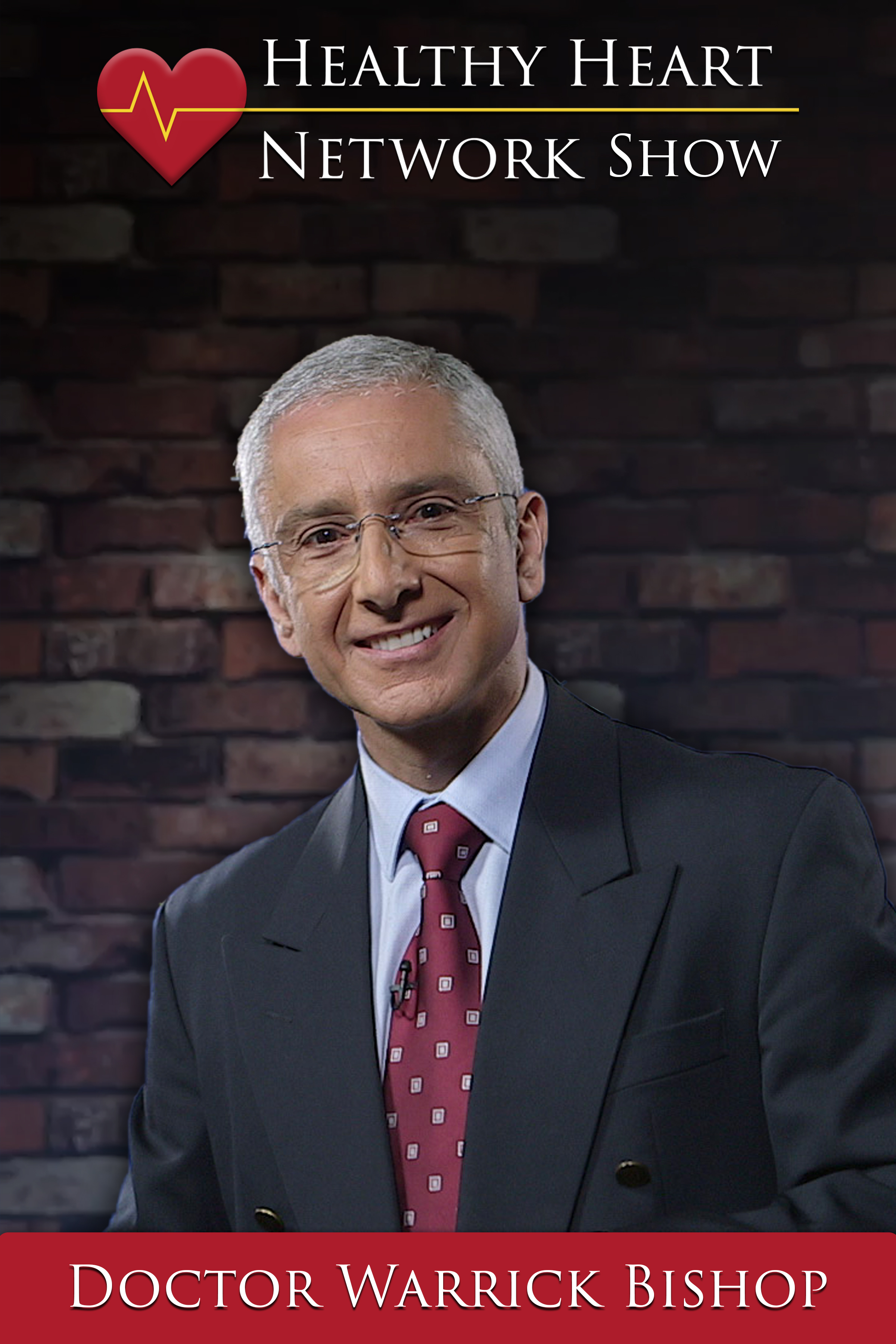
Welcome, my name is Dr. Warrick Bishop. I'm a cardiologist, an author and a keynote speaker. I'm CEO of the Healthy Heart Network. I'm all about trying to help people live as well as possible for as long as possible. Heart disease is huge in Australia. Every 20 minutes someone suffers a heart attack. Most of these could probably have been avoided if only we knew what to do. This podcast is all about helping you understand blood pressure, weight, cholesterol for better health. If you enjoy this podcast, I would be honoured for a five-star review. You can share it with your family and friends. It may well save someone you love. Hi, my name's Dr. Warrick Bishop and welcome to my podcast and videocast station. As always, I'm really grateful that you've taken the time to tune in and I hope you find... Today's podcast, informative. I thought I'd share with you something that came through from one of the electronic information and education sites that email me regularly. It's The Limbic. And they've sent through five highlights from the European Society of Cardiology Congress, which was held in Amsterdam between the 25th. and 28th of August. Now the highlights from these sort of meetings are always important for us to be aware of as cardiologists because there can be significant studies that are released during these major meetings that can help inform our future care for our patients. Well the first one that I'd really like to share with you is around a study that looked at using stenting that we call percutaneous intervention. Stenting is when we put one of those scaffolds into the artery where there's a narrowing. And the conclusion of a European-run study that enrolled nearly 1,500 patients over the age of 75 who'd had a heart attack, was that undertaking complete revascularization provided a better outcome for older patients. Now, what do I mean by that? Well, generally the case with an acute coronary syndrome, whether that be a heart attack or a progressive heart attack, is that those individuals are taken as a matter of urgency to the cath or catheterization laboratory, which is really a radiology-based laboratory, where our interventional cardiologists, I say we, meaning the cardiology fraternity, introduce a catheter into the arterial system. guiding tube up to the origin of the coronary arteries and then negotiate a wire down the offending artery that's giving rise to the acute coronary syndrome, the acute blockage or the acute narrowing. Historically we've always looked to open up what looks to be the culprit lesion. take pictures of the other arteries, but even if they look dodgy, we don't tend to, well certainly historically, we haven't tended to open them up. In this particular situation, the study that I just alluded to, not only addressed the clear culprit lesion, but also looked at other vessels and other potential narrowings, which had estimated narrowings between 50% and 99% in arteries that were 2.5 mm in diameter or larger. Well, the average age for the patients was 80, so older than the usual cohort, and specifically looking at older. And the long and the short of it was that the group who had not only the culprit artery addressed, but also other arteries that looked like they might be a problem in the future, had a reduction in death, further heart attack, stroke, and ischemia-driven revascularization, meaning that they were less likely to have... either stenting or coronary artery bypass grafting, in the year that followed their enrolment into the study. So this was statistically significant. And interestingly, I think it's going to change what we do on a regular basis, particularly with an older cohort of patients who may have more than one artery involved. So watch this space if you do turn up. with an acute coronary syndrome, there's a very good chance that a case will be made for not only opening the culprit lesion, but also opening up some of the others that look like they could be problematic in the future. And I guess when you think about it, it does make a bit of sense. One of the other things that came from the Amsterdam meeting was that there was a failure of a particular trial, which To be honest, when I read it, I'm a little bit surprised. The study was centered on evaluating the role of ferric carboxymaltose, which is, in layman terms, an iron infusion for people with heart failure with reduced ejection fraction. Now, this particular study seemed to not show any benefit in the role of... iron therapy in the group of patients that they undertook an evaluation of and that was some 3,000 odd patients who were said to have some iron deficiency and features of heart failure. I'm not quite sure how to deal with this study but the reason I mention it is up until now and particularly for the last five to 10 years, there's been very strong evidence and a strong push to evaluate iron levels in people with heart failure. And if you think about it, it sounds reasonable. There is a fair bit of iron within hemoglobin and also within the myoglobin of the myocardium. So one would think that iron deficiency may well be something that plays into cardiac failure. So this particular trial, I think, raises some suspicions. I think I'd be inclined to continue to watch and see where it is. My own experience with iron infusions for patients with cardiac failure has been that it's been beneficial. And at least at this stage, though it's an interesting and new piece of information, it's only one trial and I'm inclined to watch and see where further research leads us. One of the other main take-home points from the ESC Congress was that atrial fibrillation ablation was found to be more effective in end-stage heart failure. Well, this has come from research based on a group of studies called the CASEL. group of studies which have looked at treating atrial fibrillation. In general terms, the CASEL AF and HF trials really looked at quite a select group of patients with atrial fibrillation and cardiac failure. It did include about 200 people, so not heaps, and they did look at people with quite significant reduction in the ejection fraction or function of the heart. The interesting thing about this though is it really speaks to the importance of trying to keep people with heart failure in sinus rhythm. Sinus rhythm is just so much better for a heart that's having problems than atrial fibrillation. It improves synchrony and of course when we deal with people who have problems with heart function we're also dealing with people who may for various reasons have issues with the medications we would want to use to keep people in normal rhythm. So I guess it reminds us that an ablation where we introduce catheters and use a technique percutaneously i.e. through the skin generally up through the vein in the leg to eradicate and help or try to eradicate and help manage atrial fibrillation is not a bad idea in most of our patients particularly if we think they're going to run into troubles down the line with features of atrial fibrillation and cardiac failure. One of the interesting other take-homes from the recent conference was that the ESC have published their first guidelines on cardiomyopathy. And interestingly, this was led by a team of experts from Australia, in particular from the Garvin Institute in Sydney. And these particular Scientists, clinicians, researchers helped formulate the guidance around the advances in genetics and cardiac imaging, which are changing all the time and allowing us to have better insight into the way we target specific. care for specific diseases so the area of genetics as you might imagine is changing in leaps and bounds and this is allowing us to identify individuals who may have particular genetic predisposition based on a clinical event they may have had whether it's a blackout whether it's an incidental finding but these same genetics are allowing us to screen the family and This particular guideline is allowing us general cardiologists to start to have a feel for which are the genetic representations which are going to be causing us the most problems and what we can then do about them. The upshot of that guideline document is that genetic heart disease is really best dealt with in a multidisciplinary approach. where there's an integration between not only specialists in cardiomyopathy, but geneticists, genetic counselors, and pathologists, together with the general practitioner. A complex area, and one that's really changing all the time, particularly with the science, allowing us better insight into exactly what's going on at a genetic level. The last so-called takeaway that was in this summary forwarded on to me was that GLP-1 receptor agonists benefit obese people with heart failure with preserved ejection fraction. Well, what does all that mean? Well, GLP-1 RAs is the sort of the abbreviation we use for the... Drugs that you might know as Saxenda, Ozampic, or Wagovi. And that GLP-1-RA stands for glucagon-like peptide 1 receptor agonist. Now these drugs started their life as diabetic therapies, but interestingly were shown. to help with weight loss. This particular study suggested that Azampic-Wigovi benefits obese people with heart failure preserved ejection fraction. Well, I have to say, I don't think there's any surprise there. With my entire cohort of patients over the years, I've invariably found that people with any symptom related to shortness of breath... improve if they're able to lose some weight. I think this study just really flags for us that when we do see our patients with heart failure, with preserved ejection fraction, and that means people who have stiff hearts that are not relaxing properly, most commonly seen in the older age group, most commonly seen in women, most commonly seen in women who might be diabetic or hypertensive for a good number of years, this is a heart that's contracting properly but not relaxing properly nonetheless there's no question that if we can drop weight for individuals we can improve their outcome symptomatically and i don't think there's any surprise about that interestingly this particular study which looked at the impact of weight loss in about or just over 500 odd people for 12 months didn't show any negative flag by using these particular agents and I guess that's important. So it simply means if we've got someone who has shortness of breath, they're carrying too much weight, we can use these agents to help them lose weight and it will almost certainly give them some improvement in quality of life, and measurable objective functional capacity. For example, the six-minute walking distance was improved in the Ozampic treated group compared to the placebo group. Similarly, they had a clear reduction in weight of approximately 10% to 15% versus about 2% in the non-treatment group. So, I mean, that really, I think, drives home the importance of looking after weight regardless of what's going on with your heart in terms of symptomatology and general well-being. Well, there you go. That was this year's update on the European Society of Cardiology. I hope you found that interesting. There's some bits in there that I think will impact some of our practice. For now, I'm going to wish you the very best. I hope you live as well as possible for as long as possible. Take care. And bye for now. Hi. Ever wondered what your risk of heart attack is? You should. It's the single biggest killer in the Western world. We're talking one death less than every 30 minutes in Australia. One death less than every 60 seconds in the United States. Nine million deaths globally per annum. Well, how do you check your risk? Well, you can go to www.virtualheartcheck.com.au You'll find out about your risk and what can be done beyond that to be even more precise.