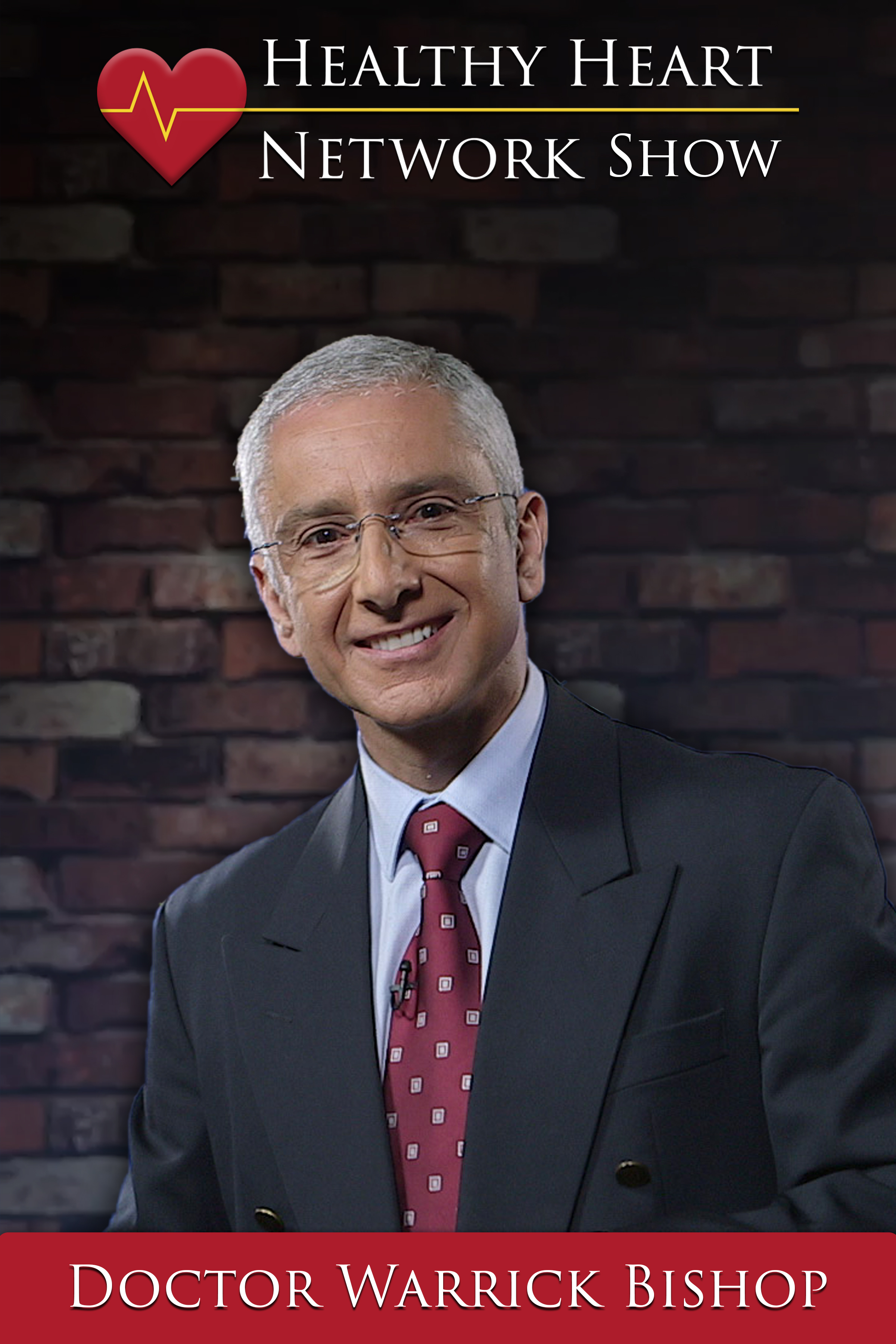
Welcome, my name is Dr. Warrick Bishop. I'm a cardiologist, an author and a keynote speaker. I'm CEO of the Healthy Heart Network. I'm all about trying to help people live as well as possible for as long as possible. Heart disease is huge in Australia. Every 20 minutes someone suffers a heart attack. Most of these could probably have been avoided if only we knew what to do. This podcast is all about helping you understand blood pressure, weight, cholesterol for better health. If you enjoy this podcast, I would be honoured for a five-star review. You can share it with your family and friends. It may well save someone you love. Hi, my name is Dr. Warrick Bishop and welcome to my podcast and videocast station. Look, I'm grateful that you've decided to tune in and I'm pretty keen to share with you. an interesting one that popped up recently for me. And that is being interviewed by Julie Kendrick, who wrote an article for the Huff Post. And the article really was a survey of five cardiologists sharing exactly what they eat and drink during the day. So if it's all right with you, I'll read that article to you. And if you want more detail, not that there'll be much more, but if you want to read it, you can go to the huffpost.com site and look it up. So Julie starts off with, they train for years, work super long hours and are required to make decisions that are literally life and death. So how do some of the world's top... cardiologists keep themselves nourished and hydrated while working in a field that can be physically and mentally punishing. Just in time for Heart Health Month, we found the answers from these experts. I'll read about Dr Warrick Bishop first because I'm listed first. Private cardiologist Hobart, Tasmania, Australia. First thing. Strong coffee, one shot caffeinated, one shot decaf, for the robust flavour without jitters from too much caffeine, often with a bit of butter blended into it to make a bulletproof coffee. Mid-morning, another coffee, sometimes with a dash of cream. Lunch, a small snack, perhaps a piece of cheese. Dinner. Salad. Often with plain yogurt, sometimes a few pickled vegetables and a protein, steak, chicken, pork or venison. Evening, a glass of wine. Bishop, persuaded by recent research, has been following a pattern of eating during an eight-hour window and fasting for 16 hours. Still, he knows that may not work for everyone. In quotes. There isn't a single perfect diet for every person, Bishop said. It depends on each person's dietary objectives. He likens the way we eat to a bank account where nutritious choices build up our balance so we can, if you like, draw down with an occasional indulgence from time to time. In quotes, my recommendation is to follow the Mediterranean diet, which research shows to be very effective. he said. Continuing, I tell my patients that you'd need to minimise eating food that has a barcode on it and to avoid processed and sugar-dense foods as much as possible. Further, he pointed out that diet is only one pillar of good health. For example, we often focus on diet and neglect the importance of good sleep, regular exercise, reducing stress and periodic health checks and screening. The next doctor interviewed was Dr. Deirdre Matina from the Cleveland Clinic, and this is a very world-recognised institution of research and excellence in the field of cardiology. Dr. Matina, first thing around 5am, two cups of coffee with sugar-free hazelnut coffee creamer and a teaspoon of sugar. Breakfast, 8am at work. Fruit and veggie smoothie, in brackets, low carb and low sugar, close brackets, from plant-based delivery service. Favourite flavour, mint, basil, lunch. One can of Diet Coke, in brackets, her favourite indulgence, close brackets, and a plant-based bowl from the same delivery service. Usually a high fibre choice with quinoa, beans and vegetables. Afternoon snack. A salty treat like a handful of nuts or a small bag of baked crisps. Dinner, vegetable-based entrees, usually served with quinoa or pasta. Evening, 10pm to midnight, two more cups of coffee as she catches up on work. Quotation. I try to keep my eating on a spectrum and I try not to be too strict with myself, Martina said. there might be times i have a deadline due so i'm not cooking as much and eating out more but then i get back on track the following week i'd say about eighty per cent of the time i'm doing the right things matina reported that her eating mostly follows the mediterranean diet quote the only difference is that i'm that as a pescetarian i only eat fish not any meat since I've been a vegetarian since I was 16, she said. Oh, and I don't drink alcohol, so there's no wine for me at dinner. Dr. Carmen Landreau is the next doctor. She is based at the Memorial Hermann Hospital in Houston. First thing, large glass of water. Breakfast, Greek yogurt with fruit, perhaps nuts. or a boiled or scrambled egg or egg white with fruit and whole wheat bread. Lunch. Chicken, fish or meat with vegetables. Starch, ideally rice, which she loves, and possibly a salad and water or iced tea. Snack or quick lunch on a busy day. Protein pack with meat, cheese and nuts, as low in sodium and saturated fat as possible. Low-fat cheese sticks or Greek yogurt with fruit. Dinner. Chicken or beef, either baked or grilled with veggies or a salad on the side with low-fat, low-sodium dressing. Weekly. A free choice meal at a favourite restaurant. Usually steak with grilled shrimp, side Caesar salad, baked potato with chives and butter and dessert, ice cream, cake or flan. in quotes a firm don't for me is not to follow fad diets landrow said i don't like to classify certain food groups or nutrients as bad and i don't totally avoid certain food groups i never ask patients to deprive themselves of occasional treats If they can do so responsibly and with moderation, I tell them that the same way eating one salad won't make them lose weight, one treat on a special occasion shouldn't derail their efforts if they resume their healthy lifestyle after that. The next cardiologist interviewed was Dr. C. Noel Byrie Murs. from Cedars-Sinai Medical Center, Los Angeles. And I've heard Dr. Bari Murs present, and she is a highly, highly regarded professional from a rather impressive institution. Her breakfast, yogurt with nuts, peanut butter on toast and a glass of milk, or leftovers from dinner. Lunch, fruit and milk. Once or twice a month, lunch out with a colleague. Dinner. Pasta with vegetarian topping. Rice with vegetable and tofu topping. Couscous or another whole grain with bean-based toppings. Fish, about twice per week. Once or twice a month, dinner at a restaurant. In quotes, I'm very comfortable eating good food, Bari Murs said. I'm predominantly pescatarian and I usually don't eat dessert unless it's very good chocolate. She stresses that she refers to what she eats as nutrition instead of diet. In quotes, diets are something for weight loss, but nutrition is the composition and the amount of food you need to feel well. Lastly, Dr. Brahmaji Nalamothu from the University of Michigan and the Ann Arbor VA Medical Center. For breakfast, a glass of water, one egg. Fried or scrambled. Piece of fruit. And a thermos of coffee with cream to take to work and sip throughout the day. Lunch. On clinical days, he usually skips lunch, but might have a protein bar or piece of fruit. On research days, he'll have a protein bar and plain yogurt. Afternoon. A latte if he's feeling sluggish. Pre-dinner. Cheese and nuts. In brackets. And with a beer, if I feel I've earned it, close brackets. Dinner. Three times weekly, Indian vegetarian food with rice, breads, vegetable and dull based curries and yogurt. Other nights, Indian fusion with Mexican or Italian. Once a week, take out. Dessert. I can go deep on cookies, he says. In quotes, I aim to strive for balance in my eating, but I also believe life isn't worth living without spicy food. Nalamothu said, I'm a big believer in Michael Pollan's dictum, eat food, not too much, mostly plants. And I've been a vegetarian for about five years now. I started with one of my children who decided to become a vegetarian, and I've continued ever since. He continues, the older I get, the more I realise how deeply personal food is for people. It is important for us to understand this diversity and be inclusive in how we think about diet and nutrition. Because of my involvement in the South Asian community in southeastern Michigan, I see a lot of people who eat non-Western diets, including vegetarian ones. Providing dietary counselling for those people has been a big... gap until recently, but dietary counselling has evolved over the last few years in a very positive way. Well, that's it. That's how five cardiologists enjoy their food through the course of a day. I have to say I feel particularly privileged to be included in that rather impressive group of cardiologists, including Dr. Deirdre Matina, Dr. Carmen Landry, Dr. Noel Byrie-Mers and Dr. Ramaji Nalamothu. Well, I hope you found that satisfied your appetite for curiosity about what cardiologists see. I'm going to wish you the very best. Till next time, please live as well as possible for as long as possible. Take care and bye for now. Join the Healthy Heart Network and become part of our growing community. If you're interested in your heart, health and risk of heart attack then join the Healthy Heart Network for only $5 as a lifetime member. This represents $55 worth of value. We offer and help people understand their present state of heart health, what their current level of risk is and the positive steps they can take. to improve their risk of heart attack in the future. Go to www.healthyheartnetwork.com.au and click the join the family button.