**EP264: All About Hormone Replacement**
**Dr. Warrick Bishop:**
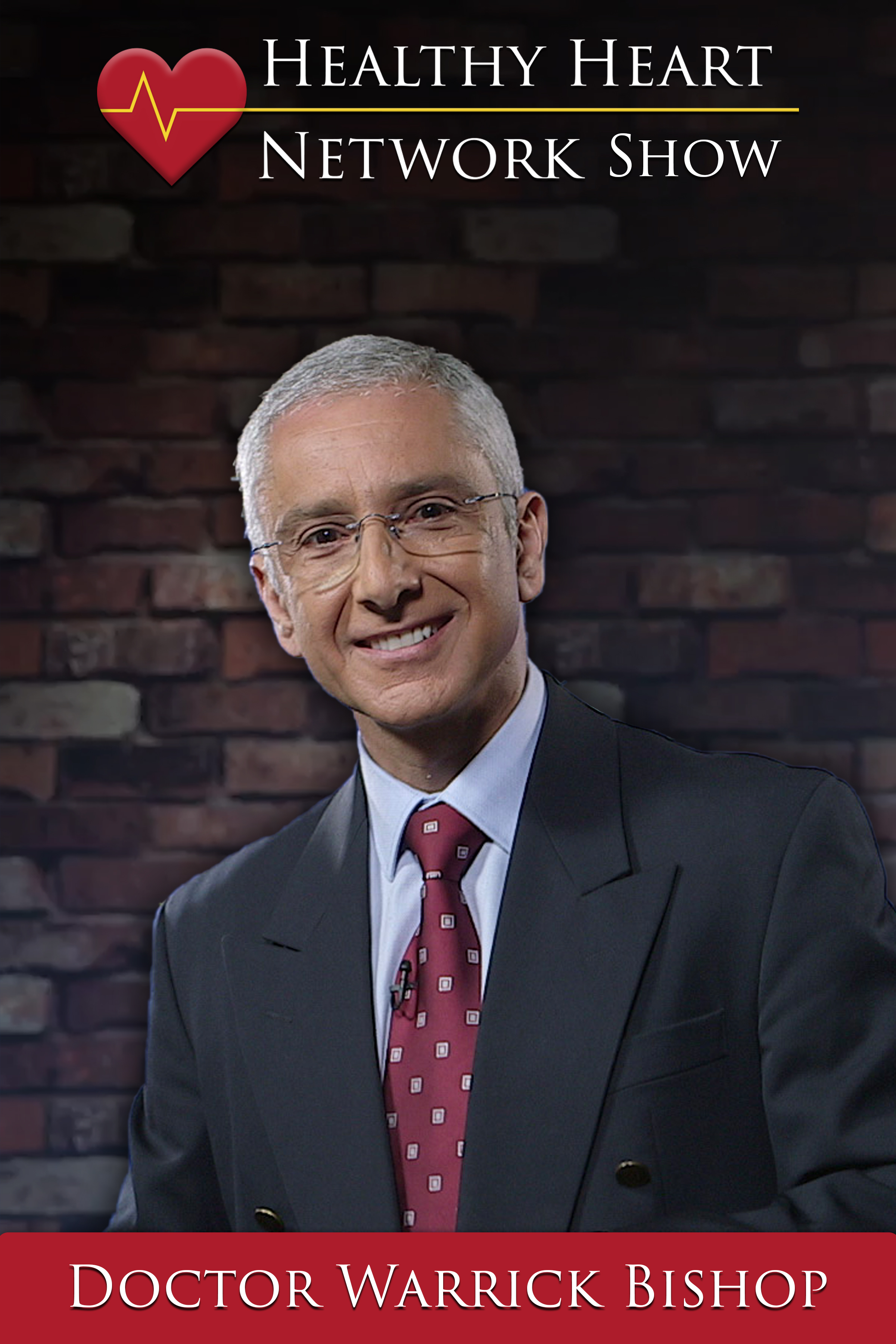
I believe we can prevent heart attacks. We can put in place strategies to reduce risk. We can literally plan to change your future. Welcome, my name is Dr. Warrick Bishop. I'm a cardiologist, I'm an author, and a keynote speaker. Together with that, I'm the CEO of the Healthy Heart Network, and I'm all about trying to help people live as well as possible for as long as possible.
You probably know that heart disease is huge in Australia. Every 20 minutes, someone suffers a heart attack, and we know that over 20 people per day die from heart disease. This is on a backdrop of over 9 million people globally being impacted by this condition. Truthfully, most of these could probably have been avoided if only we knew what to do. Well, this podcast is all about helping you understand better where blood pressure, weight, cholesterol, and all the other bits and pieces around there can help, together with general health literacy for better health overall.
I am on a mission to impact not just heart health, but general health on a global scale. If you enjoy this podcast, I would be honoured for a five-star review, and you can share it with your family and friends. Who knows? It may well save someone you love.
**Dr. Warrick Bishop:**
Hi, my name is Dr. Warrick Bishop, and welcome to my podcast and videocast station. I'm absolutely delighted to have for a second podcast, Dr. V, who's a practicing OBGYN from North Carolina with over 20 years of experience in the space. She's got a deep passion for making a real difference in the healthcare journey that her patients go through. Dr. V, welcome back.
**Dr. V:**
Thank you. Thank you.
**Dr. Warrick Bishop:**
Look, for those who may have missed it in our last podcast interview, Dr. V and I spoke about the complications of pregnancy, including blood pressure, proteinuria, preeclampsia, and eclampsia, and really what they mean, not only for the lady at the time but also the potential future risk of heart attack. I strongly encourage you to go back and have a listen to that, particularly if you're someone who may have had blood pressure or proteinuria during pregnancy. It's fascinating, it's interesting, and it's incredibly important.
But today, I think we'll pivot and we'll talk about a topic that comes up a lot, and that's hormone replacement therapy for women and the impact it has on cardiovascular risk. Without any further ado, Dr. V, I'd love to hear your thoughts about hormone replacement therapy and how you approach it, including the impact of early menopause. So that's a huge open canvas. But where do your thoughts start when it comes to HRT and cardiovascular protection for women?
**Dr. V:**
Absolutely. So as a 47-year-old woman, this is something that I'm actually living through right now. So I love to talk about it. Let me just say, when I came out of residency in 2006, the thinking at that point was that we saw that women didn't start to have heart attacks until they went through menopause, and then their risk was similar to men. For that reason, hormone replacement therapy—so that's estrogen if you do not have a uterus, and estrogen and progesterone if you do have a uterus—was considered protective.
A few years into my practice, there was the Women's Health Initiative study, and it said, "Whoa, whoa, whoa, we are seeing an increased risk of heart attacks and strokes in women who are on hormone replacement therapy." Now, if you're needing hormone replacement therapy, it's most likely because you're having horrible hot flashes. It was almost like the world came to a standstill, and every woman came off of hormone replacement therapy. Some women were not very happy; they were miserable. But we don't want to expose our patients to an increased risk of cardiovascular disease.
Years after the study, they realized that the population that was studied was older—significantly older—and that their risk of heart attack and stroke was increased prior to starting hormone replacement therapy. Also, they noticed that the women with progesterone seemed to be more impacted. So moving forward from that time, we modified our recommendations: those women who already have a history of heart attack or stroke are not candidates for hormone replacement therapy. There are alternatives to hormone replacement therapy, and we can talk about that if you like, but they are not candidates for hormone replacement therapy.
For women who are candidates, you are supposed to stay on hormone replacement for the lowest dose for the shortest amount of time possible. When I came into practice, I had 70 and 80-year-old women on estrogen. It was almost like their vitamin; they didn't need it at that point. You really need it as you're transitioning and maybe several years into that transition. Just for your listeners, we consider menopause when you have not had a menstrual period for one year. You are technically menopausal when that happens. However, there is perimenopause, which is a time before and after that where you can have all of the symptoms that would require potentially treatment for hormone replacement therapy.
**Dr. Warrick Bishop:**
So in the current practice for consideration of hormone replacement therapy in your clinic, what sort of patients would you be seeing, and in what situations would you be starting hormone replacement therapy?
**Dr. V:**
Absolutely. So again, you know, I'm a lifestyle medicine physician as well, so we want to empower the patient to manage their symptoms minus medication, right? Minus hormones. But when we have women who have severe symptoms such as hot flashes that interfere with the quality of their life, oftentimes we have women who are completely drenched at night, so they're having to change their sheets in the middle of the night or change their clothing. We have husbands that are sleeping in other rooms because the room is freezing cold. Or women who have had a significant change in their mental health, so they're having more anxiety or depression. Those are considered moderate to severe symptoms, and if you have moderate to severe symptoms, you are a candidate for hormone replacement therapy.
And just in terms of timing, Dr. V, did these symptoms appear as people are progressing to perimenopause or in perimenopause or approaching menopause? Where's the timing there?
**Dr. V:**
So, go ahead, and I'm guessing it's gradual, or do sometimes people just drop off a cliff and go from feeling hormonally balanced to beside themselves? And these hormones have changed very quickly. What do you tend to see in that space?
**Dr. V:**
Absolutely. So you're correct; it is a gradual process. The ovaries are still trying to function, and so they're sending signals to your brain, and they're getting a boost of stimulation. So, yes, as they progress, you'll start to notice some of the symptoms. A lot of women say they're feeling warmer than usual. The only women that truly drop off a cliff are those women who have their ovaries surgically removed, and sometimes that happens at the time of hysterectomy. We do not recommend that because of the protection of the ovaries and helping the transition. But we do have some younger women who have their ovaries removed. It really does vary throughout time.
What I have seen is that the women that exercise regularly do not have to be on hormone replacement as much. So getting back to lifestyle, one thing that you can do is there's a problem with your thermostat, essentially, when we're talking about hot flashes. When you're exercising and you're increasing your heart rate, that seems to tweak your thermostat in a way that is favorable to transitioning through. There are also foods that you can include in your diet that would also help the transition so that you don't feel a drastic change.
So that Women's Health Initiative study, which really changed the way we thought about hormone replacement therapy, as you alluded to, did that also raise issues around the timing of commencement of hormone replacement therapy such that it was perhaps better to start HRT before someone moved into menopause rather than wait until they were in menopause and then start HRT? Is there significance around the timing of commencement in terms of benefit in the longer term?
**Dr. V:**
So as it stands now, no. Ideally, we would not want you to be on hormone replacement therapy unless you had to be. I will tell you, prior to my age in practice, they kind of saw it as protective. As you got toward a certain age and started to show signs of it, you were definitely placed on it a lot earlier. So yes, there is, again, if we can manage the symptoms without medication, then we will do so. I will tell you that you should not start it in your older age. Also, if you have stopped hormone replacement for over a year, we try not to put you back on hormone replacement therapy because there is some increased risk when you resume hormone replacement therapy.
Look, one of the understandings I had was that there may be an improvement in cardiovascular risk for appropriate use of hormone replacement therapy. You've obviously alluded to the hot flashes and the temperature regulation. You've also touched on mood. Are there other potential benefits of HRT, such as bone health or risk of cancers? Would you like to speak to some of the other benefits or potential benefits of HRT for the women who are on it?
**Dr. V:**
Absolutely. So for the women who are on it and who need it, I don't want to scare you off of it. If you need it, you need it. There are indications for the use of hormone replacement therapy. Bone density is a hot topic. Estrogen, as we know, is protective; it helps keep your bones nice and strong. However, there are a ton of medications that we now have to treat osteoporosis that don't have the additional risk factors. So if you're seeing a doctor and they want to treat your osteoporosis or osteopenia with hormone replacement therapy, that is not first-line.
Sexual health is important. Some women benefit from having hormone replacement therapy; they have decreased libido or they have vaginal dryness. What we found is that if you have vaginal dryness, and for many women, that's also one of the hallmarks of menopause or perimenopause, you don't necessarily need a pill to help with your hormone replacement, right? It's better if you put the medication in the vagina. The benefit of that also is that it doesn't get into your bloodstream; it really focuses and stays in the vagina, so your whole body is not exposed to estrogen.
As it stands right now, osteoporosis is one of the things that can be prevented. I don't know of any cancers that can be treated with hormone replacement therapy, and obviously with breast cancer, absolutely hormone replacement therapy is not something that you would use. So yeah, I think that talking with your OBGYN about your specific symptoms and the possible treatments that would be best for you is very important.
**Dr. Warrick Bishop:**
Yeah, really valuable, particularly that comment about osteoporosis. HRT can be helpful, but it's certainly not a first line, and I'll certainly take that away; that's incredibly valuable. Look, one of the things that in the cardiovascular space we're concerned about is the oral contraceptive pill and the risk of clot formation, and potentially people getting clots in their legs, women getting clots in their legs, or even clots in their lungs. For that reason, we are at times concerned about hormone therapy, the pill. And I guess the question I've got is, is HRT or has HRT been linked in a similar way to increased risk of clot formation?
**Dr. V:**
Yeah, absolutely. So if you have a risk of deep venous thrombosis (DVTs) or pulmonary embolisms (PEs), or you have a history of a clotting disorder, it is not recommended that you take hormone replacement therapy. So we do see that, and let me make this point clearly: the dosage of a birth control pill is not the same as hormone replacement therapy. There are some women who potentially aren't great candidates for birth control pills that may be able to get away with a small dose of hormone replacement therapy. But again, that's a very few select women, and you would need to speak with your doctor about that.
**Dr. Warrick Bishop:**
Yeah, it sounds like a very highly specialized and individualized conversation.
**Dr. V:**
Absolutely. Customized care is really important in this diagnosis.
**Dr. Warrick Bishop:**
Dr. V, we've covered a heck of a lot, which has been fantastic. We've pretty well come to the end of our time for this podcast. I think from my perspective, the take-home is that HRT is really seeing a pendulum swing away and now back. It certainly has a role for diminishing symptoms around the time of menopause for women. Like anything, we use it as much as we need to, not more than we should need to, and that needs to be guided by the OBGYN. It clearly has some cardiovascular protection. If it's being used, it could be helpful for bones, but it's not a first-line therapy. There may be increased risk of breast cancer in women who are susceptible, and we'd be careful about that. And as we've just touched on, there can be a very small increased risk of clot formation, but this would be dealt with on an individual basis.
Look, I think this has been really informative for me. I'm sure those listening have found it informative, interesting, and engaging as I have. Thank you so much for joining me.
**Dr. V:**
Thank you for having me, Warrick. I love this topic, and I love that you're empowering women to take care of their cardiovascular health. So continue the good work.
**Dr. Warrick Bishop:**
Well, as far as my beliefs are, if we don't give people the education, the information, and the toolkit to be asking the questions and know where to be seeking answers, we're just not helping them as well as we can. So I'm going to wrap it up there. Thanks so much again for joining me all the way from the other side of the world. And we're doing this live in two different time zones.
**Dr. V:**
My pleasure.
**Dr. Warrick Bishop:**
If anyone has any questions, drop us a line at info@drwarrickbishop.online. Again, thank you for joining me, and until next time, I wish everyone listening to live as well as possible for as long as possible. Take care and bye for now.
Join the Healthy Heart Network and become part of our growing community. Do you want to know more about your heart health and know more about your risk of heart attack? For $5, get lifetime access valued at over $55. The Healthy Heart Network has been designed to support and help you understand your risk of heart attack, your risk level where you are right now, and the positive steps you can take to reduce that risk. Check it out at www.healthyheartnetwork.com and press the "Join the Family" button.