podcast-image.jpg
edd9164d216c19945bea55d0825befe1a07fdae5.jpeg

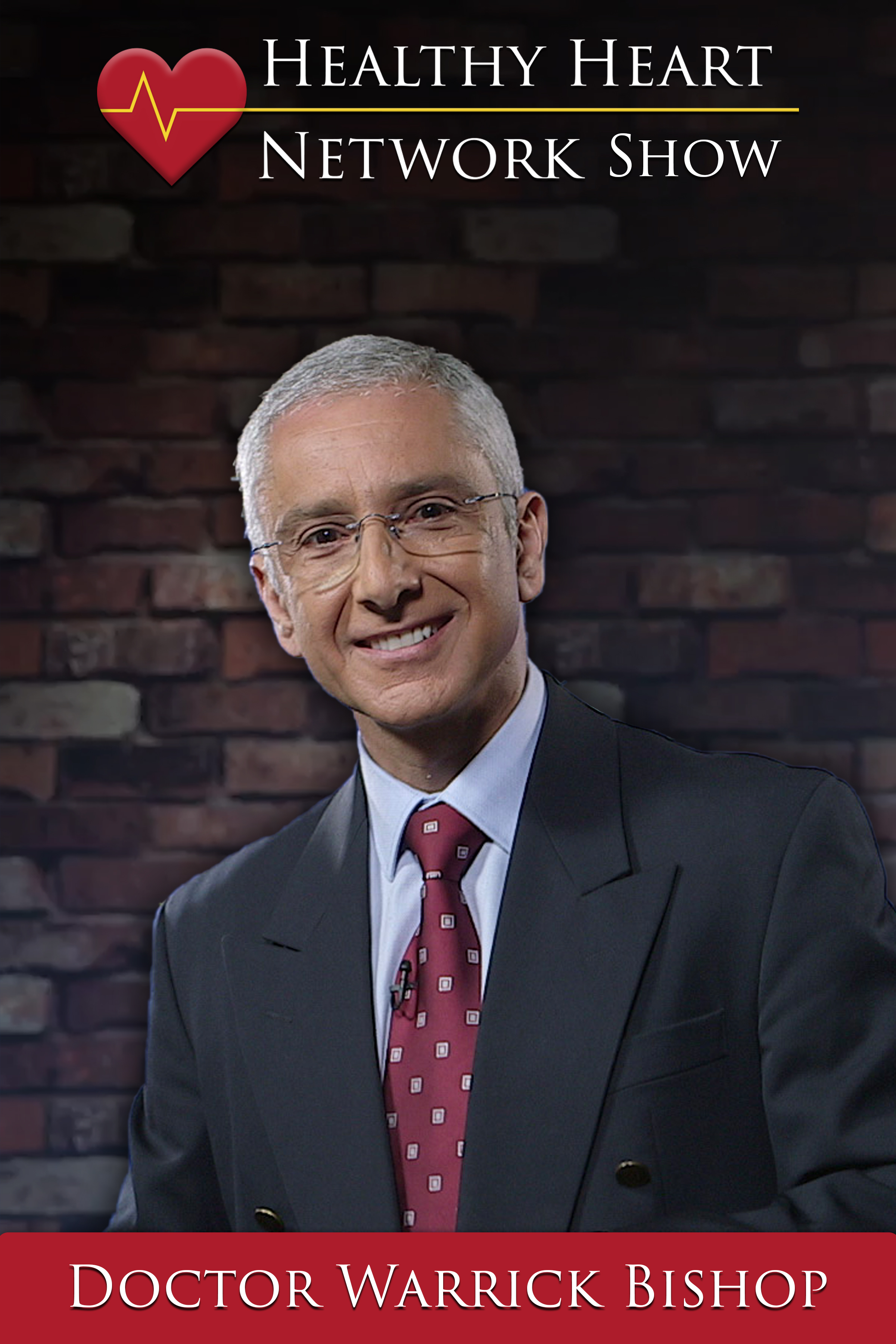
Welcome to my podcast. I am Doctor Warrick Bishop, and I want to help you to live as well as possible for as long as possible. I’m a practising cardiologist, best-selling author, keynote speaker, and the creator of The Healthy Heart Network. I have over 20 years as a specialist cardiologist and a private practice of over 10,000 patients.

Podcast Summary

Introduction

Dr. Eric Bishop is a practicing cardiologist and author dedicated to educating patients about heart health and the latest advances in cardiac care. In this episode, Dr. Bishop discusses cholesterol and coronary artery disease, focusing on the research of Vladimir Subotin from the Russian Academy of Sciences, who proposes an alternative mechanism for how cholesterol accumulates in artery walls. The episode challenges conventional understanding while emphasizing that lowering cholesterol in high-risk patients demonstrably reduces heart attack risk.

Key Takeaways

  • The traditional view holds that cholesterol particles (LDL) circulate in the bloodstream and deposit in artery walls at points of wear and tear, but this mechanism is difficult to directly observe in living organisms.

  • Subotin's research suggests cholesterol may not primarily enter arteries from the bloodstream but rather accumulates through an alternative pathway.

  • Artery walls consist of three layers (tunica intima, tunica media, and tunica adventitia); when examined under microscopes, cholesterol deposits appear in locations inconsistent with the traditional inside-to-outside migration theory.

  • Arterial wear and tear triggers local inflammation and irritation, causing cells to release tissue factors that signal the body to send repair materials, including cholesterol, to the damaged area.

  • Subotin proposes cholesterol travels into the middle artery layer via the vasa vasorum—tiny blood vessels that supply nutrients to the artery wall itself—rather than crossing from the arterial lumen.

  • Regardless of the specific mechanism by which cholesterol enters artery walls, clinical evidence confirms that lowering LDL cholesterol in high-risk patients reduces their future heart attack risk.

  • Coronary artery disease is multifactorial; cholesterol alone does not explain the disease, and factors like inflammation, blood pressure, and arterial wear and tear all play important roles.


Join The Healthy Heart Network

Transcript English

Welcome to Dr. Warrick's podcast channel. Warrick is a practicing cardiologist and author with a passion for improving care by helping patients understand their heart health through education. Warrick believes educated patients get the best health care. Discover and understand the latest approaches and technology in heart care and how this might apply to you or someone you love. Hi, my name is Dr. Eric Bishop. Welcome to my podcast and videocast station. And today I'd like to talk about cholesterol and where it ends up in the artery and perhaps how it ends up in the artery. Well, I'm specifically going to be talking about a researcher, a doctor called Vladimir Subotin, S-U-B-B-O-T-I-N. And if you're interested, he's written a review in the Drug Discovery Today journal back in 2016. Vladimir Subutin is a member of the Russian Academy of Sciences and has an interesting take on the way cholesterol ends up in the arteries. Well, I think we're all fairly familiar with the idea that cholesterol and coronary artery disease are linked. And we're also pretty comfortable with the idea of what we call the LDL hypothesis. LDL being the so-called bad cholesterol within the bloodstream. We've got lots of data over many years now that supports the premise that if we take people who are really high risk, If having a heart attack and we lower their cholesterol their LDL cholesterol or bad cholesterol then we can reduce their future risk and I don't think there's any confusion or argument about that. I think it'd be fair to say that cholesterol is probably not the whole story and there are certainly other issues at play such things as inflammation. of its own lowering cholesterol in high risk individuals has been shown through research over the last decades to correlate with reduced risk. Well the interesting thing about that is the mechanistic processes in which that occur and when I say mechanistic I'm talking about the mechanism or how the cholesterol gets in the arteries. To a large degree we've often thought that the cholesterol floats around in the bloodstream in its special little transport vehicles the lipoprotein particles which carry it around and deliver it to its location. We've generally thought that within an artery there's a point of perhaps wear and tear where for whatever reason the lipoprotein the lipid and protein particle that carries cholesterol around becomes adherent and is able to cross the inner lining of the blood vessel and deposit the cholesterol at that location. Well that's a reasonable hypothesis and it's very hard to actually measure exactly what's going on because for us to look at The exact mechanism requires us to look at a living organism and it's very hard to look at a living organism in that detail unless you've got it under a microscope and the very fact you've got it under a microscope negates the possibility of it being a living organism. Anyway, rest with the idea that general or popular consensus has been around the idea of cholesterol coming out of the bloodstream and into the... artery wall. Well Sabotin in his review shares with us a number of facts and evidence suggesting that perhaps this isn't the primary mechanism, that perhaps there's another way. Let me try and break that down for you a little bit. If we think about the artery as having several layers, and the layers we call tunica as in wearing a tunic a top or a coat or a covering there's three main layers that make up the artery wall. There's a inner tunic that thin lining that is actually in contact with the bloodstream. Then there's a middle lining and then there's a an outside lining and look a really nice simple way to think about those is that the inner lining the tunica intima is perhaps like thermal underwear that you might wear pretty thin you could almost see through it it's sheer that's what's lining the artery then the next layer might be like a thick woolen jumper that's the tunica intima. And that's the middle layer. And then there's the outer layer, which is, if you like, like a waterproof over the top. Now, the interesting thing is when we do look at slides under the microscope of the development of plaque in the arteries, Well that's absolutely fascinating because you'd probably think if the cholesterol was going into the artery wall from the artery, from the inside of the artery then it would probably accumulate just inside the tunica intima or the thermal layer that we were using as an example. Sir Botan in his review talks about how this cholesterol appears to be building up in a location which doesn't quite make sense with cholesterol migrating from the inside of the artery out and puts the proposition that the cholesterol is not coming from inside the artery at all. That what is occurring is that there is wear and tear at a point within an artery that wear and tear kicks off Uh, irritation, that irritation and inflammation stirs up local cells to release tissue factors which signal to the body that there's been some sort of damage or wear and tear. Now we know cholesterol is a building block and so deals with wear and tear. Now here's the interesting thing. inside of the artery the actual lumen of the artery making its way out to the center or tunica intima sorry tunica media the central layer of the blood vessel what's occurring is that the very very very fine blood vessels that actually supply blood to the blood vessels and these are called vasovasorum so Try and understand that there are tiny little blood vessels that actually supply blood vessels to make sure that the blood vessel is healthy. Sobotin suggests that the cholesterol travels into the artery, the middle layer of the artery wall via these very very small blood vessels which are there to provide nourishment and nutrients for the artery. Now, this is incredibly plausible and I think certainly warrants consideration and forces us to ask the question, how in fact does that cholesterol get in the arteries? Well, I think this is a really interesting space. I think we have to be aware that cholesterol of course of its own is not the whole picture in coronary artery disease because we know that wear and tear is important. We know that blood pressure is important. that inflammation is important. And also importantly we know that regardless of the mechanism of how cholesterol gets into the artery wall, that lowering cholesterol in those high risk individuals will reduce their future risk. So I hope you found that interesting. I hope that's maybe answered some questions or given you more food for thought. Either way I'm going to wish you the very best. Take care, bye for now and please don't die from a heart attack. Goodbye. You have been listening to another podcast from Dr. Warrick. Visit his website at drWarrickbishop.com for the latest news on heart disease. If you love this podcast, feel free to leave us a review.