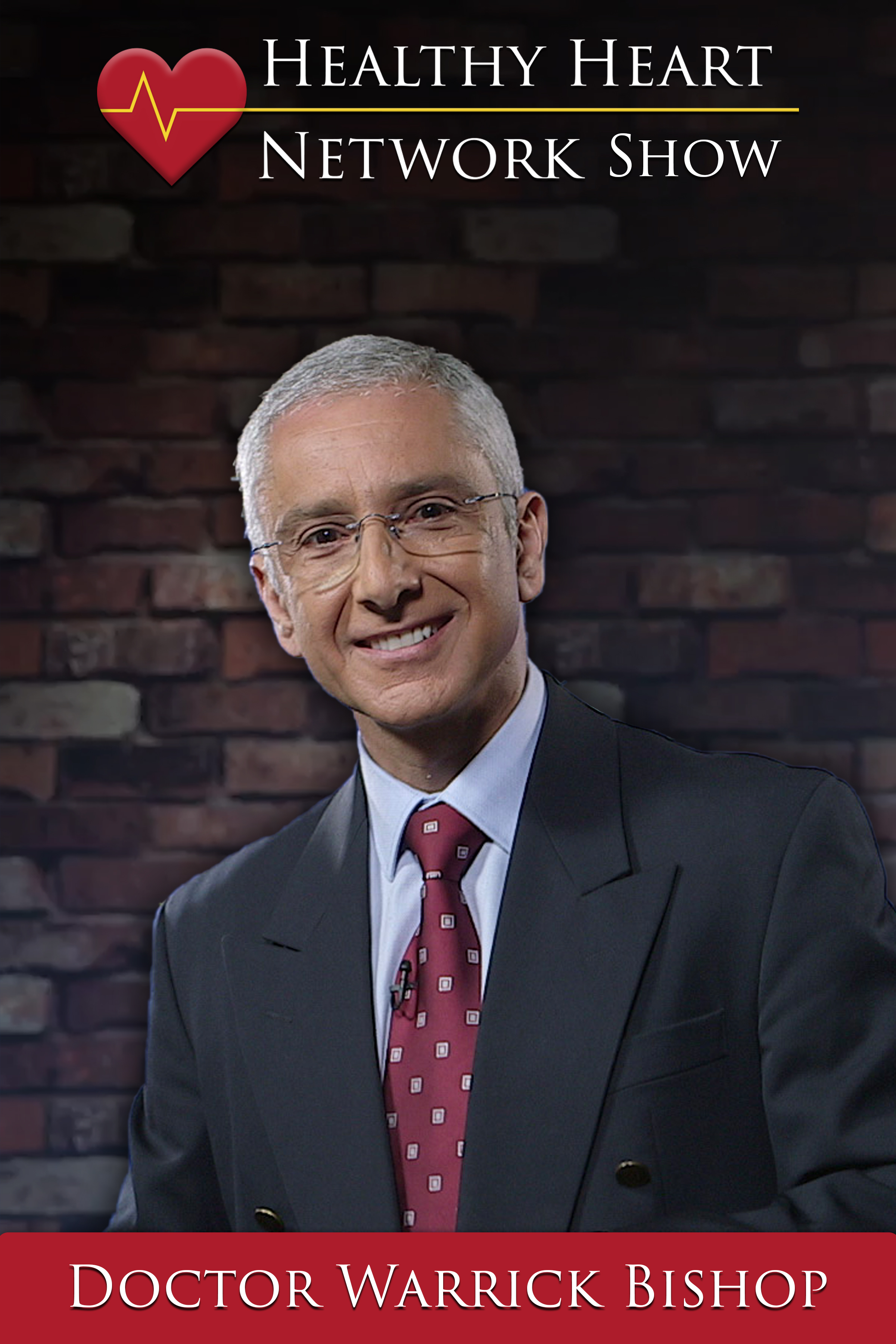
Welcome to Dr. Warrick's podcast channel. Warrick is a practicing cardiologist and author with a passion for improving care by helping patients understand their heart health through education. Warrick believes educated patients get the best health care. Discover and understand the latest approaches and technology in heart care and how this might apply to you or someone you love. Hi there, hearties. It's Angela here from Healthy Hearties. I am here again with Dr. Warrick Bishop. He is a cardiologist from Australia. And we have spent the last few weeks talking through some of your questions. So thank you for joining us again, Warrick. It's a pleasure, Angela. And I hope it looks beautiful behind you there. You've got the sun setting. So thank you for giving up your evening on a Sunday. Look, it's about 6 o'clock at night or not far off, and it is. It's been a beautiful day here. But it's a pleasure to join you, and I'm so excited that your hearties really want more knowledge and that they're asking questions and wanting to learn more because I think that's so valuable in the journey of good health around your best care. So that's a pleasure to be with you. Absolutely. Now, I do have a challenging question for you today, one that I think a lot of hearties have probably tried to have with their own cardiologist or GP. So it would be absolutely fantastic to get your side of things and, you know, spend a few minutes around this topic because it comes up a lot. So the question today is, I've had three stents. Is it really necessary for me to take statins? I'm not feeling much better after the stents and I feel lethargic and just generally yucky. And I'm wondering if it's the statins and whether I can stop them basically. Well, Angela, this is what I get day in, day out. And it's an incredibly important topic. So whoever asked that question, thank you for raising it because you are not alone. So many people ask. First of all, to deal with this particular individual, if you're not feeling well after three stents, then something's not right. You really need to go back and get checked by your cardiologist. because there might be a problem with one of the stents. There might be another narrowing somewhere. There might be a component of heart failure. There might be asthma. Who knows? But it doesn't sound right. First of all, if you've had three stents, you should be feeling better. And if you're not, I think you should be asking questions about it. In regard to statins, well, this is a great story and I'll give you a bit of an overview. The very short answer to this question is, yes, you should be on the statins. But let me fill that out because I think it's really important that people get this message clearly. Now, it turns out I have people come into my office who... maybe have raised cholesterol and been sent by their GP for advice on whether they should be on a cholesterol layering medication. They've, these individuals have done research on the net on Google. And of course they've found people who have a negative view about statins and a negative view about the cholesterol LDL hypothesis. Now, so some of these people come with preconceived ideas, which is amazing actually. So let's deconstruct that first. The information that's put on the website, some of it sounds reasonable and sounds balanced and sounds biologically plausible. And we could think about the anti-vax movement with similar information against the use of vaccines, except Samoa really proved that vaccines actually are beneficial. There may be side effects, but for a population base, the Samoans lost children, people with measles for lack of vaccinations. So, and that's because the whole story wasn't told. And the same is true with statins. The whole story is not told. So the story that's told about statins and cholesterol on the internet is High cholesterol doesn't necessarily mean you'll have a heart attack and therefore we shouldn't treat it. Now, truth is, Angela, I actually agree with that. As a predictor for heart attack, cholesterol is not very precise because I see patients who have raised cholesterol but nothing in their arteries or raised cholesterol in terrible arteries, but I also see people with really average or average to low cholesterols with terrible arteries or... normal arteries. So look, I'm the first to admit and agree that cholesterol of its own to predict who's going to have a problem is not that reliable. But the flip side of the story that's not told by these people who are often anti cholesterol and anti statin is that over the last 25 years, we have compelling, undeniable robust scientific evidence that tells us over and over and over and over again, that if we take individuals who have had a stroke or a heart attack or a bypass or a stent, these people who are truly high risk and we lower their cholesterol, whether we lower it from a high starting point or from a low starting point. we reduce future risk of events in those individuals and we can lower that cholesterol and get incremental benefit the lower we go. So it's incredibly important to get the distinction between trying to use cholesterol as the guide to who we treat with statins. So I don't think that makes sense. And you know, because I'm interested in imaging the heart and trying to be more precise about who we give therapy to. But that's a very different conversation to the conversation about if we find someone actually has a problem, there's no question we should be trying to lower their cholesterol. And it actually doesn't matter what we do it with. I was just going to follow on with, is there anything she could be doing to feel a bit better? Obviously. going back and saying, I'm not feeling great, maybe something's not right, having another barrage of tests. But say we say, right, we're stuck with these medications, maybe they make you feel a little bit tired, or whatever it might be that is the side effect. Is there anything we could be doing to improve that side effect of, well, we're sitting with loads of tablets in our tummy, that alone is going to have some effect on the body. So, you know, things like coenzyme Q10, do you recommend anything like that or exercise or more water or anything like that? So let me step back from that a little bit further and then come back and address that. The critical bit then becomes trying to be sure if the side effect is related to the statin. True. Which is difficult when you can't stop taking any of them. Correct. So the issue becomes one around side effect with statin. And now we've done some interesting research in this, and this is really important for patients to get their head around. There was a study done only in the last couple of years under the banner of the Odyssey trial, you can look it up. The study took people who swore blind they couldn't tolerate. They were so sure they couldn't tolerate statins that their specialists enrolled them in this trial. And this trial was to try one of these new agents that obviously might be useful for people who couldn't tolerate statins. So they thought they'd get this cohort of people who couldn't tolerate statins, prove they couldn't tolerate statins, then give them this other agent. All great, methodical, sensible science. But they took these people with statins, I think it was about 4,000-odd people, and they crossed them over blindly and they actually gave them either a sugar pill or statin. Now, would you like to have a guess how many of those individuals were taking a statin without any problem whatsoever by the end of the six-month period? All of them. 75%. 75%. So not all of them. And that the learning from that study is incredibly important because it means that 75% of those individuals who swore they couldn't take this tablet actually weren't having a side effect from it and were denying themselves a therapy that could truly have helped them. It also means that 25% of people truly do. have side effects from statins. So the answer to your question is, number one, make sure, make really, really, really sure it's the statin before you blame it. And then the answer to that question is, once you know it's the statin, now we can do all sorts of bits and pieces. I think coenzyme Q10 is reasonable. There's a little bit of work that would suggest it may be beneficial. I often change the statin. So if someone's on, say, a torvostatin, which is lipophilic it is uh it dissolves in fat i often swap people over to rosuvastatin which is it doesn't dissolve into fat and or vice versa and often i find that that can make a difference i've got one patient who if he takes the um proprietary uh brand of resume statin called crestor he gets pains but if he takes the generic he's absolutely fine interesting must be one of the fillers or something yeah one of the compounding agents which is just fascinating so i think the answer is we've got to be absolutely sure it's the stand and then we can try a couple of maneuvers now the other conversation i have with people is you've got to understand that this is not an allergy This is an intolerance. And it's really important to understand intolerance is related to dose. So a good example of dose response is we have a glass of wine, barely notice a difference, tiny bit relaxed, enjoy the flavor. We have 10 glasses of wine, we're intoxicated. So that's a dose related response. Well, we can do the same with statins. What we can say is, look, if this dose of statin is giving you a problem, then obviously if we gave you 10 times as much, you'd have a worse problem. But if we just asked you to lick the tablet once a fortnight, put it back in the medicine chest, you wouldn't get a side effect from that, would you? Of course not, because it's a dose-related thing. And so what I often do with patients is say, well, let's work on... the dose that works for you and it might be we have the dose it might be that we keep the same dose and do it alternate days we might do it three days out of the week or two days out of the week so there's a lot of mixing and trying to find a solution that works for that individual and i've got some patients are only taking like half a crystal twice a week, but we've got them on azetamib as well, which is a complementary cholesterol-lowering agent, and we're getting some good effect from that. Well, it sounds like you get this a lot. So thank you very much for going through that. And I guess the key thing is become a detective and find out what's going on because it may not be the statin, it may be the statin, but you have to really look a bit deeper into that. And then maybe not just jump ship and try a few things and talk with your doctor about it. But that's really interesting. And I'm sure you have a podcast about statins somewhere along the line. So can you tell us a little bit more about your podcast and your website and whether there are any more bits and pieces about statins on there? Look, I would love to. I do, in fact, have a podcast on that very topic. In fact, I've got a number. I've got somewhere around 150 podcasts these days and they've been really well received. If anyone does want to access them, then go to this app called Healthy Heart Network app. It's got a little heart with an ECG. It's free and it's loading up there. You can see, but you can access those podcasts very easily on your phone and just listen. in your car or while you're doing your exercise, walking. Brilliant. It's brilliant. You have your own app. Yeah, yeah. So it's really functional. It's a very easy way to access those podcasts. You can see there's lots and lots there. Oh, wow. Brilliant. And as I said to you before, Angela, I'm really happy and delighted to actually extend the free Healthy Heart Network membership to your Hearties members. I think you're able to put a link below for them so they can go and check it out. Yes. All these podcasts, but do get the app because it's really, I think it's really handy. Occasionally just go and refresh my own memory on some of the things I've covered. Yeah, brilliant. And it's a great way of people learning. It's just listening to a podcast. Everyone learns differently, so they might rather read some of the articles. So absolutely brilliant that you've done that. And thank you for putting in the effort to look at things like prevention and lifestyle and side effects. Because I know the frustration with patients is they feel a little bit dismissed and not understood enough. So thank you for taking the time to do things like this. Yeah, it's an absolute pleasure. And thank you for having me and allowing me to share. Well, have a fabulous evening. Looks beautiful there. And we'll speak again soon. Thank you. Take care. Goodbye. You have been listening to another podcast from Dr. Warrick. Visit his website at drWarrickbishop.com for the latest news on heart disease. If you love this podcast, feel free to leave us a review.