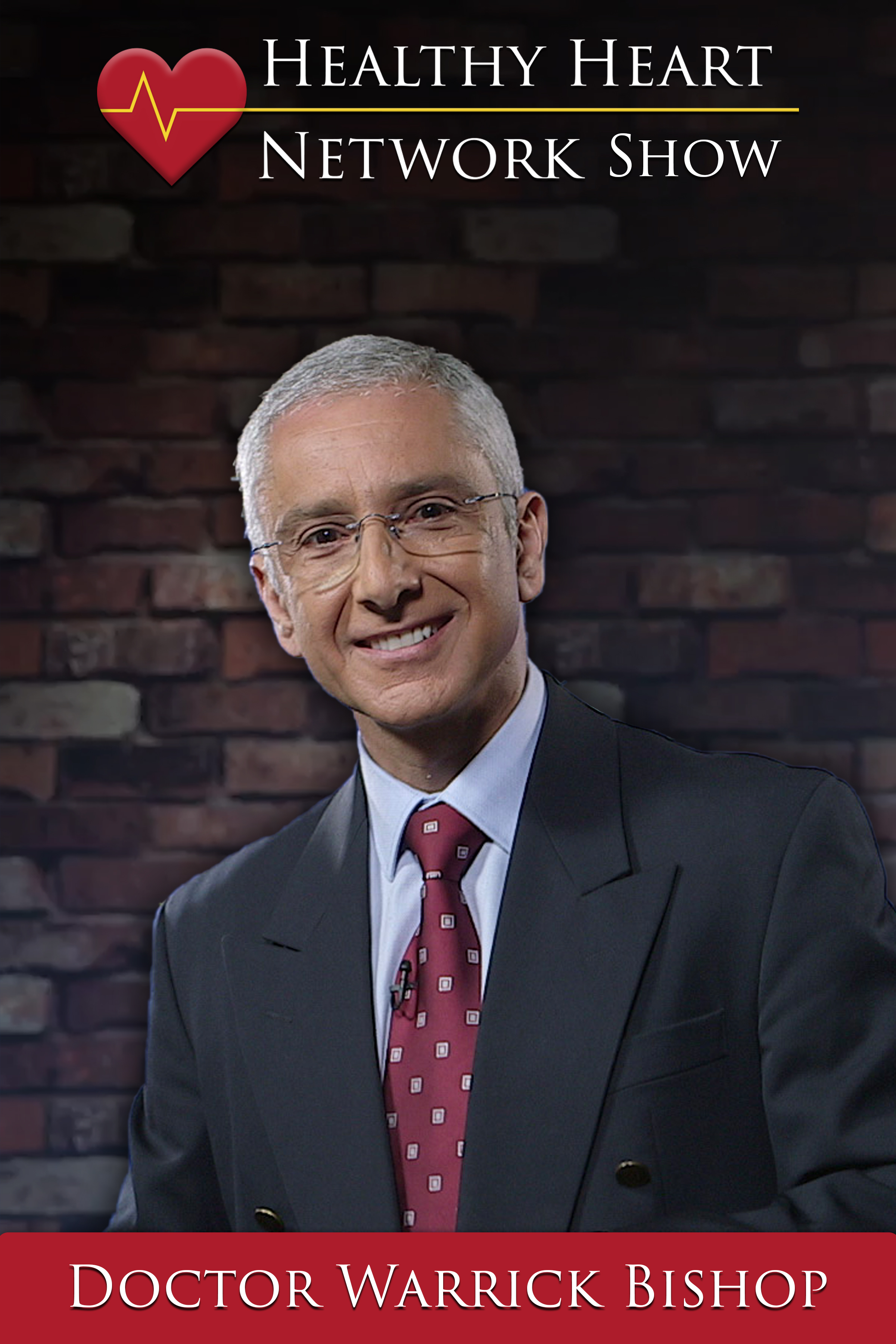
Welcome to Dr. Warrick's podcast channel. Warrick is a practicing cardiologist and author with a passion for improving care by helping patients understand their heart health through education. Warrick believes educated patients get the best health care. Discover and understand the latest approaches and technology in heart care and how this might apply to you or someone you love. Hi, my name is Dr. Warrick Bishop and welcome to my podcast and videocast station. And today I'm delighted to say I've got Greg Page with me for an interview about cardiac rehabilitation and coronary artery disease. Hi, Greg, how are you? Good, thanks, Warrick. How are you? I'm very well. Look, for those who didn't recognize Greg... Page's name like I didn't when I first met him. He is, in fact, the original Yellow Wiggle, having seen his face subsequently, unmistakably, the original Yellow Wiggle. So Greg, thanks for joining us. I'm going to ask just a little bit about yourself. How old are you and what's your... family background with regard to heart disease. We're not going to talk too much about the Wiggles today. Yeah, no problem though. Much more important things to focus on today. So I am now 48 years old and there's no, I don't know, there's no real family history of heart disease. My grandmother did have high cholesterol. She lived till she was in her late 80s and she did have a heart attack at 68. and had a subsequent heart attack and then a stroke. So yes, she did have some heart disease, but it's not like everybody in my family has some form of heart disease triggers. So yeah, it's an interesting thing when doctors ask you, what's your family history? And if you don't know it, it's very hard to answer correctly. I guess this is what makes it difficult for doctors to be able to kind of diagnose your risk of heart disease if you don't know your family history very well. It's true. Look, what about other things, Greg? I mean, at 48 years of age, you're not overweight. We know that. Were you active and exercising regularly? Did you look after your diet? Were you someone who tended to think you were doing all the right things or were there things that, looking back, you weren't looking after yourself? A bit of both, to be honest. So about 13 or 14 years ago, I was quite heavy back then. I was probably, I think I was probably about 109 kilos, which was too much. So towards the end of my time with the Wiggles, I'd put on a bit of weight and we had trainers and people coming on board to try and make sure that we were as fit as possible because the shows that we did with the Wiggles, the shows were quite... physically demanding. So we wanted to make sure we were doing the best we could. We had nutritionists and dieticians consult and give advice. Now, my diet has always been pretty bad. I'm not a good eater. I'm a very fussy eater. And that goes back to my childhood. I don't eat a lot of fruit and veg. I eat a lot of meat. I used to eat a lot of probably fatty meat, to be honest. Then that turned around for me. about 13 years ago when I met my wife, Vanessa. She's a cardiac nurse and she looked at my diet, she looked at my weight and she tried to get me to change. And I changed, but in retrospect, I probably didn't change enough. I exercised a lot. I always enjoy exercising and I like being what I call fit, but being fit isn't the same as being healthy. And that's what I now know. I thought, okay, well, look, my diet's not the best, but I'm exercising. I walk, I play cricket, I play tennis, I go to the gym, I work out. I can do all of that without getting the typical symptoms of, oh, gosh, I've got a heavy chest or, you know, I feel unwell, those kinds of things. So I think it's a little bit of both. I think there's a bit of reflection now. I look back and think, you know, I wasn't really looking after myself as well as I should have been. Obviously, some of that lifestyle stuff is important, but had you had the benefit of knowing what your cholesterol measurements were or blood pressure? The other thing, of course, I'll ask is I'm guessing you never smoked? No. No. Look, I've had a few cigarettes trying to be cool back in the day, but no, I was never a habitual smoker at all. Look, I probably had one or two cigarettes, but I never inhaled either. Yeah. I'm about the same. It was like, I don't really want to do that. That's not, yeah. But cholesterol and blood pressure, were they things that you were aware of or were they a problem even? So cholesterol, going back about, I don't know, maybe seven or eight years ago, my cholesterol reading was 6.2. That, again, was a signal to change my diet. So I made sure that I changed my diet. I did introduce a lot more, like I never used to eat salad. I never even used to eat salad. Then Berser came along and, you know, she got me eating salad at least. So changes like that, I kind of thought were enough because I was exercising. Yeah, I'd have, it's not like my diet was absolutely abominable. It wasn't like I was eating, you know, fast food takeaway every night of the week, you know, greasy hamburgers or greasy oily chicken. I wasn't eating like that. I'd have some of those things every now and then. I wasn't sort of gorging on those kinds of foods. So I thought, okay, well, I'm having some of that every now and then. I'm having the food that I enjoy, which wasn't really unhealthy sort of food I didn't think. I think if anything, actually, looking back, I probably had too much cheese in my diet. I probably had too much pizza and, you know, toasted ham and cheese sandwiches or, you know, lasagna with cheese on top, those kinds of things. To be fair, though, you sound very much like an average 40-something-year-old bloke who'd put on a bit of weight, then lost a bit of weight. Maybe could have eaten a bit better, but you did a bit of exercise. You didn't have much in the way after the family history as a flag. Your cholesterol is a bit on the high side, but not... catastrophically high it really there wasn't just from what you described there's no major flag Greg and I I guess that really leads us on to the guts of this interview which is the event that you had now I heard it on the news as I guess many people did but can you walk me through what happened and and just for those who are listening You will recall that... And when was it? Was it last year? It was this year, January this year, January 17th. January this year. January this year, Greg was reported as having a cardiac arrest on stage at the end of a Wiggles performance, which was remarkable, actually, and survived it. So from your perspective, Greg... Can you walk me through that? Can you walk our listeners through that? There's not a lot I can remember, to be honest. So 17th of January was the day after my 48th birthday. So I turned on the 16th of January. Day after your birthday. Yeah. So the next day we had this performance to do for the Wiggles, which I had been, you know, very conscious of the fact that I had to do a show. We hadn't done a show for some time. So I was conscious about my physical fitness. So I'd been making sure that I was walking and exercising, staying relatively fit. I don't remember a lot about the day itself, nor the show itself. There's probably half a dozen things that I can remember. But one of the things I can remember is lying on the ground after I'd collapsed, you know, going into cardiac arrest. So with the benefit of hindsight, I can tell everybody that what... happened physiologically inside my body was a clot formed in my LAD, my left anterior descending artery in my heart, and blocked off that artery apparently 100%. And almost immediately, I would say, I went into cardiac arrest. I don't remember any warning signs. I don't remember feeling heavy in the chest or any pain or any shortness of breath other than what I would normally experience during a wiggle show. being physically active and exerting yourself, I was out of breath. And that's what I can remember. You know, I don't remember the moment of collapsing, but I do remember lying on the floor, looking up at the ceiling and struggling to breathe. I remember thinking, gosh, I'm so out of breath. I'm so exhausted after that show. But I didn't think that that could have been my last few breaths on this earth. Was that memory of you laying on the floor looking up, presumably that was after you'd been resuscitated, Greg? No, I think that was before I went into, before I passed out. It was the last few breaths I was taking, I think. And then, you know, luckily people around me recognised that I was in cardiac arrest or that I needed CPR and they jumped straight onto it, called triple zero, of course, and then straight into the CPR. Very, very fortunate. Well, Kerry Packer, who survived a cardiac arrest when he was playing polo, if you remember, many years ago, remarked that there was nothing on the other side. Did you have any awareness of something else? What did you recall? Anything from it? No, look, the only thing I can recall is those last few breaths and just feeling really tired. And look, struggling to breathe, I guess. I kind of feel like I was struggling to swallow, you know, when you kind of get that lump in your throat and you're trying to swallow. I felt like I was trying to swallow and I couldn't. But look, apart from that, I didn't feel distress of any sort. I didn't know what was happening. And no, there was nothing on the other side, I think, only because I didn't make it to the other side. Okay. really die, thank goodness. People got to me in time. So I don't know if we want to talk in spiritual terms. I do believe there is something on the other side, but I don't believe I got there because of the actions of those people around me. So people have asked, what was it like crossing over? And I think the answer is I didn't cross over. I might have been sort of technically dead because my heart wasn't beating for itself. It was in ventricular fibrillation. I don't think I actually died that night. I nearly died, but I didn't actually die. Look, just again to reiterate, and I think this is so important, from what you're describing, up until that moment from your exercise, your day-to-day, your physical exertion, there was no clue. Is that...? No, well, look, I'll tell you this too. So you asked earlier about cholesterol. And about four or five weeks before this event, so back in December 2019, I'd been to my GP to get a blood test done for something else. But I said to her, look, can you just check my cholesterol for me? Because I haven't had it checked for a while. And she asked, have you fasted? I said, no, I haven't fasted. She said, well, look, it's not going to be an accurate test then. So I said, look, that's okay. Just cholesterol and we'll see what it says. So when that test came back, The cholesterol reading in that test was 6.6. And I asked her about that. I said, well, look, is that something to worry about? She said, well, you hadn't fasted. So it's probably not all that accurate. Just, you know, make sure you watch what you're eating and try and stay, you know, doing your exercise. So I did that and nothing kind of alarmed me about that. Then, of course, we have this event and... In retrospect, thinking back to that, I thought, oh, well, I was told my cholesterol was 6.6. However, when they did cholesterol and bloods on my admission straight after the cardiac arrest, they did cholesterol then the next morning after I fasted, and it was 4.8. So I don't know, even if I had have had a proper cholesterol test done back in December, a month before my cardiac arrest, I don't know if it would have revealed anything then had I been fasting because I don't think a 4.8 overall cholesterol is that high to worry about is it? No and I think look it represents there are two things that come out of that one is a cholesterol of its own of its own in predicting who's going to have a problem is not always accurate and we've spoken about that before and you've even seen some of the information I've created for patients to review about that it's a It's very, very important once we know you've got a problem because lowering it will make a difference, but it's not a great predictor. But the other thing that I think is really important, Greg, is you represent one of the individuals who has an event in their artery where the artery up until the time the plaque ruptures is not flow limiting, not stopping blood getting down the artery. And we know about 50% of heart attacks occur. on arteries that are not narrowed until the plaque ruptures and that clot forms and i think that's that's the scary bit isn't it it's terrible it really is because as i said i could exercise you know i'd play cricket you know i bowled i remember in december i bowled like 17 overs in a day now for a 47 year old that's not bad you know charging in and trying to bowl your fastest 17 overs in one afternoon and i didn't feel like I was like struggling and going oh my gosh you know and a couple of weeks back I met a woman who told me she was having a heart attack for six weeks before she actually got treated she said she was having some uncomfortable feeling in her chest and eventually she went and got got seen and she was told that she'd had a massive heart attack going back six weeks they could tell that her heart was damaged like she said she'd lost a third of her heart function because of this massive heart attack over six weeks that she wasn't really feeling symptoms of. So I know that's not directly related to what we're talking about, but the point is, I think the symptoms of heart attack can actually be put down to other things. People aren't necessarily aware. So for me, any shortness of breath that I might've been feeling, I was putting down to the fact that I was exercising and I was just a little bit older now. So I'd do my seven and a half K walk. I'd get back and I'd think, oh, gee, that was a good walk. I'm pretty puffed after that. I was going pretty hard. So yeah, I'm probably justified in feeling the way I feel. But what I can say now, after having a stent put in, I can do that same walk and I can actually do it quicker than I did before and not be as puffed out. So I think for some people, perhaps some of those little indicators are there, but we don't recognize them because we just think, It's only that one thing. I'm not having the, I'm not out of breath and feeling heavy in the chest and I'm not getting pain in the neck or the jaw or the arm. It's not all the kind of symptoms or warning signs that we get told to look for. It's maybe one of them. And so we think, oh, well, look, I've got the high cholesterol. I'll be fine. Or, you know, I've got the shortness of breath, but I'm getting older. So I don't know. I think, I don't know. I'm not the doctor. Well, it can be incredibly subtle for something that can hit you like a sledgehammer. And I think that's what your story is, isn't it? I mean, incredibly subtle indicators and then wham. Look, once you were resuscitated and whipped off to hospital, what did you understand? Did you understand much about that process? Was it scary? Was it surreal? Really, did you realise you could have been dead? No. So, yeah, look, it's a very interesting series of events, I guess. So, as I said, my last memory was lying on the floor trying to breathe. I have very vague recollections, only because I've been told about this, that I was in the ambulance trying to remove the mask, the oxygen mask off my face. And as I said, I only remember that because, you know, the paramedic later told me, oh, you know, you were conscious in the ambulance. You were trying to take the mask off your face. And I can remember that. I can remember having this plastic mask on my face and thinking, gee, that's uncomfortable. I just want to get rid of that. But I kind of remember it in the way that you would remember a kind of drunken night. You know, it's like, oh, yeah, I kind of remember that, but I don't really have much real solid memory of it. The first thing I can remember being in hospital is Vanessa standing beside the bed. I think I was still in the emergency department at this stage. I hadn't been stented and Vanessa was standing there and I was still really confused and dazed. And I said to Vanessa, what happened? And she said, you're having a massive heart attack. And I remember that. And I remember thinking heart attack. how on earth could I have a heart attack? So that hit me pretty hard at that point in time, but I was still out of it. Really. I was still kind of not really processing things, but I remember at the time thinking massive heart attack. Then the next memory that I have is waking up in the hospital ward after the procedure. And I think this was the next morning and the nurse was there sort of, you know, fixing my blankets. And he said to me, he said, Oh, How are you? I said, oh, good, thanks. I said, what happened? He said, you've had a heart attack. You had a cardiac arrest. He said, and your chest is going to be very sore from where they had to perform CPR on you. That's when it really hit me as to what had happened. I didn't still realize at that point in time the difference between a cardiac arrest and a heart attack. But I knew that if somebody had been... performing CPR on me, but I must have been in a pretty bad way. So that was my first kind of moment of acknowledgement of how serious that night was. And the next thing that really shocked me was hearing that I was only one in 10 that survived. 10% of people survive a cardiac arrest. And that really hit home very hard. It's, yeah, no, it's staggering. In fact, I actually thought it was one in six. Look, there's various figures, but, yeah, look, it's basically... One in six, it's pretty low. It's in the order of Russian roulette, and it's terrifying. Look, what we might do is we've spoken for about nearly 20-odd-plus minutes, and I think if it's all right with you, we might just take a natural pause here. I'll... Stop the recording. We'll break this into two parts because we're barely into your first day in hospital and there's a lot to cover if that's okay with you. Yeah, that's fine. Yep. All right. Well, I'll stop for the time. For those listening, we're going to take a break and we'll come back with part two of Greg Page's interview regarding his experience through... a heart attack and cardiac arrest.