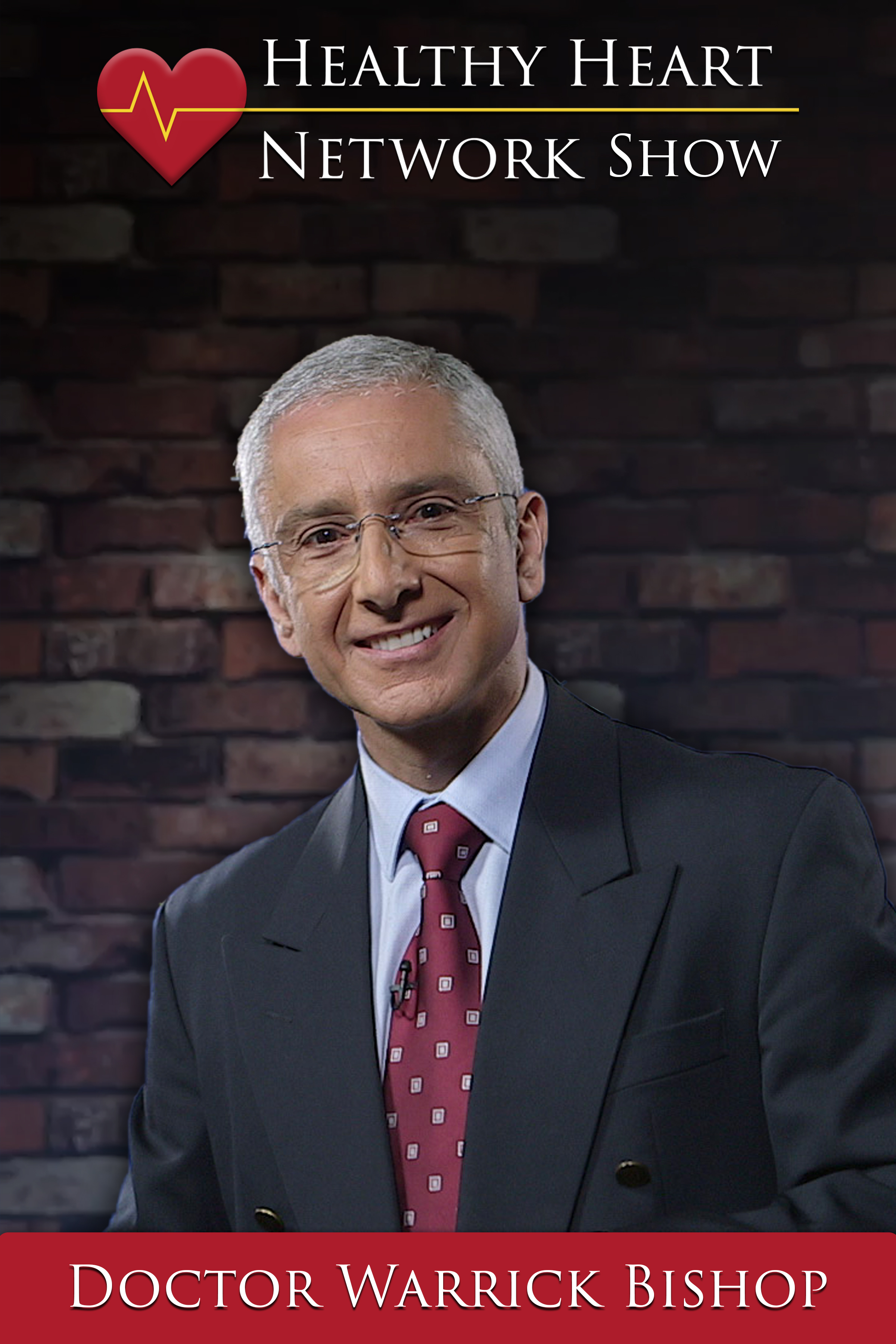
Welcome to Dr. Warrick's podcast channel. Warrick is a practicing cardiologist and author with a passion for improving care by helping patients understand their heart health through education. Warrick believes educated patients get the best health care. Discover and understand the latest approaches and technology in heart care and how this might apply to you or someone you love. Hi, my name is Dr. Warrick Bishop, and I'd like to welcome you to my podcast and videocast station. And today I have a special guest, Dr. Karam Kostner, who's a good friend and colleague of mine, a cardiologist with a special interest in cholesterol and lipids, joining me today to talk about high-density lipoprotein. Welcome, Karam. Thank you, Warrick. It's a pleasure to be part of this again. Look, it's a pleasure to have you as always and a special day like today, which is your birthday. So thank you for making extra special time to share. So we're going to jump straight into it. HDL cholesterol, people talk about it all the time, but what is it? Is it good? Bad? Is it ugly? Or what is it? Look, HDL is often referred to as the good cholesterol because what HDL, which is a lipoprotein like LDL basically does. is transport cholesterol back to the liver where it's excreted into the bile and then into the feces. And we often refer to it as the good cholesterol because the higher your HDL, generally the more protected you are from coronary disease. So it's a negative risk factor as we call it. So does that mean it actually gets into the arteries and takes cholesterol out? Is that what it means? That's correct. It transports lipids like cholesterol and triglycerides and phospholipids to a certain degree. But instead of transporting them into the arteries and getting into arteries as bad cholesterol does, it actually transports cholesterol back to the liver. And there it's excreted into the bile, as mentioned. So it's basically the body's own police or regulator for cholesterol, if you want to call it that. Okay. And what seems to set the level of HDL in someone's bloodstream? Is that genetic or where does it come from? It's a very good question. It is genetically determined. So the main carrier protein for HDL is apolipoprotein A1, but also other apolipoproteins, and they are genetically predisposed. So if you're born with a very low HDL, as some genetic conditions cause, You are not as protected from coronary diseases if you're born with a higher HDL. The thing that makes it more complicated with HDL is LDL is always bad. We've touched on that in your podcasts. And, you know, the higher the LDL, the more, the higher the risk usually. But with HDL, it's a bit more complicated because not every HDL... is as effective in reverse cholesterol transport, which is the transport of cholesterol back to the liver. So there is very small HDL particles sometimes that are very effective in this reverse cholesterol transport. And there's very large HDL particles that are sometimes not as effective. So with HDL, it's a bit more complicated than LDL. So just for the people who are listening, a quick reminder of a lipoprotein is simply a structure, if you like, a vehicle. or a sphere that carries cholesterol around inside it. And the size of that sphere determines how dense it is. The bigger the sphere, the less dense it is, the smaller the sphere, the greater the density. And if people could imagine a sort of a sphere, which is knobbly, a bit like a Ferrero Rocher, which is a lipoprotein. And in the center of that, it's carrying around a cholesterol. mass that can be given up or absorbed from the bloodstream or the body. Is that correct? That's correct. That's a good comparison. And that's how these were named originally after their density on ultracentrifugation without boring our audience now. So one of the things, sorry to jump in there, Karen, one of the things that was interesting for me that you said is we, you think about and flag the issue of thinking about HDL cholesterol in terms of particle size. But my experience is people talk about particle size with LDL or the so-called bad cholesterol much more. So we're talking there's the same variance in particle size for HDL, is there? The same variance in particle size and, you know, HDL of different composition, sometimes independent of the cholesterol content, is more or less effective in this reverse cholesterol transport. than other HDL particles. But generally speaking, HDL is a negative risk factor. And the higher your HDL, usually the more protected from cardiovascular disease you are, which is why clinicians often talk about the total cholesterol HDL ratio as a risk marker. Yes, of course, we use that. We've used that ratio for many years, really. Correct. So it's really good to know that some of this is set genetically, but... what sort of things in our daily lives might push HDL cholesterol levels up or down? What's something for us to know about? Good question. So smoking, for example, reduces your HDL. Obesity generally also reduces your HDL. In diabetics, often HDL is also quite low. So all the things that we consider as additional risk factors seem to have a negative effect on HDL. And on the opposite side, losing weight increases your HDL and exercise increases your HDL and alcohol in moderation also increases your HDL. You know, so what we often say that a glass of wine or a beer a day is not necessarily a risk factor on the opposite. It increases your blood cholesterol slightly. Now how effective, how important that really is. So alcohol in moderation, exercise and weight loss all increases HDL. What about things like hormonal change? Say for women or men as they age with testosterone levels, do they have an impact? That's a good question too. Yes, in general, sort of as the estrogen protection falls away in women when they get into menopause, HDL levels also decrease often and LDL cholesterol and total cholesterol often increases. And the same with men. If they take testosterone, bodybuilders, for example, that can also affect HDL levels. And so one of the things that obviously you might be thinking as you listen to this is if your cholesterol level is low, are there drugs that have been used to raise HDL levels like we use drugs to lower LDL levels? Can you speak to any drug experiments or drugs that have been used in that space? I'm very happy to. So the two common drugs that we still use that increase HDL or good cholesterol are nicotine acid, niacin. which we use also to reduce LDL cholesterol and LP small A, which is a B vitamin. But the other thing that is also used to increase HDL is fibroids. You know, phenofibrate, for example, or gemfibrozil increase HDL. And they also have a very good effect on triglycerides. So in diabetics or people with metabolic syndrome who have residual dyslipidemia, such as low HDL and elevated triglycerides. Fibrates have been shown to be very useful. And again, something we talked about in another podcast. They are the two common ones. Then there is some other interesting approaches like inhibiting some of the enzymes that are involved in HDL metabolism, like cholesterol ester transfer protein. Now, CTP inhibitors have a dramatic effect on HDL. They increase HDL up to 100%. But this, unfortunately, has not shown to significantly reduce cardiovascular events, which is why the pharmaceutical companies that have developed these CTP inhibitors have not pursued this, and these CTP inhibitors are not available in clinical practice around the world. That is a drug that increases HDL significantly. The other approach that's still being used in clinical trials is to supercharge HDL, basically. to create a very effective HDL in reverse cholesterol transport. And you can inject these proteins that we talked about, apolipoproteins, into humans. And in smaller trials and in the first clinical trials, this is actually being shown to be effective to mobilize cholesterol and transport it back to the liver. But we don't have large clinical trials that really show that this is an approach that we can use in clinical practice at the moment. Okay, well, that's an interesting space, really, and it's fascinating to think that the drugs that alter the enzyme to increase the levels, the CTP inhibitors, raise the HDL without an impact on cardiovascular disease. It's fascinating. Yeah. So a couple of quick questions as we wind up. If we were to have a blood test for our HDL level, how affected is that measurement by fasting? Or can we do it straight after lunch? It's a very good question. It's usually not affected much by fasting. So triglycerides are the only sort of lipid that really is affected a lot by fasting status. But total cholesterol and HDL doesn't change much, whether you're fasting or not. We always do a fasting test for lipids. But even if you're not fasting, your HDL is only going to change by about 5%. That's a very relevant question. So one of the other things that we talk about is diet. And you talked about smoking and diabetes and exercise and a glass of alcohol all having an impact on HDL cholesterol. But what about things like saturated fats or monounsaturated fats or omega-3 oils? Do they have an impact that you're aware of, Karim? They do. They often increase HDL. They also increase total cholesterol, some of these diets. and increased triglycerides. But how relevant that is to reverse cholesterol transport has not convincingly been shown. And one of the big problems is that if your LDL is high, and if your small dense LDL particles, which we'll talk about in a separate podcast are high, you need a lot of good HDL to counteract that. And that's difficult to achieve. And that's why people with high HDL still get coronary disease if they're LDL. And other lipid particles are higher. So, you know, HDL is protective, but only to a certain degree. And diets that increase HDL, but also increase LDL and total cholesterol probably increase your cardiovascular risk overall. Okay. Well, look, this has been a fantastic journey through HDL cholesterol. Absolutely fascinating. Great stuff sharing the information about the CTP inhibitors and some of those simple things like exercise, not smoking. perhaps a glass of wine. And in fact, I'll try and raise my own HDL cholesterol later on tonight with dinner with a glass of something nice. I'm going to wrap up there. Was there any final comments you wanted to make about HDL? Not really. We've discussed the important things. The final thing is really that there is something... that we call good cholesterol, which is HDL, you know, and in small amounts, cholesterol is obviously needed in the body, but it is a negative risk marker and we use it in risk calculators to tell us sort of a bit more about risk in our patients. And as we said, lifestyle changes to influence HDL in the right direction. With drugs, we're not really there. They are really my final comments. Thank you. Well, Karim, thank you so much for joining us. I learned something. again, as I always do, speaking with you. For those who are listening, I hope you found it informative and beneficial. Please, if you've got any questions or queries, drop us a note at info at drwarikbishop.online. Otherwise, thank you for paying attention and staying tuned and look forward to you joining us next time. Take care and bye for now. And please don't die from a heart attack. You have been listening to another podcast from Dr. Warrick. Visit his website at drWarrickbishop.com for the latest news on heart disease. If you love this podcast, feel free to leave us a review.