podcast-image.jpg
edd9164d216c19945bea55d0825befe1a07fdae5.jpeg

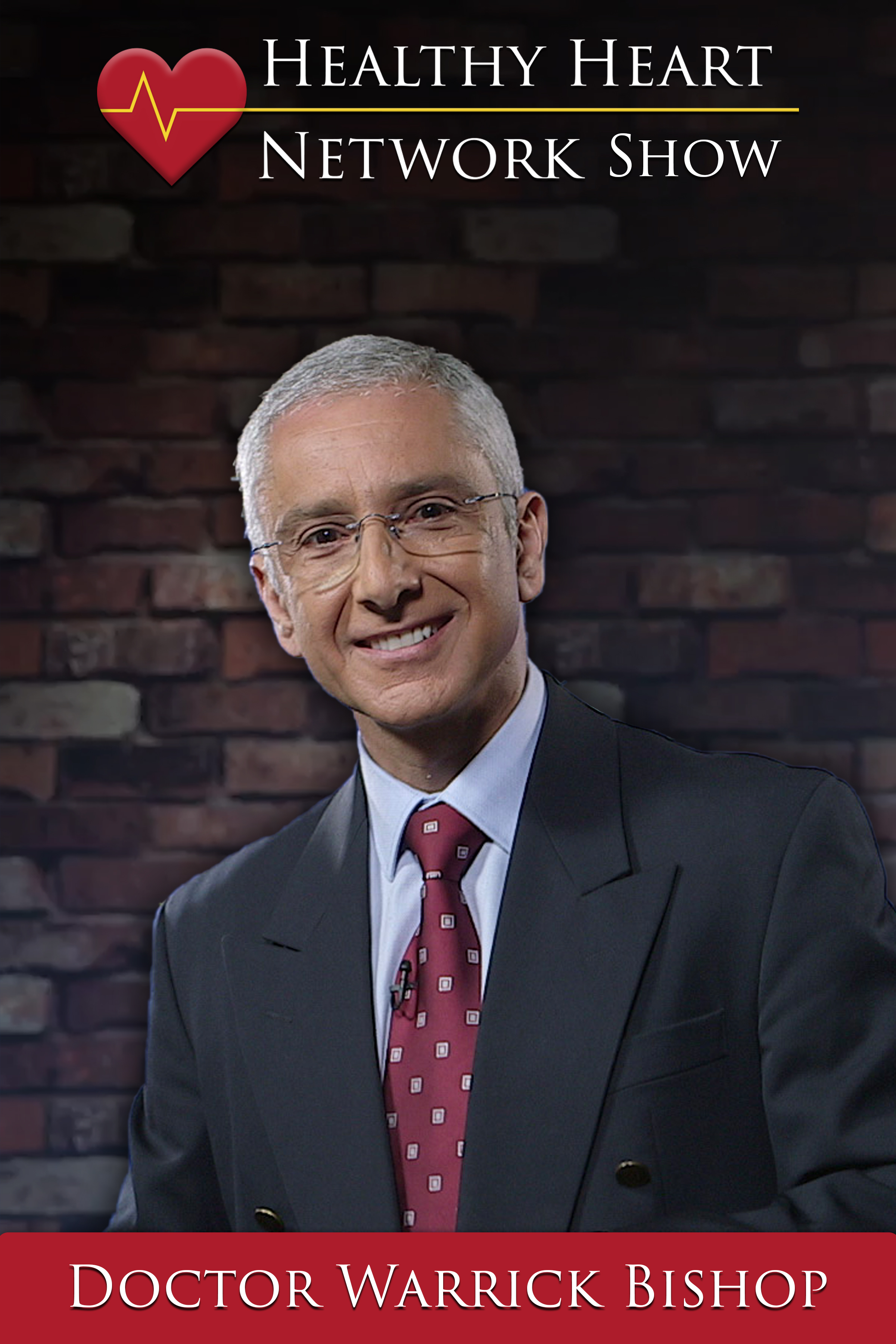
Welcome to my podcast. I am Doctor Warrick Bishop, and I want to help you to live as well as possible for as long as possible. I’m a practising cardiologist, best-selling author, keynote speaker, and the creator of The Healthy Heart Network. I have over 20 years as a specialist cardiologist and a private practice of over 10,000 patients.

Podcast Summary

Introduction

Dr. Warrick Bishop is a practicing cardiologist and author dedicated to educating patients about heart health through his podcast and videocast station. In this episode, he explores the fascinating intersection of space medicine and cardiology by examining how astronauts' bodies respond to microgravity, particularly focusing on unexpected changes in blood flow and vision. The episode bridges historical space exploration achievements with cutting-edge medical research discoveries made possible through astronauts' participation in space station experiments.

Key Takeaways:

  • Early space programs were concerned with basic bodily functions in zero gravity, but astronauts proved remarkably capable of adapting to the space environment despite discomfort.

  • Approximately 10 years ago, NASA researchers discovered that astronauts in space were experiencing swollen optic nerves, flatter eyeballs, and vision changes—symptoms initially addressed simply by providing corrective glasses.

  • A research team studied 11 astronauts' blood flow patterns in the jugular vein (the main neck vessel returning blood to the heart) across different body positions on Earth and compared findings to their physiology in space.

  • Five of the 11 astronauts showed stagnant or reversed blood flow in their jugular veins while in space, meaning blood entering the brain through carotid arteries was not flowing back out normally, causing fluid accumulation.

  • Stagnant blood flow in veins creates a significant risk of deep vein thrombosis (blood clots), a concern astronauts typically face after immobilization, such as following surgery.

  • Female astronauts taking oral contraceptive pills face compounded clot risk, as hormonal contraceptives already increase clotting tendency when combined with blood flow stagnation.

  • Commercial space tourism presents a critical medical concern, as paying passengers may lack the rigorous health screening and superior physiology of professional astronauts, making them vulnerable to dangerous clotting complications.

  • Understanding how gravity loss affects bodily adaptation is essential for developing safety protocols and medical interventions for both professional astronauts and future space travelers.


Join The Healthy Heart Network

Transcript English

Welcome to Dr. Warrick's podcast channel. Warrick is a practicing cardiologist and author with a passion for improving care by helping patients understand their heart health through education. Warrick believes educated patients get the best health care. Discover and understand the latest approaches and technology in heart care and how this might apply to you or someone you love. My name is Dr. Warrick Bishop and I'd like to welcome you to my podcast and videocast station and of course to the Healthy Heart Network. Today I'd like to leave the stratosphere and talk a little bit about what happens in space to astronauts. Now some of us will remember our history, some of us may have even been around and remember it. because it would have been part of the news. But Yuri Gagarin back in 1961 was the first man to spend any time in space and completed for the Russians the very first orbit of our planet. As people probably remember, there was a drive from the United States and under the encouragement of John F. Kennedy in 1965, man took their first step on the moon. Well in that early space experience the medicos were worried about simple things like would the astronauts be able to pass urine? Would the astronauts be able to swallow? Would their other bodily functions work? Well it turned out that although man as an organism didn't enjoy being in space, we certainly seem to cope with it. Space travel though and the International Space Station and astronauts spending time there have ended up being a remarkable resource for medical experimentation and observation on astronauts. And that's what I'd like to talk about, about 10 years ago. there was an observation that astronauts were getting swollen optic nerves that's the nerve that runs to the back of the eye their eyeballs were appearing flatter less spherical and rounder almost plumped up and with this there were some changes in vision now of course The agencies such as NASA simply provided astronauts with glasses and that was a simple way to get around it but they also started to try to want to understand what might have been happening or causing these observations and one of the thoughts was that there was an accumulation of blood or fluid in the brain and they were trying to then understand how that may work. Well it turned out that a group of researchers working on the hypothesis that there was changes in blood flow to the brain causing these eye related issues brought together 11 astronauts and observed the blood flow from the brain through the jugular vein. So brain, vein does rhyme, forgive me if I get them tangled. So these researchers measured using ultrasound flow the flow of blood from the brain into the jugular vein the main return blood vessel in the neck there's one each side back to the heart. Well they took these astronauts and in a seated position a supine position and a tilted position looked at how the blood flowed and obviously the astronauts being fit well healthy people with absolutely no medical issues blood flow looked perfectly normal. Well then it was time to see what happened when they took those astronauts and put them into space and so the observations that were done on Earth were then compared with what they found in space and it turns out that when they repeated these experiments in space that five of the 11 astronauts who they'd done the evaluations on showed no flow in the jugular vein. So blood was going in to the brain through the carotid pulse, the artery, but it wasn't clearly coming back out. Clear reason for accumulation of some fluid in the brain. The body did in fact open up other pathways to allow blood out, but these were secondary pathways. and so not as effective so five of these astronauts showed blood stagnating in the jugular vein now we think of stagnating blood or in the situation of people after surgery maybe a hip surgery or a knee surgery and their legs immobilized and so the blood in the veins doesn't move And if blood doesn't move in veins, there's a chance it can clot. So as you can imagine, these researchers suddenly realised that our astronauts may well be at significant increased risk of clotting from this altered blood flow while in space. Two of these five astronauts, in fact, were found to have blood flowing in the wrong direction. Well, go figure that. So obviously other veins had been opened up to alter and change the way blood could get back to the heart. But quite extraordinary findings. A realisation that the way that blood moves and flows within the body, out in space, can certainly be something we need to keep a close eye on in the future. It does raise concerns, for example, for female astronauts who may be on the oral contraceptive pill because there is a feeling that the oral contraceptive pill can increase risk of clot formation. Combine that with stagnation and you could be putting people at problem or at risk way beyond what's reasonable. Some of this information becomes really important because the future is starting to see commercial exploration into space and so it will be people who can afford to get into space not necessarily the the fittest the the astronauts who get through the most rigorous selection criteria but perhaps it may be the people who can afford to pay for the ride now they may not have the same physiology or anatomy or health as the astronauts and their risk of forming a clot within their veins when the veins are not moving the blood as it should may prove to be unacceptably high. Anyway, blood clots in the veins of my body are not a problem for me in space as I'm not going to be in space anytime soon. I don't know if you will be or not but it is a fascinating space to think about. I'm going to wish you the very best. I hope you found some of this stuff about astronauts fascinating. To think of the things that go on and change through the loss of gravity and the way the body is adapted for gravity, I think is just a really interesting concept. I hope you found it informative. If you have any queries or questions, please let us know at members at drWarrickbishop.online. As always, if you have any suggestions for future... podcasts please let us know otherwise until next time i wish you the very best and please don't die from a heart attack goodbye you have been listening to another podcast from dr Warrick visit his website at dr Warrickbishop.com for the latest news on heart disease if you love this podcast feel free to leave us a review