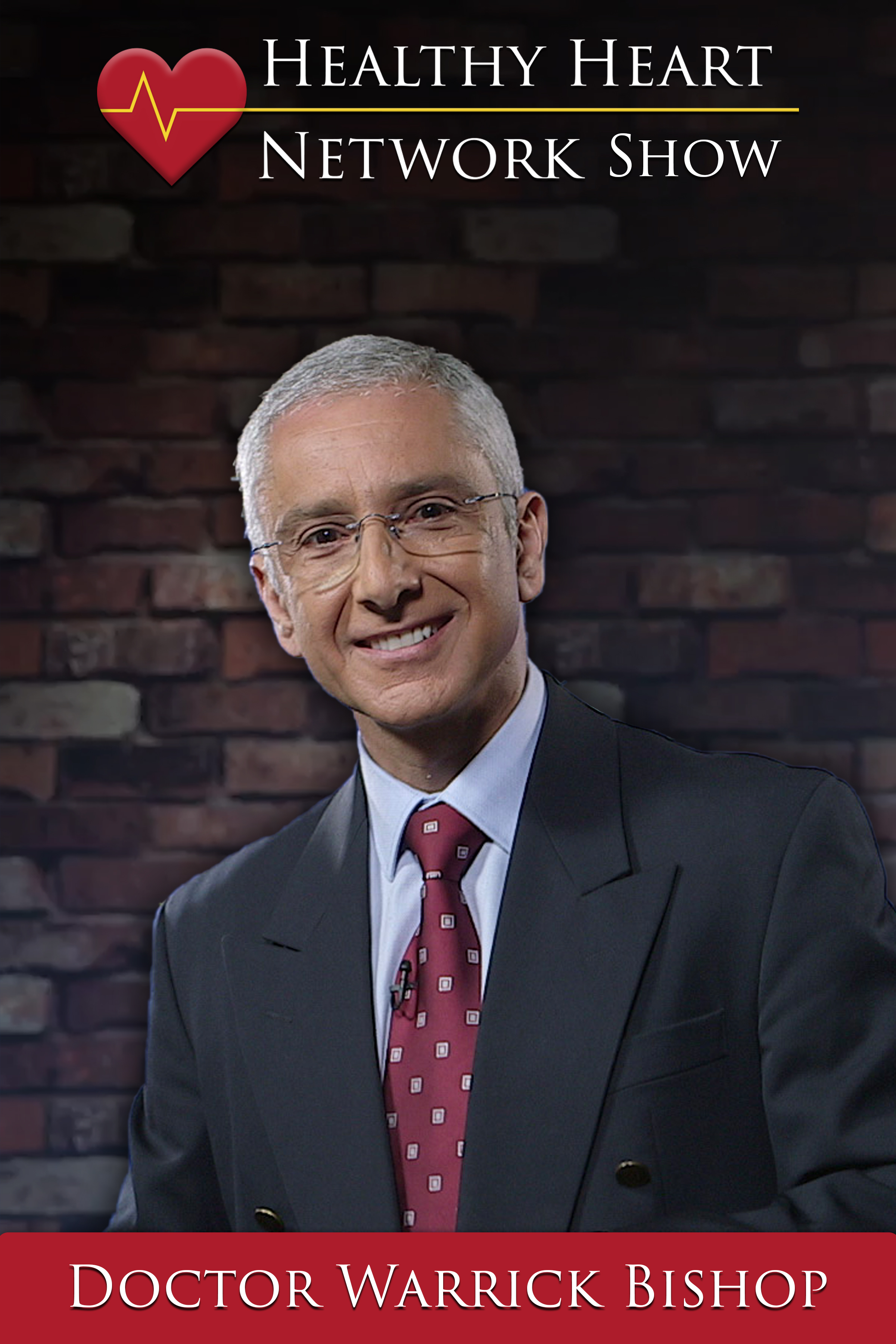
Welcome to Dr. Warrick's podcast channel. Warrick is a practicing cardiologist and author with a passion for improving care by helping patients understand their heart health through education. Warrick believes educated patients get the best health care. Discover and understand the latest approaches and technology in heart care and how this might apply to you or someone you love. Hi my name is Dr Warrick Bishop and I'd like to welcome you to my podcast station and of course to the Healthy Heart Network. Today it's my absolute pleasure to have the opportunity to interview a colleague who is a cardiologist whose special area of interest is rehabilitation. Well this is something that's really important for anyone who's had a problem. with their heart and wanting to know what to do next. I've got Dr Alistair Begg, a senior cardiologist from Adelaide, joining me today to share with us some of his knowledge and wisdom on this really, really important topic. Hi Alistair and welcome to the Healthy Heart Network. Thank you Warrick, it's a pleasure to be here. Alistair, just by way of background, Alistair, can you give us a little bit of an overview of what your current practice looks like and a little bit of your own professional background? Sure, Warrick. Well, look, I'm a cardiologist who trained in Adelaide many years ago, and I have a large... private practice based in a large private hospital in Adelaide and I have a special interest in cardiac rehabilitation which really involves the full recovery of patients after their heart surgery or stents or heart attacks and that's my sort of one of my special interests that I've developed over the last 15 or 20 years and I'm happy to talk to you today about what that involves, and the benefits of cardiac rehabilitation in patients' lives. Well, I really appreciate you making the time to do that, Alistair. And what I'd really like to do is really start off by, if you like, a bit of a definition so that we really know what we're talking about when we're talking about cardiac rehabilitation. How would you describe what cardiac rehab? or cardiac rehabilitation is, to a patient and to our audience out there. Sure, Warrick. Well, thanks for asking that. And certainly cardiac rehabilitation is really the whole process that sort of picks up the pieces after a cardiac event. There's someone that's had a heart attack or come into hospital for an operation and they have their initial treatment. The cardiac rehabilitation really involves the full support and education and the physical, mental and social conditioning that occurs after that event and really takes the patient through the whole journey after their initial visit to hospital or their cardiac event. So as you would know, Alistair, and we go back a long way, you wouldn't be surprised to know that I've done a little bit of background reading before. coming to chat with you and of course I picked up the British Association for Cardiovascular Prevention and Rehabilitation Guideline Standards from 2017 and I have to say just reading those at the moment when they define rehab you're so close to exactly what that British Association suggests, and I'm just going to take the opportunity to read that because I happen to have it in front of me. Is that okay with you? Certainly. So the British Association for Cardiovascular Prevention and Rehabilitation define rehabilitation as the coordinated sum of activities required to influence favourably the underlying cause of cardiovascular disease, as well as to provide the best possible physical, mental and social conditions so that the patients may, by their own efforts, preserve or resume optimal functioning in their community and through improved health behaviour, slow or reverse progression of disease. So it is a complex approach that's multifaceted. and incredibly important. How did you get into cardiac rehab, Alastair? Sure, Warrick. Well, it was more by evolving into it, really. I didn't actually make that conscious decision, but I could see that the patients that had their surgery or had their heart attack really needed a lot of support in terms of picking up the pieces after a major cardiac event. And a cardiologist is particularly well-placed to do that because not only do they actually provide the acute treatment, they can supervise the longer-term process of medical and other sort of facets of the recovery process. So using our knowledge, we are able to educate patients to reassure them, to guide them into... what are the areas that they have to work on and coordinate the involvement of the whole range of health professionals that are involved in cardiac rehabilitation such as dietitian and nutritionists and also exercise professionals and sometimes they need extra input from the mental health perspective as well which is also very important as well in the recovery process. So the cardiologist is well placed to, if you like, coordinate all those services and guide the patient through that journey. Well, it certainly sounds like a journey that any patient would want all the possible help they could to get the best result in the long term. And I guess through your experience, Alistair, and I imagine that this is a multifaceted answer. Well, what do you see as the real key ingredients needed to get rehabilitation working for an individual patient? There's a couple of absolute key ingredients that you focus on first and then put other things in subsequently. How do you approach it? Well, whatever the reason for them being there, we always look at what... are called cardiac risk factors. So the cardiac risk factors are those factors which maybe the patient's born with, such as a family history of heart disease or possibly in many cases those factors that are required, such as maybe high blood pressure or diabetes or habits such as smoking and lack of exercise and eating the wrong diet. Those are the factors that we... sort of concentrate on when we were coordinating the whole program and the process is very much one of education making the patients aware of how they got there in the first place where they're going what they can do to modify and improve their outcome and by educating the patient and empowering them and giving them confidence we can make them much more likely to avoid any further complications and improve their quality and quantity of life in the longer term. And there's plenty of evidence to show that people that do cardiac rehabilitation actually do better in the long term, both in terms of reducing further events and having a better quality of life, which is what it's all about. Certainly, Alistair, I think we... resonate on some common beliefs there. There's no question that a substantial drive for the Healthy Heart Network is to inform and educate patients because my own observation, and you've just explained that there's data to support it, is that the best educated patients end up with the best healthcare. And so rehabilitation is that opportunity to engage, inform and educate patients and guide them as to all the processes that you talked about, how they are, where they are, and from where they are, where they can go. In terms of some of those risks, obviously we try and deal with those before people have events, which is really challenging at times because often people are a bit complacent, but I imagine people are more eager to listen. after an event. Is that your experience? Yeah, certainly. Look, once someone has had a cardiac event, they're really very keen to prevent the recurrence of all the pain and distress that occurs during that cardiac event, as well as making them feel more confident and helping them recover both physically and mentally. by getting them more involved at that time, when it's really a moment that they're really keen to be receptive, if we can instil those educational beliefs at that time, there's certainly a much greater chance of them taking them on board for the longer term. Unfortunately, sometimes people are not as receptive when they have not yet suffered an event. which is one of the challenges of primary prevention. There's always that attitude that it won't happen to me, which tends to be one of perhaps denial or thinking that they'll find a reason why it won't happen to them. But obviously when they've already had a cardiac event, those beliefs are somewhat shattered. So when they actually have had a cardiac event, they are more likely to... take on board those messages. Look, I think it's an area that is incredibly important. I know the Heart Foundation of Australia are prioritising efforts to improve cardiac rehabilitation after events because they know that people who've had one event are at the highest risk of having another event. And if we can influence those people's outcome... we can make a real difference for them. We can really change their lives and improve their quality. Look, I'm going to wrap up there, if that's okay, Alistair. If there was anything you wanted to add finally, that'd be fantastic. If you had a story about a patient, I'd love to hear it, but we're pretty close to time. So we can save your story for the next time we get together. Or if you've got something you want to add in now, please feel free. Otherwise, we'll bring this one to a close and get ready for the next time we get to catch up. I haven't got any specific stories to relate to you right today, but all I can say is there are multiple examples of patients who've really got a great deal of confidence and really made huge improvements in their lifestyle and education and understanding of their conditions through attending cardiac rehabilitation. I would certainly urge all those people that have had a cardiac event to try and find their local services and really attend those classes because they are very beneficial for those people who do go along. Alistair, absolute pleasure speaking with you today. I really appreciate some of your comments and thoughts on this important and complex issue. of cardiac rehabilitation i'm going to turn back to the podcast audience now guys i hope you found this informative if you have any queries or questions please let us know if you've got any suggestions for future podcasts of course drop us a note and we can try and entertain that and as always i wish you the very best health until next time and please don't die from a heart attack goodbye You have been listening to another podcast from Dr. Warrick. Visit his website at drWarrickbishop.com for the latest news on heart disease. If you love this podcast, feel free to leave us a review.