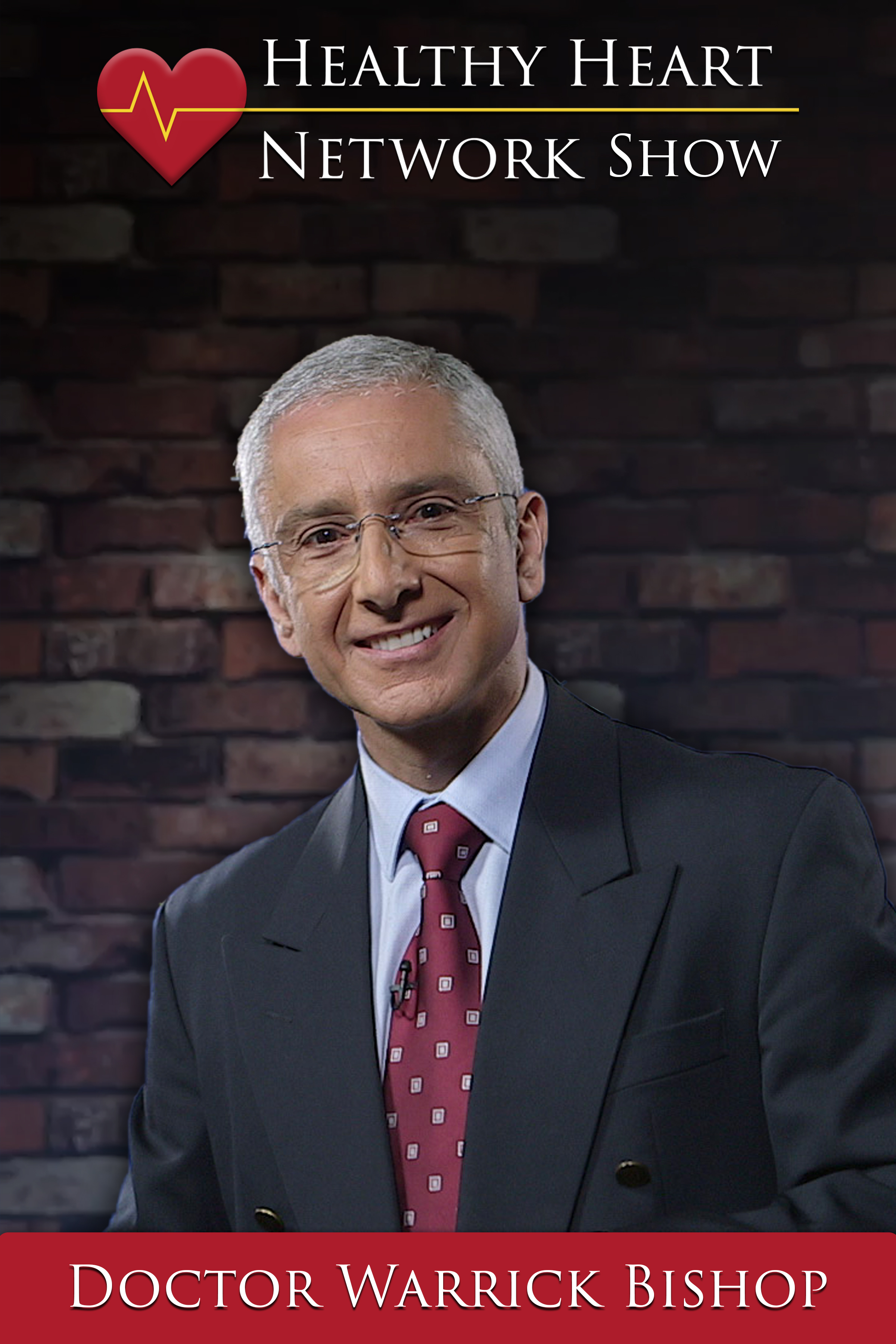
Welcome to Dr. Warrick's podcast channel. Warrick is a practicing cardiologist and author with a passion for improving care by helping patients understand their heart health through education. Warrick believes educated patients get the best health care. Discover and understand the latest approaches and technology in heart care and how this might apply to you or someone you love. Hi, my name is Dr. Warrick Bishop and I'd like to welcome you to my podcast station and to the Healthy Heart Network. Today we're talking about getting back to life after a heart event and I'm delighted to say I've got a good friend and colleague who's an expert in the cardiological field of rehab, Dr. Alistair Begg. Welcome to the podcast show. Thanks, Warrick. Great to be here and enjoying talking to you today. Alistair, I get plenty of questions, as I'm sure you do, about the things that we need to do or people want to do after they've had a hard event. And one of the things that comes up regularly is exercise. I guess you get that question fairly often yourself, yeah? Sure. Now, look, that's one of the common questions that we get. I do a lot of cardiac rehabilitation, which involves the progressive increase in exercise after a heart event, doing it in a supervised and structured program. And essentially, I mean, after a heart attack or any sort of injury to the chest, it takes about six weeks for the muscle or the bones to knit together. And that's really the time period during which there's a gradual return to normal activities. Though sometimes it can be quicker than that. So for someone that's had a stent, for instance, the injuries are really pretty minimal to the wrist or to the groin, and the actual procedure is microscopic around the heart. So the return to activity is a lot quicker. But someone that's had a heart attack or a heart surgery... It's generally sort of a four to six week recovery period for both of those. So from what I'm hearing, Alistair, in terms of trying to break it down, you're thinking in terms of impact of the damage to the heart, whatever that may be, as one component. So heart related. uh timing to get back to exercise but the other thing you're describing is whether the intervention that that person needed has led to something that may alter their ability to return to exercise whether it's a minimally invasive or quite an invasive procedure would that be fair yeah that's correct so i mean obviously sometimes these days stents are done through two millimeter incision or cut, you know, the wrist or the groin, and really, you know, within a day or two, the patient may be walking around feeling comfortable. And if their heart hasn't been damaged and they haven't had a heart attack, they may be able to go back to normal activities within a few days. So that's correct. Certainly the type of intervention has an impact on the recovery time and also the underlying sort of state of the heart muscle in particular. as it also has an impact on how quickly we can get them back to normal activities. Well, OK, it's obviously going to be one of those things where it's a bit variable between different people. But that example you just gave is probably one end of the spectrum where there's no damage to the heart. So maybe someone's presented with some warning pains. and then they've had a stent implanted and everything's gone very smoothly so no damage to the heart and minimal minimally invasive in terms of the procedure what would be the other end of the spectrum so that anyone who's listening who would fall in within that spectrum can understand where they may sit on that range what would be the other end of the spectrum that you'd describe no so i mean i've sort of described this with the uh the low impact uh situation but that The high impact situation may be someone that's had a significant heart attack with damage to that heart muscle. And then they may need surgery, like an open heart surgery to fix the other arteries. And the corporate artery might need fixing as well. And then that really involves quite a degree of recovery or rehabilitation. And it may take even longer than six weeks by the time they get back to full activities. And that really is a... double whammy because not only are they recovering from the injury to the heart and waiting for the drugs to sort of improve that heart function, but they're also recovering from the injury to their chest wall and potentially their leg where the surgeon's taking the vein. And that is an additional thing that they have to cope with. So that could mean that they might take more than six weeks to get back to full activity. And also we must remember that the impact of this psychologically as well is much greater when there's a significant heart attack and when there's a big operation involved. And that mental reconditioning needs to be taken into account more in that situation as well. Of course. One of the things that I'll often say to patients who have had bypass grafting, and just for the people who are listening, bypass grafting is where the chest wall is cut open down the middle at the front we call that through the sternum and bypass grafts which are literally arteries plugged into the aorta or from inside the chest wall are stitched into the heart arteries beyond where the blockages are this is pretty major surgery When I talk to my patients who have had that surgery, I tell them that it can take weeks and weeks for the sternum, for the chest wall to knit properly. And the last thing you want to do is disrupt that healing. So I actually say to people that they may start to feel very well after six to eight weeks, but I advise them three months. to give that chest wall the absolute best opportunity to knit properly and as a bit of a joke i often say to them if they want to undertake any exercise they could think about doing some irish dancing so they can wiggle their legs around as much as they like but as long as they keep their arms straight by their side they shouldn't have a problem with their chest wall so um So it can be a real problem. Have you seen people who have damaged their chest wall because they felt so well and gone out the back and tried to move a couple of rocks or decided to refurbish the living room? Well, look, I have seen people who've had problems with their chest wall after heart surgery. Sometimes it can be something that's unavoidable. So someone has a big cough or a sneeze and they forget to... to actually brace their chest and they they can sort of damage the wound so it's always important to have a pillow with you particularly that first six to eight weeks after heart surgery so that if you cough or sneeze you can grab onto the pillow and hug it and that that does stop sort of shifting of the wound so even though the wound is actually held together with quite strong wires um it's still the bones haven't knitted together very well and as you say Maybe even waiting three months before doing really vigorous activity like swinging an axe or something is a good idea. And people do get sometimes clicky sternum where the bones aren't quite knitted together. And so it's important that you do look after your wound after heart surgery. Okay. Well, look, we've talked about getting back into activity. We've talked about looking after... a surgical wound and your sternum or your chest wall if you've had bypass surgery. So now we've got through that. Alistair, how much exercise should people be doing? Sure, Warrick. Well, look, the general guidelines, you know, for people with heart disease as a long term is to exercise at least five days a week for half an hour. So that's the general guidelines for the population and certainly for those with heart disease. But it all depends a bit on how fit you are and also it's got to be tailored for the individual. I mean, what we talk about after heart surgery or heart attacks is more about what impact is that having on the person rather than saying, well, you must exercise for this many minutes or that many metres. And we often talk about what's called a perceived level of exertion. It's something called the Borg scale. And that's really a feeling of how hard is it to breathe. And someone that's really struggling to breathe, they might be on a 9 or 10 out of 10. Someone that doesn't feel breathless at all might be a 1 out of 10. And somewhere in the middle, about 6 to 7, is sort of feeling, what they say, moderately breathless. Okay. exercise after a hard event. We taught them to exercise to the point where they're sort of moderately breathless. So when they come in for their cardiac rehabilitation, we teach them all about this Borg scale and we get them to really exercise at the pace that makes them moderately breathless. So for one person, it could be just a gentle walk. The other person might have to run on the spot or sort of do some more vigorous exercise on a bike to get to that level. So I think it's important to individualise. the exercise, and it's more about the impact that exercise is having on that particular individual. Okay, well, that's really interesting. I need to pay more attention to the Borg scale. You're certainly teaching me and educating me there, and obviously that makes sense because what you're trying to do is get people to push their own limit and build their fitness. Once people are starting to become engaged in exercise... What type of exercise do you try to recommend? Is there a particular type of exercise that's better than another in your experience or in the literature? There are various things that happen during a heart illness. One of them is a lack of fitness or aerobic capacity. And there are sort of certain deconditionings that can happen when you have a hearty window. So primarily, most of the exercise that we recommend in cardiac rehabilitation is aerobic activity. So there's things like walking or cycling. But we also like people to do some muscle strengthening because you do lose quite a lot of muscle strength when you're in hospital and after you've had surgery, your arms and legs get a bit weak. So it's important to get up your muscle strength as well. And in fact, some of the drugs that are given can make your muscles a bit weak too. So that's another point to mention when we're talking about physical strength after a hard event. Sometimes the statin medication, the cholesterol drugs we give, can need to be reduced or stopped for a while if your muscles get weak. And that's something that you need to be aware of if your muscles, if you're having trouble getting out of a chair. your muscles feel it's friendly, weak. You need to mention that to your cardiologist. So my own practice tends to be very much in keeping with what you've shared, Alistair. My observation is that it's really important to try and find an exercise routine that the individual patient can... fit into their daily activities and that they enjoy because if they can't fit it in easily and they don't enjoy it, no matter how motivated they are, they often won't keep it going. Do you have any guidance for patients when you speak with them around that space? Yeah, well, I think that's a good point. I tend to ask them what sort of exercise they like doing because I think it's always good to try and, you know, particularly... after surgery or something like that, you don't want to be starting to do exercise that you don't enjoy or perhaps that you haven't done before. So if they're used to doing walks, if they're used to going on a bike, I try and encourage them to go back to that form of exercise that they're comfortable with. And most people have done some walking or some bike riding in the past. The more vigorous exercises, you know, you may actually restrict that a bit to the first, particularly in the first four to six weeks. You might not want them to do weightlifting, for example, because that puts extra strain in terms of elevating the blood pressure. You might sort of avoid cycling up steep hills for the same sorts of reasons. So it's important to tailor the exercise to the individual condition and person. Well, we've nearly wrapped up on exercise, Alistair, but before we do, is there any exercise you would tell people not to do? And do you have any final comments before we wrap it up? Sure. Well, look, I think that I alluded to that before about lifting heavy weights because certainly the blood pressure gets significantly elevated when there's that sort of really sort of almost overexertion of lifting heavy weights. So I tend to tell people to avoid that, particularly for the first six weeks. And for people with high blood pressure, they probably should avoid those sorts of extreme lifting type exercises anyway. But certainly the exercise component is really beneficial and it really helps in terms of managing risk factors and psychologically it's very important too because we know that psychological health after an event like this is a very important determinant of how well you do in the long term. Yeah, some great points there, Alistair. Just for those people listening to underline it again, Alistair's reminding us that there's good information in the literature, good data in the literature from studies that show us that regular exercise is as effective for improving mood as first-line antidepressant agents. Get out there and not only look after your heart health, but look after your mood as well. I'm going to wrap it up there, Alistair. It's been fantastic sharing with you. I really do appreciate your time. Say goodbye to our listeners. Thanks for having me. And I'll just remind them about exercise and the fact that I've just been for a half an hour walk before talking to you. Well, I'm glad I got my surf in earlier today because the weather's changed where I am. So it's good we're both practicing what we preach. So thanks again, Alistair, to those listening. I really hope you found today's interview with Dr. Begg informative. and helpful. I've learned some stuff myself, which is fantastic. If you have any queries or questions, please drop us a line on members at drWarrickbishop.online. If you have any suggestions for future podcasts, let me know and drop it to the same email address. As always, I wish you the very best. And until next time, please don't die from a heart attack. Goodbye. You have been listening to another podcast from Dr. Warrick. Visit his website at drWarrickbishop.com for the latest news on heart disease. If you love this podcast, feel free to leave us a review.