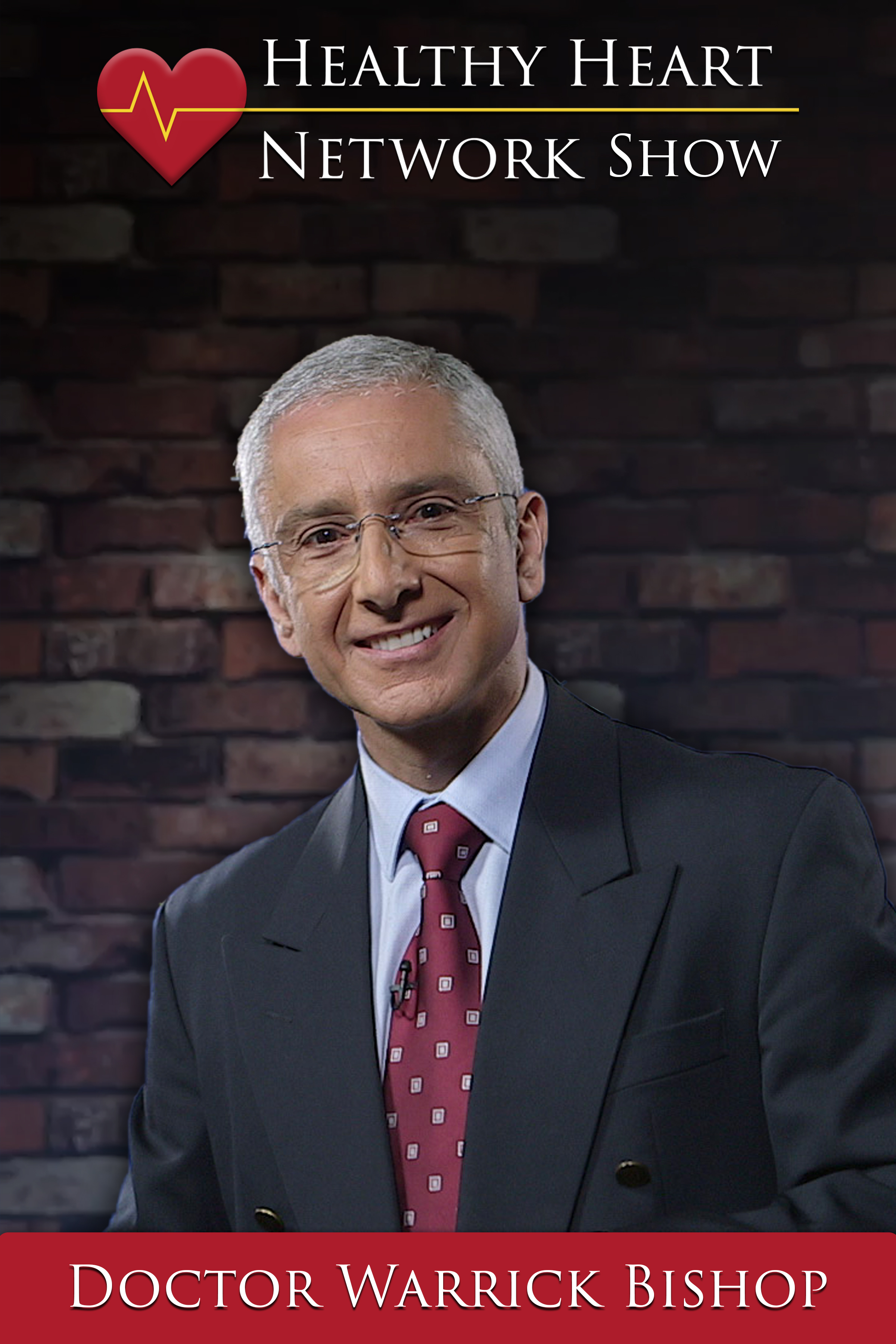
Welcome to Dr. Warrick's podcast channel. Warrick is a practicing cardiologist and author with a passion for improving care by helping patients understand their heart health through education. Warrick believes educated patients get the best health care. Discover and understand the latest approaches and technology in heart care and how this might apply to you or someone you love. Hi, my name is Dr. Warrick Bishop and I'd like to welcome you to my podcast and videocast station and to the Healthy Heart Network. Today I'd like to share a little bit about vitamin K. Well, you may or may not be aware that there are two types of vitamin K. It was first discovered back in 1929 and it was recognised that vitamin K had a role in coagulation of the blood. Now, it turns out that way back in 1929, it wasn't clear that there were two vitamin Ks. That was discovered subsequently. With that discovery, there was a realisation that there's a vitamin K1, which is called phyloquinone, and we get that mainly from leafy greens, and that's mainly associated with some of the factors. or proteins required for healthy coagulation. It's important to understand that requirement of healthy coagulation as a lack of vitamin K1 gives rise to the hemorrhagic disease of the newborn. This used to be a condition where children would bleed spontaneously after birth. through lack of vitamin K1, giving rise to failure of their coagulation or blood clotting systems to work properly. This is remedied these days as newborns are given a jab of vitamin K1 as they enter the world. The reason newborns are susceptible is because they don't have the normal gut flora that adults have which actually produces vitamin K. and allows our own production of this vitamin to support our coagulation pathway. Vitamin K2 is menaquinone. This is found in animal products and also in fermented foods. And it's vitamin K2 I'd like to talk a little bit about because this is the one that's starting to have a light shone on it more and more. It would seem that vitamin K2 activates two major proteins. One is matrix GLA protein, and the other is osteocalcin. Now, matrix GLA protein, we don't fully understand how it works, but we do know that it seems to be linked with preventing calcification occurring where it shouldn't in the body. And where calcification shouldn't occur, we call heterotopic or out of place calcification. And one of the reasons I'm particularly interested in that is that we can see calcification in the coronary arteries. Well, it turns out that matrix GLA protein seems to have a role in decreasing that calcification occurring. I first dropped onto this. When I was coming across papers to do with cardiac CT imaging, imaging of the heart, and one paper I came across talked about warfarin and an increase of calcification in patients who took warfarin. Well, warfarin is an agent that's been used for many years clinically to decrease... the function of vitamin K1 in the coagulation system so that people taking warfarin could have their blood thinned for whatever purpose that may be. A clot forming and going to the heart causing a pulmonary embolus or to the lungs causing a pulmonary embolus. You would be on warfarin or a blood thinner for that. If you had atrial fibrillation, an irregular... an irregular rhythm of the top chambers of your heart, you might be on warfarin. If you had a mechanical heart valve in so that blood doesn't clot and stick to that valve, you might be on warfarin. Well, the paper that I've come across suggested that warfarin, which blocks vitamin K, seemed to be associated with increased levels of calcification in the arteries. Well, of course, that... piqued my curiosity and I've looked into it a little bit more. It's probably something to do with warfarin not only blocking vitamin K1 metabolism, but also blocking vitamin K2 metabolism. And by blocking vitamin K2 metabolism, it is therefore reducing the amount of matrix GLA protein and therefore reducing the inhibition of calcification. in places where it shouldn't occur, and in this situation, within the coronary arteries. Vitamin K2 also stimulates osteocalcin, which helps in bone formation. Osteocalcin is found in the bones and the teeth, so vitamin K2 is likely to be beneficial for bone and tooth mineralisation. Really worth bearing in mind. Well, I've talked about vitamin K2 reducing calcium in the arteries, sounds like a good thing, and improving the calcification of bones and teeth. Well, all that sounds like something I'd sign up for and probably everyone would like a bit of as well. So where do you get your vitamin K2 from? Well, pleasingly, there is some conversion from vitamin K1 to vitamin K2. And there is plenty of vitamin K1 because our bodies actually produce it from the gut flora. Trouble is, the conversion from K1 to K2 is fairly inefficient, so you can't rely on your body to do that all by itself. Just like vitamin K1, vitamin K2 is also produced by the gut flora, mainly the gut flora and the large bowel. Again, probably not enough de novo to supply our needs. So let's think about where we might get it in our diets. Certainly the sort of fatty dairy products, particularly from grass-fed cows. And there is a real sense that grass-fed beef has a better fatty balance within the fat that it produces and therefore a better opportunity for some of those nutrients to be in. I will mention that vitamin K1 and 2 are... fat soluble vitamins, so the fats within animal products do become important. Vitamin K2 is also seen in liver and offal of animals. Probably the way that many people get it is through fermented foods, foods particularly like sauerkraut, but also Japanese traditional foods like fermented soy products, natto. and also MISO have high levels of vitamin K2. Some patients with a propensity to calcification, particularly in their arteries or in their aortic valve, I have suggested that they may wish to supplement with vitamin K2. And supplementation with vitamin K2 is certainly possible. It is a vitamin that is sold fairly broadly. through herbal vitamin type outlets with plenty of providers having that product available. So that's worth a thought. The other reason I came across vitamin K or have an interest in vitamin K is that in my own practice where I'm imaging hearts on a regular basis looking for evidence of plaque then of course I'm looking for calcification in the arteries. So if I do find calcification in the arteries, it has commonly been a situation where I explain this to the patient and the patient says, but my local doctor put me on a calcium supplement. Should I be taking that or not? Well, my feeling these days is that, first of all, calcium supplements are not natural. And I think if you can avoid taking something that's... not natural, and do it a more natural way, then that's obviously a preference. If you think about taking a calcium supplement, then as you swallow that pill, you'll get very high blood levels for a short period of time. And that just isn't the way the body was designed to deal with calcium. So what I tend to say to patients, and there's not a lot of... There's no outcome data that I'm aware of for this, but there's a little bit of logic behind it, is that I encourage patients who have been advised to take calcium supplementation to perhaps put the calcium supplementation aside and think about supplementing vitamin D. And I think the most important way to do that is by getting your own solar panels out in the sun, because if you can get your chest... or your back and legs out in the sun, then that is the way the body was designed to make vitamin D. I'm not as excited about supplementing with vitamin D as I am about people getting some good sun exposure. Of course, making sure you don't get burned, but making sure you get enough sun exposure that you produce enough vitamin D. If you don't, then supplementation would be indicated. So I ask people to top up their vitamin D. I asked them to think about supplementing with vitamin K2, and then I encouraged them to really seek out a calcium-rich diet, which includes, of course, dairy products, but not just dairy products, also things like seafoods, leafy greens, and legumes. So there you go. Vitamin K, there are two components, one and two. The coagulation cascade is critical for normal clotting within the body, critical if we use it in a medical sense to thin the blood as well. Vitamin K2 acts on two main proteins, one that stops calcification in the wrong places and one that helps calcification in the right places. Really important to understand. You look at healthy foods that may contain particularly vitamin K2 to make sure you keep it topped up in your body. And for people who are taking calcium supplementation, certainly a conversation with your doctor or whoever put you on that calcium supplement as to whether you would be in a position to look at vitamin D, vitamin K2 and good dietary calcium as an alternate. Well, I hope you found that interesting and informative. If you've got any queries or questions, drop us a note, please. If you have the opportunity to do a podcast review on iTunes, I'd be really grateful, be really appreciated and would raise awareness of what I think is an informative and interesting educational resource. If you do have any suggestions for future podcasts, please let us know. Always interested. And until next time, I wish you the very best health and please don't die from a heart attack. Goodbye. You have been listening to another podcast from Dr. Warrick. Visit his website at drWarrickbishop.com for the latest news on heart disease. If you love this podcast, feel free to leave us a review.