EP02: Have You Planned Your Heart Attack?

podcast-image.jpg
edd9164d216c19945bea55d0825befe1a07fdae5.jpeg

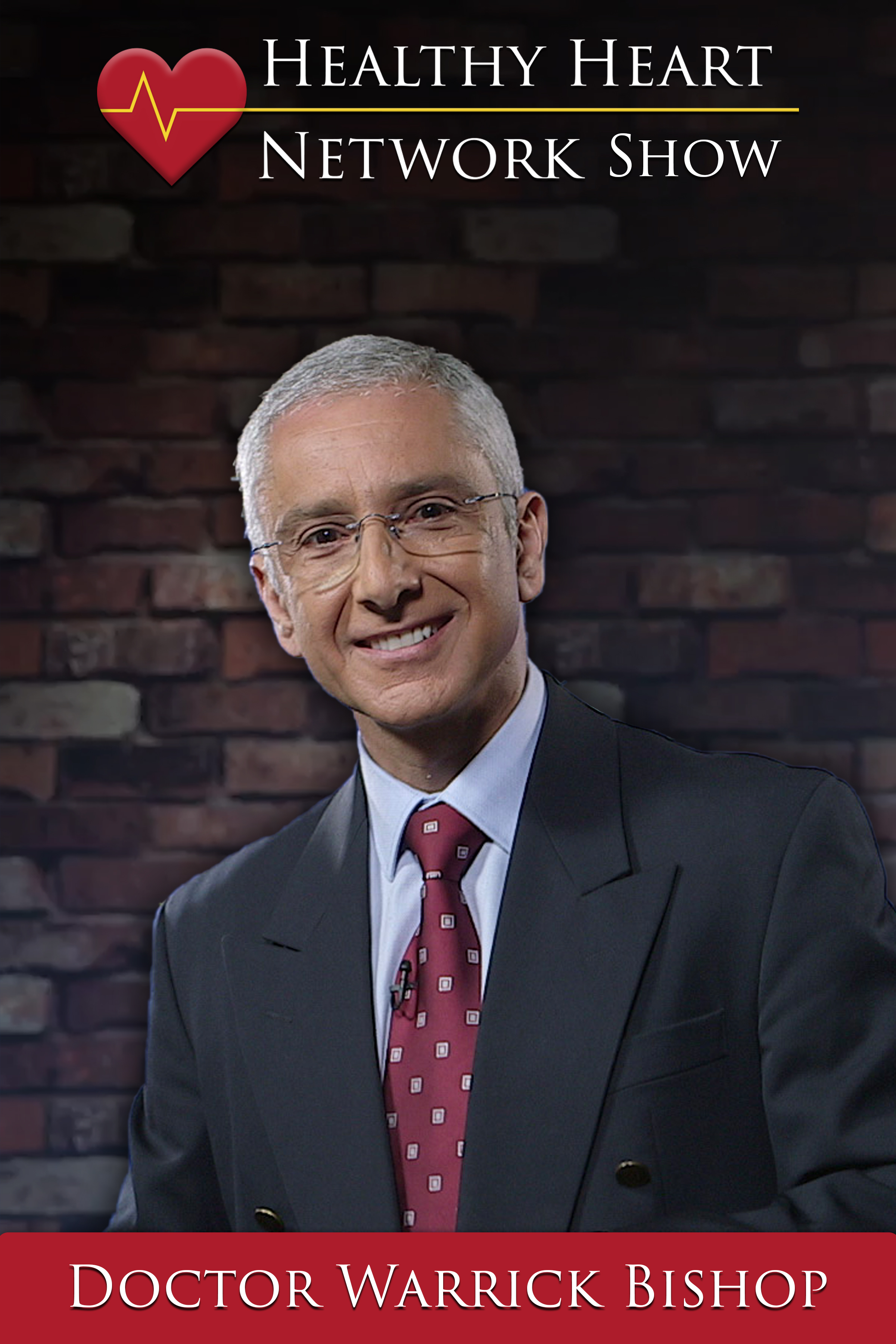
Welcome to my podcast. I am Doctor Warrick Bishop, and I want to help you to live as well as possible for as long as possible. I’m a practising cardiologist, best-selling author, keynote speaker, and the creator of The Healthy Heart Network. I have over 20 years as a specialist cardiologist and a private practice of over 10,000 patients.

Podcast Summary

Introduction

Dr. Warwick Bishop is a practicing cardiologist and author dedicated to improving patient care through heart health education. In this episode, he introduces his book "Have You Planned Your Heart Attack?" and discusses a pivotal moment in his medical career when a patient he had previously cleared via treadmill testing suffered a sudden cardiac event during a fun run, prompting him to explore better methods for predicting individual heart attack risk.

Key Takeaways:

  • Traditional risk calculators have been used for 25-30 years but provide population-level probability rather than precise individual predictions, making them imprecise for personal health planning.

  • Risk calculators can only tell patients their statistical likelihood (e.g., 10% chance in 10 years) but cannot identify which specific individuals will or won't experience an event, since individual outcomes are binary (0% or 100%).

  • Cardiac CT imaging technology now allows cardiologists to visualize the heart's arteries directly, enabling more precise risk assessment compared to population-based calculator formulas.

  • A single negative treadmill test cannot guarantee future cardiac safety, as demonstrated by Dr. Bishop's patient who passed testing two years before experiencing a fatal heart attack.

  • The book addresses why cardiac CT imaging, despite its precision capabilities, remains underutilized in broader clinical practice.

  • Dr. Bishop's approach integrates considerations of statins, family history, and proactive individual health management into personalized heart disease prevention strategies.

  • The book is written for general audiences with diagrams and explanations to enable patients to have informed conversations with their doctors about appropriate testing options.

  • Patient education and engagement in health decision-making are central to achieving better cardiovascular outcomes.


Join The Healthy Heart Network

Transcript English

Welcome to Dr. Warwick's podcast channel. Warwick is a practicing cardiologist and author with a passion for improving care by helping patients understand their heart health through education. Warwick believes educated patients get the best health care. Discover and understand the latest approaches and technology in heart care and how this might apply to you or someone you love. Hi, my name is Warwick Bishop and I'd like to welcome you to my consulting room. Today I'd like to give you a little bit of insight into a book I've written called Have You Planned Your Heart Attack? The introduction for the book begins with a story from 2005 where, as I was driving to work on a weekend, I stopped at a commotion at a fun run. A man had fallen while running, dead. He'd had a heart attack and was being resuscitated by ambulance crews and passed by people who were doctors or medically trained. I stopped to help out. That man did so well that two days later, he was on the front page of the local newspaper. I was quite proud to be part of that resuscitation and shared that information with my staff who pointed out that two years earlier I had seen the very same patient, had undertaken a treadmill test and had reassured him that everything was fine. As you can imagine, this was a confronting thing to realise and it really opened my mind to what can we do differently. And what can the technology that we have available today offer that can improve the way we make predictions for men like this man who'd collapsed during the running race? Our current approach to understanding risk for individuals is to use what we call a risk calculator. Those risk calculators take information like cholesterol, age, blood pressure, diabetic status, smoking status, and we put that information into an algorithm or a data set to come up with a likelihood of an event. We've been using risk calculators for over 25 to 30 years. The trouble is that those risk calculators are not precise for the individual. What they provide us is information on the population that that individual resides in. And so if we take a 50-year-old male with average cholesterol, average blood pressure, etc., etc., who doesn't smoke, we could tell him that his risk of an event is in the order of 10% in 10 years, based on a standard risk calculator formula. However, we can't tell him If in fact, he's one of the 10 out of the 100 who will have an event, or one of the 90 out of the 100 who won't have an event. Because his actuality is either going to be a 100% he has an event, or a 0% he doesn't have an event. It's very hard to have a 10% heart attack. What's happened is that in the last years, we've now... have available to us technology called cardiac CT imaging, which allows us to literally take pictures of the heart so that we can be more precise about exactly what's going on in the arteries and exactly who is going to be at greatest risk of having an event. This book is a little bit about that technology and how it can bring precision to an individual's care. I talk about why the test is not more broadly used, but I also talk about who it may be beneficial for. I try and cover where statins fit in, where family history fits in, where just wanting to be ahead of the game and proactive with your own health all fit in. I've put plenty of references in this book, so it is supported by good data. I also reflect on exactly how I approach my own clinical style. I've written it for general consumption. There's plenty of diagrams and pictures and explanations in there, so it's accessible to you as an individual. It gives you the chance to engage with your doctor about a conversation about the relevance of future testing for you, your health, your health benefit, your education, your choice to be proactive. I really hope you find the book an interesting read and thank you for taking the time to listen. I wish you the best. You have been listening to another podcast from Dr. Warwick. Visit his website at drwarwickbishop.com for the latest news on heart disease. If you love this podcast, feel free to leave us a review.