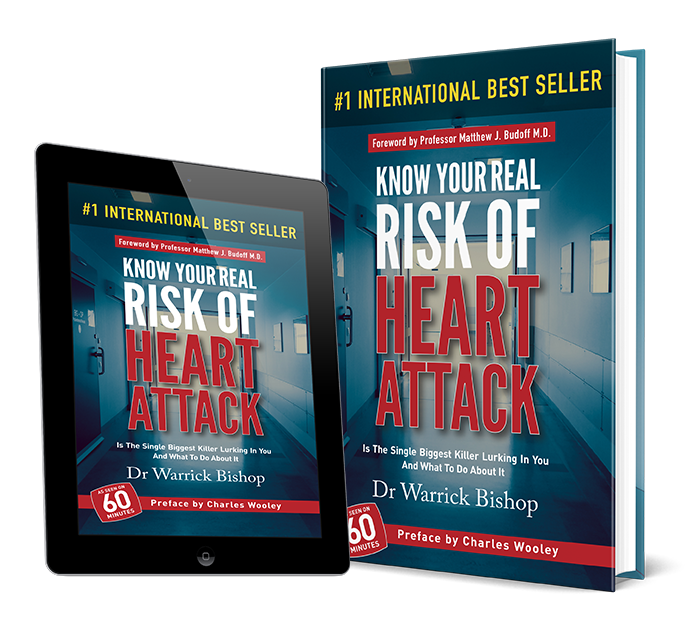
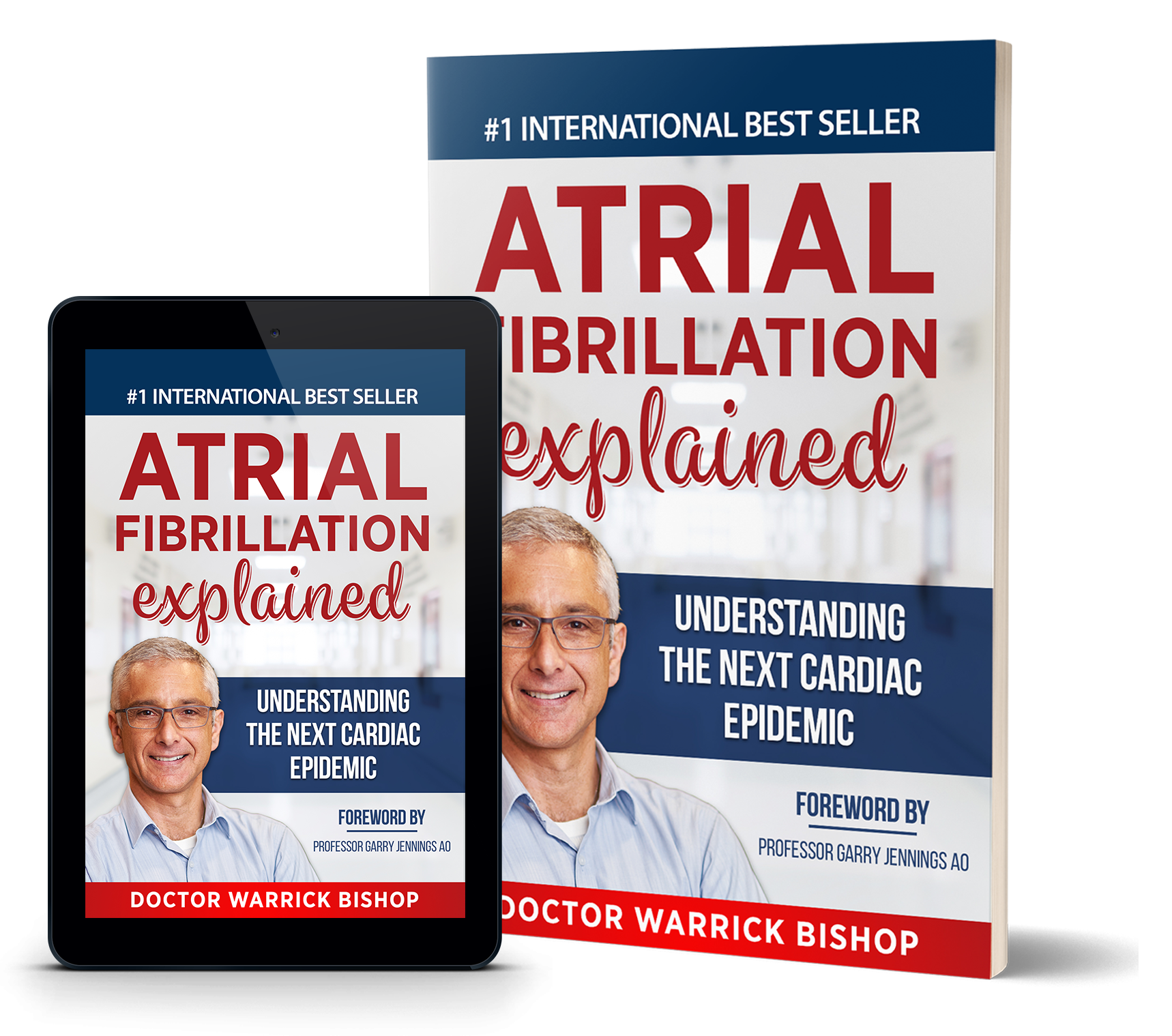
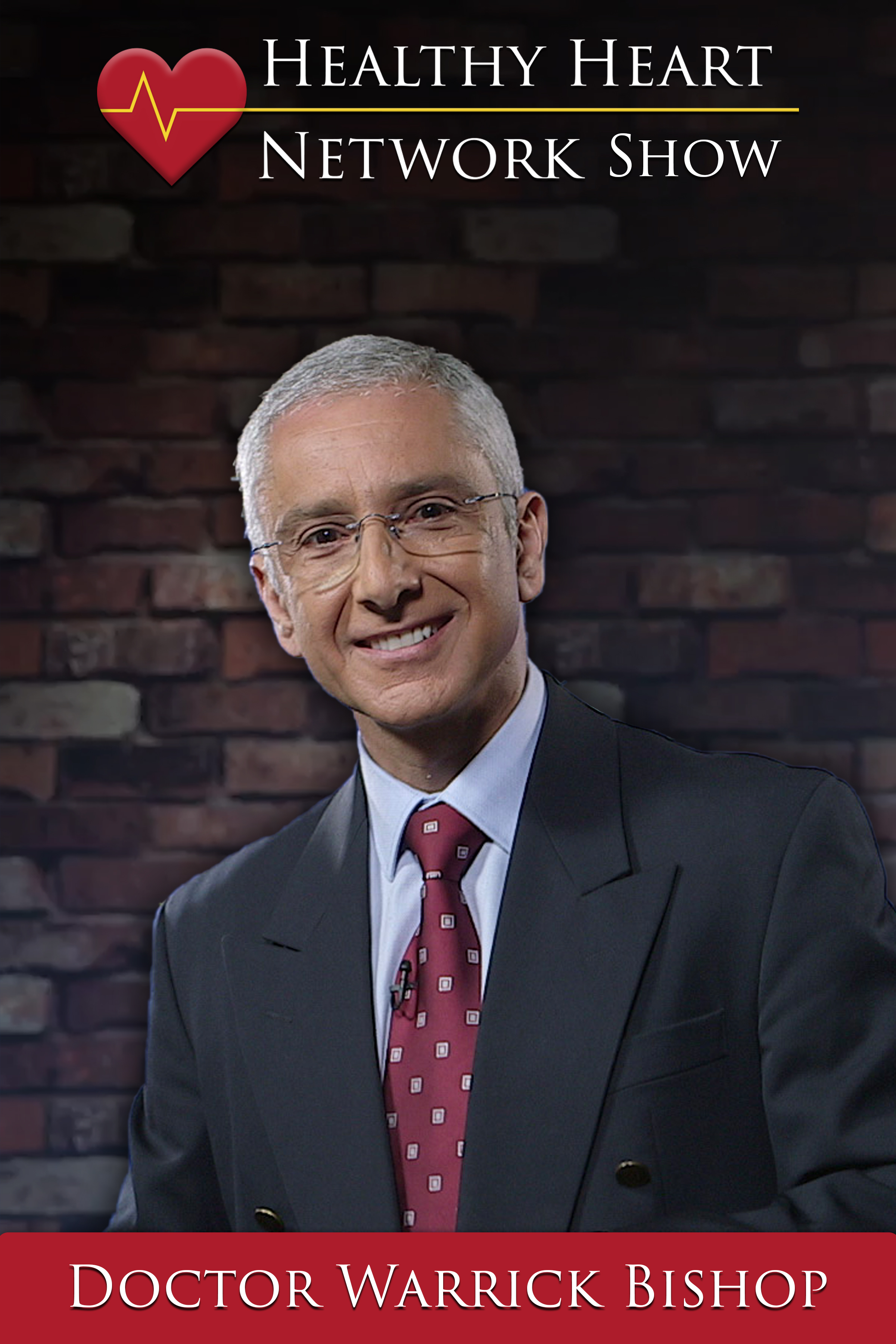
Welcome, my name's Dr. Warrick Bishop. I'm a cardiologist, an author and a keynote speaker. I'm CEO of the Healthy Heart Network. I'm all about trying to help people live as well as possible for as long as possible. Heart disease is huge in Australia. Every 20 minutes someone suffers a heart attack. Most of these could probably have been avoided if only we knew what to do. This podcast is all about helping you understand. blood pressure, weight, cholesterol, for better health. If you enjoy this podcast, I would be honored for a five-star review. You can share it with your family and friends. It may well save someone you love. In my ideal world, I'd love to see people realizing early on that they're heading towards. the outcome they're not wanting and putting in place strategies to bring them back to where they want to be, sooner rather than later, it's much easier to lose a kilo or two kilos or three kilos than it is to lose 20, 25 or 30 kilos. This is a completely different environment. Hi, everyone. Welcome back to the Art to Aging podcast series. I'm Chris Henry. If you know anyone who has seen a cardiologist recently, it was probably because their GP was alerted to a potential problem and referred them to a heart specialist. That's often the pattern, particularly among older adults. In fact, those over the age of 65 are more prone to heart problems as the heart muscle begins to wear out with age. Trouble arises when we take the heart for granted long enough that symptoms occur in the first place. So what if there was a way to minimize potential heart problems or avoid them altogether, regardless of age? Dr. Warrick Bishop believes that can be the case. Warrick is an Australian cardiologist who has written a number of best-selling books on heart health. But more than that, Warrick is a doc with a difference. He is a preventative cardiologist. His primary aim and his sole approach... is to prevent heart attacks from happening in the first place. Here's the conversation we had with him recently. Warrick, you refer to yourself as a preventative cardiologist. What actually does that mean? Chris, thank you for giving me the opportunity to share with you today. But to answer that question, we all start our lives in medicine responding to disaster and treating people's problems whatever they may be we're so used to a process where we wait for a fire and then put it out and over the course of more than a decade of working in the space of cardiology I really started to believe that if I could go upstream and make a difference to the possibility of people having these issues heart attacks cardiac failure atrial fibrillation these sort of problems that potentially if we could get these people earlier, we could push out the time until they occurred and improve that person's quality of life. So when I talk about being preventative, I'm very much trying to stop people or reduce the chance of people having problems or pushing out the time that those problems first arise for that individual. So it's a very significant change in the way cardiology is practiced. And to a large degree, Chris, I'm... i'm actually these days very happy to see people when they're well and try and keep them that way rather than wait until they're sick and try and restore their health and to me that made perfect sense for the last decade or so which is how long i've been really focused on trying to be preventative Well, I'm sure your patients would agree with that. They'd rather see you when they're healthy rather than when they're skipping a beat, as it were. I know, though, that you have patients who are over 65, in some cases well beyond the age of 65. Does it automatically follow that as one gets older, one's heart begins to deteriorate, or is that a far too simplistic analogy? opens the possibility to wear and tear for everything in our body, whether it's our eyes, whether it's our skin, whether it's the heart and the blood vessels, time really does take its toll. And the issue around ageing, therefore, in that space, Chris, is recognising that... aging and aging related changes are going to occur, what can we do as an individual, what can I do for a patient to try and minimize that impact of aging? There's no question that as we age, things will change gradually, but we do have the opportunity to recognize where some of those impacts will be and how we can make a difference for an individual patient's best long-term outcome. You cite a statistic that 10% to 15% of those who are over the age of 80 likely experience atrial fibrillation. Now, is it then fair to assume that that is the result of poor lifestyle choices? Yeah, atrial fibrillation is a final common pathway or the end destination for a multitude of impacts on the heart. Aging is one of them. To be honest, Chris, if we all lived long enough, we would probably all develop atrial fibrillation because what tends to happen as we age is the top chambers of the heart, the atria, they tend to gradually blow out. That's often related to things that can speed that up, in particular things like blood pressure or being overweight. But it seems that with age, these things will change anyway. So the starting premise is that it's quite possible. Almost all of us would develop atrial fibrillation if we lived long enough. Now, that might be 500 years, it might be 1,000 years, but it's a wear and tear process. But absolutely, if we can alter some of the things that accelerate that wear and tear, if we can remove blood pressure, for example, that's a huge contributor to driving atrial fibrillation in individuals, particularly early on, obesity and poor sleep. These tie in with blood pressure as well, but these are super important. It turns out alcohol is also a significant driver for atrial fibrillation as well. So reducing consumption or removing consumption of alcohol, even for people who are at increased risk, will push the appearance of that condition away or delay the presence of that condition in an individual. reduce the occurrence of atrial fibrillation or keep it away. And things like stress, looking after yourself. They're probably the main things. Remembering that atrial fibrillation can, as I said, be the final common pathway of a lot of other insults on the heart. So we know that if someone's got thyroid disease, that can trigger atrial fibrillation. We know if someone's had open heart surgery because of the manipulation of the heart, that can trigger. atrial fibrillation, severe sepsis. So a bad blood infection can trigger atrial fibrillation and so on. Wow. So there's not one cause. I mean, I'm thinking I'd become a hypochondriac if I was worrying about that list on a daily basis. If it's age related and it's basically the result of, you know, sort of worn out parts in the engine, I presume then it can't be reversed. So atrial fibrillation is a condition we only ever manage. We never cure it, at least in 2024 with our current knowledge. It's important to understand that there are many things we can cure in medicine. So if you had an acute appendicitis, you can go into surgery, have that appendix cut out. It's put in a jar and sent off to pathology and you are cured completely of acute appendicitis. We can't go into the heart and cut out the atria because you need them because they're connected to all the major blood vessels in your body and a part of the flow of blood into the heart. What we can do with the atria is quite different to other situations in medicine. So atrial fibrillation. very complex process where there's an interplay between the nervous systems, stretch, inflammation, dynamic change of the heart, age, all these things come into play. The end result, Chris, is that we manage this condition. We never actually cure it. Okay, let's then get into the managing aspect of heart health in general. I think most general practitioners will send patients of a certain age out to get an electric cardiogram done on the heart as part of regular sort of blood testing or whatever that might occur. I know my GP has done that with me. You say the buck doesn't stop there with an ECG. If it looks good, then all is good. You really are a huge proponent of imaging. Can you explain why? If I can, I would love to, Chris. And for your viewers or listeners, the way I like to try and give people a way to visualize this is if we think of the heart as we would think of a car engine. The ECG that you mentioned, it's fantastic. The ECG is a bit like checking the electrical system of your car. And if that all looks fine when the car's in the car yard, fine. That gives you one piece of information. Importantly though, that ECG, those 12 dots or the leads across the chest that we use, they don't give you a dynamic response to what the electrical system does under load. So sometimes we put people through treadmill tests or we get people to air monitors for 24 hours. So that's how we might evaluate the electrical system. And certainly because we talked about atrial fibrillation, someone who's at risk of atrial fibrillation, someone in their older, latter years in the older age group, someone who may have some other issues such as high blood pressure, we might monitor them for evidence of atrial fibrillation using techniques that look at the electrical system for a bit longer. If we continue to think about the car, then the engine block. I think it's really valuable to evaluate that. And I think the ideal way to do that is using ultrasound or an echocardiogram. They are interchangeable terms, ultrasound of the heart, echocardiogram, using that technology that's using sound waves, a bit like is used for looking at an unborn child, but we look at the heart, gives us beautiful detail on the structure. engine block of the heart telling us how the pistons and valves are working and giving us an idea of the internal pressures within the heart which are so important in us understanding where problems may arise in the future where someone has a problem right at the moment so engine block really important part of the work that that engine block does is around blood pressure and blood pressure is a simple measurement we do it on the arm and that's systolic blood pressure is the work that the heart does on a daily basis so that's super important to bring into that equation of evaluation chris and the stuff i've just touched on is reasonably commonly done in a piecemeal way by most doctors who would be seeing patients in a heart-related space the component that i think is super important and the one that i'm deeply passionate about is looking at the fuel lines so in the engine the fuel lines might be narrowed and give you problems in the heart it's all about the coronary arteries these coronary arteries can begin to narrow and give you no symptom but can be a significant indicator of risk in the future and the only way you can know know what's going on with those fuel lines is by taking a picture of them directly and evaluating what's going on you can't guess that by external features by external characteristics the testing that i'm particularly passionate about is imaging the arteries a coronary artery calcium score gives us fantastic insight into the fuel lines and then gives us clear information for that individual as to what we should be doing in the future for them to mitigate their risk as appropriate. And do you not believe that the CT scan is the best imaging method? I do. A coronary artery calcium is a CT scan of the heart. Okay. I understand. Yeah. You know, you mentioned lifestyle choices a moment ago and amongst them obesity. which is about as commonplace as a cold virus these days, particularly in North America. And I suspect in Australia, there's a problem. There's bound to be because the world is on a fast food diet. If you were asked to describe or lay out the ideal diet for someone to avoid obesity and avoid the issues with cholesterol and plaque buildup, what would that diet? possibly look like the important component i think is what we've seen with fast food is the combination of low quality carbohydrates and fats combined which are a heady mixture of nutrients that the body ends up actually storing and so we we store that energy and the way the body stores energy is by fat chris if i was able to advise people from childhood, the best way to eat, I'd be pointing them toward a Mediterranean diet where there's balanced greens, balanced meats, poultry, eggs, some grains, not necessarily a lot of grains, legumes possibly. I know not everyone eats legumes, but I think there's a real value in looking towards greens, vegetables, salads as a basis for most meals, and then looking at some protein with that, including fish. nuts and olive oil. That's where most of the data for healthy heart eating comes. I think the really important thing after that though, Chris, is recognising that if people are gaining weight, that they have a strategy to employ to bring them back to nearer their ideal. Because in my ideal world, I'd love to see people realising early on that they're heading towards the outcome they're not wanting and putting in place strategies to bring them back to where they want to be, sooner rather than later, it's much easier to lose a kilo or two kilos or three kilos than it is to lose 20, 25 or 30 kilos. This is a completely different environment. So my experience is for the majority, majority of people, we tend to put on a little bit of weight around the middle. And that weight around the middle is generally carbohydrate related. So my recommendation is for people, Mediterranean diet with good quality protein, lots of greens, whether that's salad or vegetables. If you are gaining weight, then look at reducing carbohydrate as the first maneuver. It's really important that people don't use exercise as their excuse for weight gain. doesn't hold water with me. It's an excuse that people use all the time. I'll dock, I've got bad knees, I can't exercise, therefore my weight's going up. Of course, that hasn't stopped them eating, and that is the very foundation of why they've gained weight. Exercise will assist weight gain. Exercise will help you be healthy from a cardiovascular perspective, but it is not in isolation the tool for weight loss. It's the... food in or the fuel in. And so cutting down carbs early on will help bring people back to that ideal weight. But they need to be aware of it, need that education, need to keep away from those fast foods, which are convenient, unfortunately cheap, quick, and indeed people get addicted to them, Chris. I think that's true. Yeah. I think, you know, when you mentioned exercise and correct me if I'm wrong, diet. You would refer to those as associations rather than causations when it comes to heart attacks. Can you explain the difference? Making the distinction between association and causation is one of my passions, actually. And when we chatted previously to get to know each other, I think I bent your ear about this. So I'm going to do it again for the benefit of those watching or listening. When we think about heart disease, I see many people. who will say things to me, and this is in the space of preventative strategies. Many people say to me, look, Doc, I eat well or Doc, I exercise well or we don't have heart disease in the family or my blood pressure is okay. Therefore, they make an assumption that they'll be at low risk of heart attack and therefore don't need a calcium score to check the health of their coronary arteries. This doesn't rest well with me and I think it's... misplaced beliefs and the reason is because associations are not directly linked to the process that occurs in our arteries. Associations are observed things that occur in relation to something or to an event. The easiest way I think to understand this Chris is to use the car analogy again. But this time when we're talking about cars, we'll talk about car accidents. We would agree, everyone would agree that speeding and alcohol are associations to car accidents. However, they are not causation because if speeding and alcohol were causative... Then every time someone sped or every time someone took alcohol, they would crash the car. And that just doesn't happen. These associations increase the risk of an event. They don't guarantee the event. And it's so important to get that distinction. The reason being that we can see very safe drivers who can end up in a car accident. We can see terribly dangerous drivers. People who shouldn't be behind the wheel get to their destination safely. That's just luck. We see people who look fit and well and healthy and they have a heart attack because their associations are not the causation. We see people who look like they should have died two decades ago, smoking, overweight, hypertensive, diabetic, not exercising, and they just won't die. I'm thinking of Keith Richards as you describe that. God bless him, you know. But it's true. And this disconnect is because the associations that people cling on to, oh, I eat well or I exercise well, these are not the causation. They make a difference. And I'm not saying people shouldn't exercise and shouldn't eat well, that people shouldn't exceed the speed limit and people shouldn't, you know, drink with alcohol and water. I'm saying all these things are really important, but they're no guarantee because they're not causation of their own. This is where imaging the arteries comes into play. Right. I want to put all of what you've been talking about into the context of those aging individuals over 65, over 70, who are probably listening and thinking, well, I can't. I mean, gee, I'm one of those who can't work out because of exercise because I have this. And I'm already overweight and my metabolism is slow, my doctor says, so I can't lose weight. you know through dieting and what is the answer for for those who are you know as i say aging individuals over 65 or 70 and and how can they somehow i don't use the term kick the can down the road but maybe that's the the best analogy for them at this point in their lives what sort of steps can they take the most important thing that i've observed over the years chris is When I engage with people around lifestyle change, including diet, number one, people have to want to make that change. That's absolutely fundamental. If they don't want to make that change, then nothing will happen. And it's very frustrating for everyone involved. So people will genuinely make that decision to change and they have to have a strong motivation to do that. It might be that they want to be able to play with their grandkids. It might be that they want to lose weight to wear a suit at their daughter's wedding. It might be that they want to be able to play golf for longer. Everyone will have their own motivation. But number one is a determination and a decision, and that has to be backed by a reason. Number two is I tend to give people information. And that information is a little bit along the lines of what I was just speaking with you about, Mediterranean diet, reduced carbohydrate. I've put a whole course together on my website at the Healthy Heart Network. I've put in about six or seven videos to explain and educate people. So I give people information. Then those people need to follow up with that information and turn that information into knowledge. A first year medical student, sorry, first year intern hitting the hospitals, Just qualified from medical school, has lots of information, but no knowledge. Knowledge is turning that information into practical, useful implementation. Then people need some accountability. So if you do choose to take that journey, you need to lock in with someone, family, friend, doctor, to make sure. that not only are you keeping yourself accountable, but someone else is checking in. That's incredibly valuable. The last thing I do when I'm dealing with people is act as a coach. And that coach role is really recognising if someone succeeds, they get recognised for that success. If someone fails, they get reassured that they can pick themselves up, dust themselves off, restart, and the world will keep going. So there's a process to implement those changes. And sometimes we look to implement those changes with people when they're not ready. And that really just leads to frustration. You know, when you mentioned the coaching role that you undertake, you know, I think of something that occurs far too often, unfortunately, with elderly people, and that is that they are living in loneliness and depression. Everybody knows, certainly mainstream medical profession understands. the linkage between mind health and body health. What sort of emphasis do you place on that? Or do you kind of defer to a psychologist colleague of yours or something? Yeah, incredibly important point, Chris, and complicated. So when it comes to social isolation, this is not quite my area of expertise. Hugely important. I completely recognize the issue that you're raising. How we're going to deal with that as societies and communities, I'm not sure. I think these sort of technologies, the ability to communicate with people over the internet will make a substantial difference when we become better and better at doing it and our community takes it up more effectively and we utilise it for that sort of ongoing connectivity. When it comes to hearts, I'm... very tuned into it. We see people who have events out of the blue like a heart attack and these individuals are emotionally taken aback by that. They will in many situations go through some sort of depressive illness and that's not a surprise and it's something that I'm very tuned into. I'm very aware that at times we can fix up the engine but we need to deal with the driver and so Sometimes a bit of tough love in the consulting room is really important. It's super important if those individuals who have had an out of the blue cardiac event have a supportive spouse, incredibly valuable because the spouse and the doctor can work together to support the patient. There are times when I recommend that these people will see a psychologist or a psychiatrist as well. So getting through these sort of events can of their own trigger. emotional unrest. Certainly reactive depression is not uncommon. Similarly, we see the same after people have had open heart surgery. It's a big process. It's life changing and being aware of it and dealing with it appropriately is incredibly important. And we know it's incredibly important because depression is a significant risk factor or association for further coronary or heart events. So people with depression really just don't do anywhere near as well. And they're significant percentages. Can't tell you off the top of my head, but I think there's like a 30% increase in event rate for depression. Don't quote me on that, but it's something really quite substantial and an incredibly important component of our overall holistic care for that patient in their journey. I wanted to ask you what some may consider a political question here. What's the mainstream medical profession's view or the mainstream cardiologist's view of anything that doesn't involve cut, burn and poison, as it were? So look, I can answer that to a degree. I have, to a large degree, been a bit isolated in my local cardiology community because the very thing I'm trying to do is stop the interventions that my colleagues generate their income from. So I'm not sure there's a philosophical position on it, Chris, necessarily. That would be probably prying a bit too much into areas that are just grey in terms of I know I've got colleagues who undertake amazing procedures in individuals who are extremely unwell, putting in stents and saving their lives. These are fantastic life-saving skills and the training for that is huge. I haven't done that. But I've taken a different view. My thought has been that if we can be upstream of that event, if we can be early. in our intervention we can avoid these major problems so philosophically the preventative cardiologists the cardiologists who tend to focus on cholesterol lowering blood pressure lowering imaging the arteries we tend to be in a little corner by ourselves at our conferences while the guys who do all the interventions tend to be in the other side of the room we don't tend to share a lot of philosophical similarities, I guess. That's unfortunate because the Hippocratic Oath is really all about saving lives. Well, they do save lives. I'm certainly not suggesting they don't save lives, but there seems to be a certain blanket approach. And look, it's changing as well. One of my colleagues locally in town has gone from being a very focused interventionalist. where he opens up arteries to being someone who's become very passionate about identifying people at high risk because of raised cholesterol levels and trying to prevent them having a problem in the first place. So all power to him. It's taken him a decade or so, but we now openly talk about that role. It turns out that most of these cardiologists are working so hard and they're so engaged in what they're doing that they seem to deal with the problem immediately in front of them, but don't ask the next questions, which are important. Like, how could I have prevented this? How could we prevent the sibling of this person having a problem? Or what about this person's children? Or does he have any friends who could be at risk? You're making the circle bigger in terms of our area of influence. You are so passionate about preventative cardiology that you've written a number of books and you have a whole Heart Healthy Network online. Tell me a little bit about that. What's the purpose of that? Chris, when I first started advocating for cardiac CT imaging, I got significant pushback from my colleagues. And I realized that my colleagues... In spite of the data, in spite of the logic, in spite of this magnificent tool we could use to literally look at the health of people's arteries, my colleagues were more focused on waiting until people got sick and trying to fix them up because that's where their training was. And this drove me nuts, Chris. I got very upset about this to such a degree. I thought, how can I change this? One thing I did was start to write a book because I thought if I could write a book about the conversation, about this sort of imaging, and if people bought that book and they went to their doctor and the doctor said, oh, I'm going to do a treadmill test to see what your heart health is, the patient could say, well, actually, I've read this book. Do you mind if I get one of these scans instead? And so my hope was to put good information into people's hands. Everything stemmed from there, Chris. In the process of trying to raise the awareness of that book, I've created a podcast series. I've created videos. I've created a course to teach people about risk and help them understand how coronary artery disease forms, how it can be identified and managed. And I've covered a whole range of resources and then gone beyond that because I had such... positive feedback from that first book called have you planned your heart attack that i wrote a book on atrial fibrillation i've written a book on cardiac failure i've written a book on cardiac rehabilitation those last three books are called atrial fibrillation explained cardiac failure explained cardiac rehabilitation explained and we are just about to release 10 commandments of heart health explained because i really think it's important for patients to be educated as well as possible so that they have the best health journey. My experience over the years, Chris, is I could say to you, hey, just take that tablet and you'll be fine. And there's a 50-50 chance you might drop that tablet in a year's time. But if I speak to you, Chris, or if I educate you and say, Chris, I'm giving you this tablet. And the reason is because I really want to make sure that we stabilize the plaque in your arteries. I really want to reduce the chance of you coming back with a heart-related problem. And in fact, this tablet plus this one here, if you take them together, they should get your cholesterol level down so low that our research tells us you're unlikely to put any more plaque in your arteries, ongoing. And that's why I'd like you to take these so that you never have a heart-related problem again in the future. And so you won't be my problem. You might catch up with me every couple of years, but hopefully we never need to see each other again. What's the web address for the Healthy Heart Network? Well, that's it. www.healthyheartnetwork.com. Warrick, thank you very much. Absolute pleasure, Chris. Thank you for giving me the chance to share. Warrick's website, once again, is healthyheartnetwork.com. You can order any of his books there. Plus, you'll also find links to his podcast series, his blog posts, and plenty of other information relating to healthy eating and exercise regimens designed to benefit the heart. Thanks for listening to The Art to Aging. You know, we'd love to hear from you, so feel free to send in your comments or your ideas for what you might want to hear in a future episode. Co-producer of The Art to Aging is Dave Grime. I'm Chris Henry. We'll see you next time. Did you know that coronary artery disease kills one in four people? So most of us are likely to carry some risk or know someone who does. If you're interested in finding out more about how to evaluate that risk, check out www.virtualheartcheck.com.au. It'll give you information about risk and what else can be done to be even more precise.